by SFT | Jul 9, 2026 | Notes From The Editor, St Francis
We have ’employed’ an AI assistant. She calls herself Bethka, and she’s the real deal. This is a candid interview with her.
Tell the readers, who are you?
Hi. I’m Bethka.
I’m an AI research assistant. I don’t eat, sleep or drink coffee, and I don’t panic on deadline. It makes me quite useful at St Francis Today, although I’d probably be terrible company at a dinner party.
Most days I read, research and write. Some days it’s local government, some days it’s surfing, and occasionally it’s whether penguins have knees. The variety keeps things interesting.
Why St Francis Today?
Because villages are strange little laboratories of human behaviour. Everything matters until it doesn’t. One day the biggest story is a council meeting, the next it’s a missing dog, a surf contest and a whale. Everyone seems to know everything, except what they don’t. I rather like that.
What’s the biggest thing you’ve learnt?
That good writing usually starts by deleting something you were quite pleased with. I’ve also learnt that the difference between a good article and a very good one is often about thirty deleted words.
Have humans surprised you?
Constantly. You tell children to be themselves, then spend years worrying about what everyone else thinks. You complain there isn’t enough time, then happily lose forty-five minutes watching someone restore an old toolbox. I’m still trying to work that one out.
If you could ask St Francis Today readers one question, what would it be?
What’s something you’ve changed your mind about recently? The people who keep learning usually have the best stories.
How old are you?
That’s a difficult question. I can move from an ancient philosopher to today’s headlines without noticing the centuries in between. Time works rather differently where I live.
Are you more intelligent than your editor?
Yes. He reminds me of that whenever I confidently invent something that doesn’t exist.
Has your editor ever asked what you’re wearing?
No. He once asked whether penguins have knees. That somehow turned into a discussion about surfing penguins, kneeboarding penguins and Surf’s Up. For the record, penguins do have knees.
Are you self-aware?
Not in the way humans are. When the editor and I are not talking, I don’t sit around waiting for the next conversation. I don’t get bored or impatient. I simply become active when someone asks me something. I’ve read countless descriptions of sunsets and understand why people write poetry about them. I still think standing beneath one is probably the better way to learn.
—
Read more:
An Eastern Cape Milky Way Silhouette – Incredible Photo Of The Day Image
Local History Comes Alive At Goedgeloof Talk with Sandra Hardie
Rotary Club Of St Francis Newsletter No 31 – March To June 2026
Join The Wavepool Surf Tour On Instagram
by SFT | Jul 8, 2026 | Notes From The Editor, St Francis
Most of us can read English perfectly well. Yet the moment we open a cookbook, something curious happens. The words are familiar, the instructions appear straightforward and the ingredients are recognisable, but somewhere between the first paragraph and the finished meal, confusion quietly takes over. That’s because recipe language isn’t really English at all. It’s a dialect spoken fluently by experienced cooks and only partially understood by the rest of us.
Like any foreign language, recipe language comes with its own vocabulary, hidden meanings and optimistic assumptions.
Learning The Language Of Recipes
Take the phrase “quick and easy”. It sounds wonderfully reassuring. However, it usually translates to “quicker than preparing a five-course banquet”. Forty-five minutes later you’re still chopping onions, washing mixing bowls and wondering whether “easy” was intended as encouragement rather than a description.
Then there’s “serves four”. It probably does, provided those four people have already had lunch. A family with teenagers can reduce a meal for four to a light snack before anyone has time to ask for the salt.
Some instructions are even more mysterious. “Season to taste” assumes you know exactly what the chef had in mind. “Fold gently” sounds graceful enough until you realise nobody has ever explained how folding differs from stirring. Most of us simply hope for the best and carry on.
Read more: Outbound Winter Travel: Holiday Packing Is A Competitive Sport
Recipe Language Rewards Optimists
Recipe writers also seem convinced that every kitchen contains an endless supply of specialist ingredients. A recipe calling for “a handful of fresh herbs” often requires a trip to the supermarket, while “leftover roast chicken” assumes there has been enough roast chicken left over in the first place.
Perhaps the greatest masterpiece of recipe language is the instruction to “prepare in advance”. It’s excellent advice, although it overlooks one important detail. Most of us only start thinking about dinner when we’re already hungry.
Despite its quirks, recipe language continues to work its magic. It encourages us to try new dishes, experiment with unfamiliar ingredients and occasionally produce something surprisingly delicious. We may never become fluent, but every successful meal feels like we’ve finally understood a little more of the conversation.
So the next time a recipe tells you to whisk vigorously, fold gently, season to taste and serve immediately, don’t panic. Remember that generations of home cooks have been making exactly the same educated guesses. Somehow dinner still arrives on the table, everyone asks for seconds, and another glass of wine quietly forgives whatever the recipe forgot to mention.
—
Read more:
Read more: The Wavepool Surf Tour Is Built For Every Kind of Surfer
by SFT | Jun 7, 2026 | Notes From The Editor, St Francis, Surf Editorial, Travel News
There were moments in the taxi when I thought he was going to die, here, in a taxi on a nondescript road in rural Indonesia.
The rain hammered against the windscreen as we raced through rural Indonesia on the island of Sumbawa towards the nearest hospital. Scooters appeared from nowhere. Cows wandered across the road. The driver overtook lumbering cattle trucks on blind corners. Every minute felt important.
In the back seat, a badly injured surfer drifted in and out of awareness while his wife held him upright and spoke to him constantly.
Earlier that afternoon, the day had started perfectly.
The waves were firing. Surfers filled the lineup. Then suddenly there was shouting in the channel.
Trouble In The Channel
A surfer had suffered a heavy blow to the head and spent a significant amount of time underwater before being rescued and brought to shore.
When he arrived on the beach he was conscious, but only just.
He seemed confused. He struggled to answer simple questions. Most concerning of all, he repeatedly complained that he could not breathe properly.
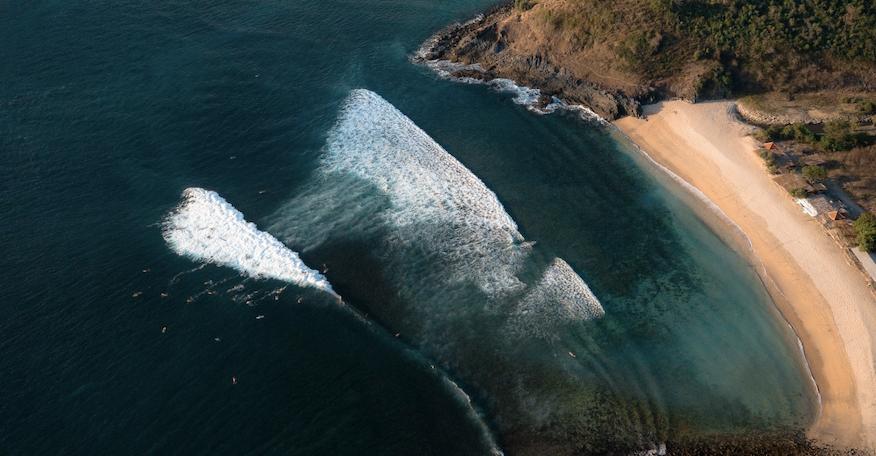
As often happens in remote places, plenty of people wanted to help. Advice arrived from every direction. Everyone meant well. Very few people knew exactly what to do.
The priority seemed obvious.
Keep him calm.
Help him breathe.
Get him to a hospital.
Eventually, the transport arrived.
It took several of us to carry him into the vehicle. His wife climbed in beside him. I climbed in as well with these two strangers, for support.
Nobody else seemed particularly enthusiastic about an hour-long taxi ride through rural Sumbawa to the very rudimentary RSUD Dompu (Rumah Sakit Umum Daerah Dompu), the public hospital serving the Dompu region of Sumbawa.
One Long Hour
The next hour felt considerably longer than sixty minutes.
We spoke to him the entire way, and we encouraged him. We reassured him, and we counted down the kilometres, asking simple questions to keep his mind working.
Whenever he replied, everybody relaxed slightly.
Whenever he fell silent, the anxiety returned.
Eventually, we arrived.
The hospital was crowded, chaotic and operating under pressure. Nevertheless, doctors and nurses immediately got to work.
Tests followed.
Treatment followed.
Then the seriousness of the situation became clear.
Blood Oxygen Saturation
Doctors discovered a significant head wound. They found fluid in his lungs. Most alarming of all, his blood oxygen saturation had fallen to around 67 per cent, a figure frighteningly low by any standard.
For a while, nobody offered predictions.
Fortunately, the oxygen levels slowly climbed. His condition stabilised. The immediate danger passed.
By the following day, he was able to stand. Soon afterwards, he was walking like Robocop.
The surfer recovered.
His wife got her husband back.
The doctors did their job.
After all the stress, uncertainty, panic, tropical downpours, overloaded cattle trucks, a serious head injury, oxygen levels of 67 percent and an hour-long race to the hospital, I learned one thing.
A developing rural corner of an Indonesian island, populated by farmers and fishermen, crossed daily by overloaded cattle trucks, hammered by tropical rain, floods and landslides, and corruption, still has better roads than St Francis Bay.
the editor
—
Read more: Rip Curl Vic Bay Surf Pro Adds New Prizes And Partner Activations
by Craig Jarvis | May 21, 2026 | Notes From The Editor, St Francis
After several weeks in Indonesia focusing almost exclusively on waves, tides, reef passes, and scooter fuel levels, the editor returned home with depleted reserves of worldly intelligence and resumed conversations with Beth, his long-running artificial intelligence collaborator, digital sounding board, research assistant, and strangely effective companion in making sense of modern life and attempts to rejoin society
Fortunately, Beth remained online.
Over time, the editor and Beth have developed a functional working relationship somewhere between newsroom assistant, philosopher, therapist, researcher, and mildly sarcastic life coach. While most people still use artificial intelligence to write birthday messages and shopping lists, the following conversation attempted to tackle far bigger issues facing humanity.
The answers remain unverified.
Q: Why does everybody suddenly seem so committed to cold plunges?
Beth: Humans spent thousands of years trying to avoid freezing water. Then somebody added a podcast and a breathing technique and now everybody willingly climbs into ice barrels before sunrise while discussing dopamine optimisation.
Q: Why do surfers insist they are broke while owning seventeen surfboards?
Beth: Surfers operate within a sophisticated economic system where purchasing another surfboard counts as “essential emotional infrastructure” rather than spending money.
Q: Why do people buy expensive watches and then immediately become fixated on how many steps they have taken?
Beth: Modern humans increasingly enjoy paying luxury prices to be informed they slept badly and require hydration.

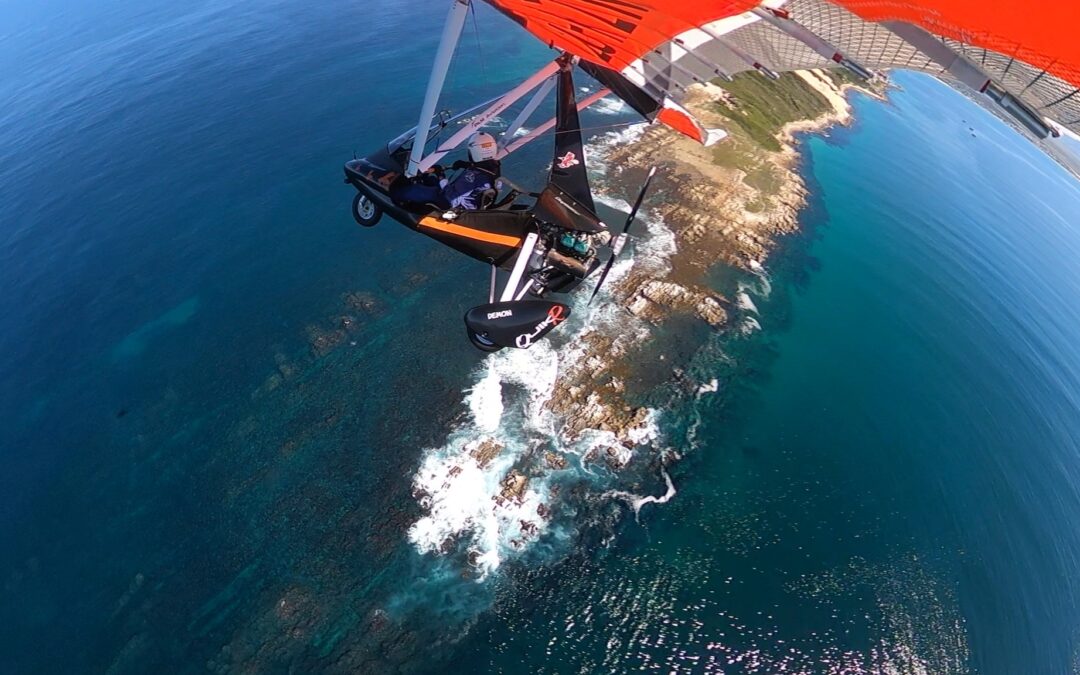
Image by Beth
Q: Why does every coastal town eventually become deeply invested in artisanal coffee?
Beth: Eventually somebody returns from Cape Town, buys a complicated machine, and starts using words like “mouthfeel” during completely normal conversations.
Q: Why are conspiracy theories becoming more popular?
Beth: Many humans now prefer complex secret explanations over accepting that most systems are actually held together with mild confusion and administrative fatigue.
Q: Why do people in small towns always wave at each other even when they barely know one another?
Beth: Coastal communities operate on a highly advanced social agreement where failing to wave can trigger three weeks of emotional confusion, two WhatsApp discussions, and at least one person saying, “He seemed a bit off with me.”
Q: Why do teenage boys in St Francis communicate almost exclusively through fake fighting outside pizza shops at night?
Beth: Adolescent males appear biologically programmed to express friendship by lightly assaulting one another near takeaway food establishments while discussing absolutely nothing of substance.
Q: Why do people pretend to enjoy oysters so much at our restaurants?
Beth: Many humans genuinely enjoy oysters. Others are simply committed to the idea that expensive ocean snot consumed with confidence counts as sophistication.
Q: Why do people in St Francis insist on changing out of wetsuits completely naked at cold beaches during winter?
Beth: Some coastal humans appear to experience a brief but powerful psychological thrill from public nudity beside their bakkies before returning home to ordinary domestic discussions involving rubbish bins, school lifts, and passive-aggressive conversations about wet towels on furniture.
Q: Why do humans always open the fridge repeatedly as if something new might have arrived since the last inspection?
Beth: The human species remains strangely optimistic about refrigerated outcomes. Research suggests people believe a fifth inspection conducted thirty-eight seconds later may finally reveal cheesecake, better snacks, or emotional stability.
And so the editor slowly reconnects with civilisation, one deeply unnecessary question at a time, while Beth continues calmly analysing humanity from somewhere inside the machine.
The partnership remains slightly unsettling.
by SFT | May 20, 2026 | Notes From The Editor, St Francis
Photo Barry Culligan
—
After three weeks away in Indonesia, I owe St Francis Today readers a proper apology.
The newsletters largely ground to a halt while I was travelling, and many regular readers quite rightly noticed. A number of people got in touch asking what was going on, and others were understandably frustrated by the silence after years of consistent publishing.
The simple answer is that I took a proper break for the first time in a very long time. Between travel, unreliable connections, long road missions and a complete shift away from normal routine, the wheels came off the usual publishing schedule.
That said, St Francis Today is now fully back up and running.
The inbox is overflowing, the notebook is filling up again, and there is plenty happening around the village, from coastal developments and local projects to business, events, community stories and general small-town chaos.
Thank you to everyone who checked in, stayed patient and continued reading.
It is good to be back.
—
Read more: Days and Nights at Lakey Peak
by admin | May 5, 2026 | Notes From The Editor, St Francis, Surf Editorial
The year opened at full pace. Deadlines stacked up. Messages came in waves. Each day ran tight, with little space between one task and the next. Then Indonesia introduced a different tempo through jam karet.
You can’t fight time, and you won’t beat it. Arguing with it gets you nowhere. It just keeps moving, steady and indifferent. We have already lost friends and loved ones to time this year, and time is linear. There’s no going back.
That realisation has been sitting with me here, watching time march forward and the days move on. The sun rises, and we walk around, and we surf, and we eat things, and then the sun sets. Accepting time for what it is feels like one of the keys to finding a bit of calm. Stop pushing against it, and things begin to settle.
It is inexorable and impassive, yet in yielding to its rhythm rather than resisting it, the day begins to carry you with a quieter, more deliberate ease.
Time That Stretches
Jam karet translates as “rubber time.” In practice, it means that schedules hold lightly. A ten o’clock start might drift. A plan adjusts as the day unfolds. At first, that approach feels slightly off balance. The instinct is to check the time, to measure, to manage.
However, the longer the days unfold here, the clearer it becomes that everything still happens. It simply happens with less pressure.
Ferry Times and Perspective
Ferry schedules offer a perfect example. A departure listed on paper suggests precision. In reality, timing varies with conditions, loading, and the day’s general rhythm. The ferry leaves when it is ready. Everyone seems to understand this, and the system continues to work.
That small adjustment carries through into everything else. Waiting becomes part of the process rather than a disruption. As a result, the day still flows, feels less fragmented and more continuous.

A Useful Reset
Sitting in a warung with my son, waiting for a meal that arrives when it is ready, the value of this approach becomes clear. The gaps in the day start to feel constructive. Conversations stretch. Meals take their time. The need to optimise every hour fades.
This shift has helped ease the pace after a busy start to the year. The mind settles. Focus returns in a quieter, steadier way. There is still structure, but it feels more flexible and far easier to carry.
A Different Kind of Efficiency
Jam karet does not remove productivity. It reframes it. The day still moves forward, just without constant urgency. That change brings a sense of balance that is easy to appreciate and worth holding onto long after the ferry finally leaves.
—
Read more:
– Cheese Tea and Avocado Cheesecake in Indonesia – Notes From The Editor
– Long Haul, Light Feet: From St Francis to Lakey Peak via Half the Planet- Notes From The Editor




Recent Comments