
by SFT | Oct 25, 2026 | Notes From The Editor, St Francis
Suddenly, it’s nearly November, and St Francis is coming alive. The surf is packed at seven on a Tuesday morning. There’s a tussle for parking on pensioners’ day at Spar. The restaurants are filling up, and the contractor you finally remembered to phone can fit you in after Easter 2027.
Everyone seems to be in a hurry, and it’s starting to rub off. You leave home feeling perfectly relaxed and return twenty minutes later, annoyed with someone who took too long to turn.
A few weeks ago, you could pull up outside wherever you were going. Now you might have to park a little further away. We’ve gone from quiet to fairly busy by St Francis standards, and we’re already behaving as though we need an evacuation plan.
We know how this goes
The summer crowds haven’t properly arrived yet. its still just us locals at the moment, pretty much.
They’re still coming, 6 weeks. They’ve booked their accommodation, packed their beach umbrellas, and promised the children a holiday. Our feelings about the traffic at the three-way stop will have very little bearing on their plans.
We have some nice new beaches waiting for them. The restaurants will be pleased to fill their tables. Plenty of people who live here will finally have the chance to make some decent money.
There’ll also be queues. Someone will park badly. Someone will stop to look at a house while you’re behind them. This will add several seconds to your journey, during which you can decide how much of your afternoon you’d like to spend being furious.
Builders’ holiday will take some construction traffic off the roads. Holidaymakers will take their place. We’ll muddle through, as we do every year, and somehow everyone will get their rolls.
Prepare, then relax
There are things we can sort out now.
Plan your shopping runs. If pensioners’ day annoys you, shop on another day and leave the bullets alone. You have the whole week.
Stock up on liquor before the rush. This doesn’t mean you must drink more because the cabinet is full. Some of it can stay there. It keeps.
Get your diesel. Find comfortable noise-cancelling earplugs for Billy’s week. Make whatever arrangements you need to make, then carry on with your life.
We still have time. Spending it telling everyone how stressed we are seems a poor use of a perfectly good November.
Make a plan for summer
Once the visitors arrive, we could try enjoying the place with them. Go to the beach. Book a table. See friends who only come down once a year. Allow a bit longer for the shopping and accept that other people also like being here.
If you really can’t bear a full St Francis, go away for the summer. Rent out your house, visit somewhere quiet, and come back when you can park outside the Spar again.
Either is a reasonable plan.
Staying here to complain on Facebook for six weeks seems less rewarding. The other misanthropes will agree with you, of course. Then you can all sit indoors, agreeing about how dreadful it is outside.
Meanwhile, everyone else will be having a holiday.
Or go outside, breathe deeply, and wave at the sun. You live here. You don’t even have to pack.
the editor.
—
Read more:
Mayor Hattingh Bornman puts his endurance to the test with aspirant lifeguards
Kouga expands drone technology to strengthen safer communities
by SFT | Sep 2, 2026 | Notes From The Editor, St Francis
Earlier this week, I made the mistake of asking readers for help. After several weeks of this particularly persistent flu, I had reached the stage where conventional medicine appeared to have done all it could, so I put out a fairly urgent appeal for old-fashioned remedies.
Thank you. The response was magnificent, but, unfortunately, none of it was publishable. There were several suggestions involving alcohol, a couple involving substances that may or may not be entirely legal, and remedies which, if followed precisely, would probably cure the flu by killing the patient.
So I have developed a new treatment plan: I am going out. This happens to coincide with a particularly busy weekend around here, with the Belgian Beer Festival at Cape St Francis Resort, the Dress Up Beer Run, Henry Ate, Dalin Oliver, Brandon Peel and plenty of other reasons to leave the house, see actual human beings and remember that there is a world beyond tissues, cough mixture and green mucus (sorry).
There is one slight complication in all of this, which is that I don’t drink. I haven’t had a drink for just over 400 days, which is occasionally inconvenient because I still think drinking is quite cool. I know that is probably not the approved way of discussing the subject. We are meant to talk about alcohol in sensible terms involving moderation, units and responsible choices, but the fact remains that drinking brought me some extremely good times.
It also brought me some spectacularly bad mornings, missing sections of evenings and conversations that seemed profoundly important at 1 am and turned out, in daylight, to have been utter crap. Stopping was one of my better decisions, but that doesn’t mean I have suddenly developed an objection to everybody else having a few. Quite the opposite. I remain entirely supportive of other people’s right to get woozy.
A Belgian Beer Festival full of people drinking Belgian beer, therefore sounds excellent, and I shall simply be the irritatingly sober bloke watching proceedings deteriorate with complete clarity. I may be high.
Either way, after several weeks of being sick, working through it, complaining about it and generally becoming bored with my own company, I think getting out amongst St Francis might be the best medicine available. I am probably not in peak festival condition, but there is a lot happening this weekend, and I intend to see some of it.
by SFT | Aug 30, 2026 | Notes From The Editor, St Francis
Things have reached a fairly desperate stage.
I have now spent three weeks with this particularly nasty strain of flu going around and around the village. Some people are calling it COVID Mk. IV. Me I’m calling it a kak jol.
I have tried working through it and I have tried ignoring it. I have tried sleeping more, and I have swallowed the tablets, drunk the water, taken the vitamins and done most of the sensible things one is supposed to do. Still it lurks, like a fart in a wetsuit.
So I am taking a week off.
St Francis Today will go quiet for seven days while I lie down, sleep and attempt to return to the land of the living. Before I disappear, however, I need your help.
I want old-fashioned remedies.
Not things you have just found on Google. I want the family stuff. The strange stuff. A remedy your grandmother swore by, your mother inflicted on you as a child.
At this stage, logic is optional.
If I need to cut a potato in half, rub it on my navel and bury it under a dog pooh, tell me where to dig. If nasturtium leaves must be eaten at the going down of the sun while eating a toasted chicken sarmie from Vida, I am ready.
There is the starvation cure. The ice bath until the hard hallucinations kick in. Sauna yoga. Eucalyptus inhalations that gently remove you from this dimension. Standing barefoot on the earth to discharge the illness. (I hardly ever get to use the word discharge). Whispered incantations to dark lords. Full-moon interventions. And, somewhere out there, surely, an auntie who knows exactly which part of a dead chicken needs to be inserted…
At this point, I am listening to all of it.
There is only one rule. No alcohol remedies. Please don’t tell me about hot toddies, brandy, whisky, brown sherry, or anything else that comes out of a bottle. The very thought currently makes me want to lie down. I am, in fact, already lying down. Alcohol is unlikely to improve the situation.
Scientific credibility will not be a deciding factor.
Send them to me. I will publish the best ones when I return, assuming I return, and at this stage, I am prepared to entertain almost anything except urine.
In the meantime, St Francis Today is going quiet, and the editor is going back to bed.
No sympathy, I need a cure. and a haircut.
See you in a week.
The Editor
by SFT | Aug 19, 2026 | Notes From The Editor, St Francis
The weather in St Francis has been decidedly odd lately. We have had strange temperature changes, far too many southerly winds and very little sense of a normal winter pattern. Meanwhile, the surf has been abysma, water freezing. There have been a few moments, but anyone waiting for a solid run of winter waves has been waiting for quite some time.
Something else interesting has been happening along the beaches around the new groynes in St Francis Bay. Over the past two months, there has been a healthy deposit of sand along sections of the beach. At the same time, we haven’t had any vicious weather or those powerful, long-period winter swells washing through the bay.
Whether the two are connected is a question for people who understand coastal processes better than I do. However, it is another noticeable feature of what has been a very unusual couple of months around here.
There are plenty of theories about what is happening. El Niño – the Godzilla version gets mentioned, along with ocean temperatures and changing weather patterns. Then there are the various pressure systems moving around the Southern Ocean. However, you can stare at charts for hours and still end up looking out the window for the final answer.
The Chokka Forecast
I recently conducted some highly informal meteorological research at a fairly raucous party with a few local chokka fishermen. It was not a controlled environment, and nobody was taking notes. Nevertheless, these guys spend enormous amounts of time at sea. They watch the wind, currents and water temperatures amd understand the ocean.
Their verdict was fairly unanimous: we can expect an early summer. They weren’t presenting a complicated theory or trying to explain global weather systems. They simply reckoned the signs were already there and summer weather patterns are going to arrive ahead of schedule.
That sounded reasonable until the local surfers entered the debate. They have looked at exactly the same ocean and reached the opposite conclusion.
Winter Is Just Late
According to the surfers, winter isn’t finished because it hasn’t really got going yet. Eternal optimists, they reckon that the proper winter swells are still somewhere out there. Eventually, the southerlies will disappear, the swell patterns will improve and St Francis and JBay will get the winter surf it usually expects.
There might be a little wishful thinking involved. After several months of mediocre surf, accepting an early summer means accepting that winter didn’t deliver much. A late winter leaves the door open for September to produce something worthwhile.
So we have two groups calling an early summer and a late winter, respectively.
I’m Going With Summer
I’ve decided to side with the fishermen. This isn’t based on any deep understanding of climatology, El Niño or the Southern Ocean. I’ve simply become accepting to the idea that winter might already be packing up. And it’s east next week.
Besides, I prefer warmth. If the choice is between waiting hopefully for another month of cold fronts or accepting an early summer, summer gets my vote. I would still appreciate a few decent waves, but they don’t necessarily have to arrive with freezing mornings and howling westerlies attached.
Perhaps September will prove the surfers right. For now, though, the warm days, strange winds, quiet surf and growing beaches have me leaning in the other direction.
What do you reckon? Early summer or late winter? It’s like a metaphor of life.
the editor
—
Read More
Behind the scenes – the groyne construction project video
by SFT | Aug 3, 2026 | Notes From The Editor, St Francis
Every family has that one dinner nobody complains about. In our house, it’s chicken enchiladas. They’re easy to make, difficult to mess up and guaranteed to leave everyone warm, full and smiling.
I’ll admit it. I’m not much of a chef. I can make a toasted cheese sarmie and I can also burn toast with alarming consistency. Every now and then, though, I stumble across a recipe that even I can’t ruin. This is one of them.
If you’ve had one of those days where work has been relentless, the kids are circling the fridge like hungry sharks and nobody can agree on what’s for dinner, these chicken enchiladas will save the day. They never let me down, and I don’t think they’ll let you down either.
Pour Yourself Something First
Before you chop a single onion, pour yourself a glass of wine. Or crack open an icy Mexican beer. If it’s Friday night, there’s absolutely nothing wrong with a little tequila while you cook. It helps with the chopping. Probably.
Cooking should be enjoyable. Dinner always tastes better when the cook isn’t stressed.
The Kitchen Soon Smells Amazing
Heat a splash of oil in a large frying pan and throw in two sliced red onions, two sliced red peppers and a couple of crushed garlic cloves. Let everything soften gently for about 15 minutes before stirring in two teaspoons of chipotle paste. If your family enjoys a bit more heat, feel free to add another spoonful.
Next comes the chicken. Slice two chicken breasts into thin strips and cook them through before adding a tin of black beans, a handful of chopped coriander and about 150ml of passata. Give everything a good stir and stand back. At this point, people usually start wandering into the kitchen asking if dinner is nearly ready.
Wrap Them Up
Mix the remaining passata with another crushed garlic clove and a teaspoon of tomato sauce or ketchup. Spoon the chicken mixture into six tortillas, fold in the ends and roll them up tightly.
Pour a little of the tomato sauce into the bottom of a baking dish, arrange the enchiladas side by side, then cover them with the remaining sauce. Finish everything with a generous handful of grated mature cheddar, then put some more cheddar on. A little bit more, before baking for about 30 minutes until the cheese is bubbling and beautifully golden.
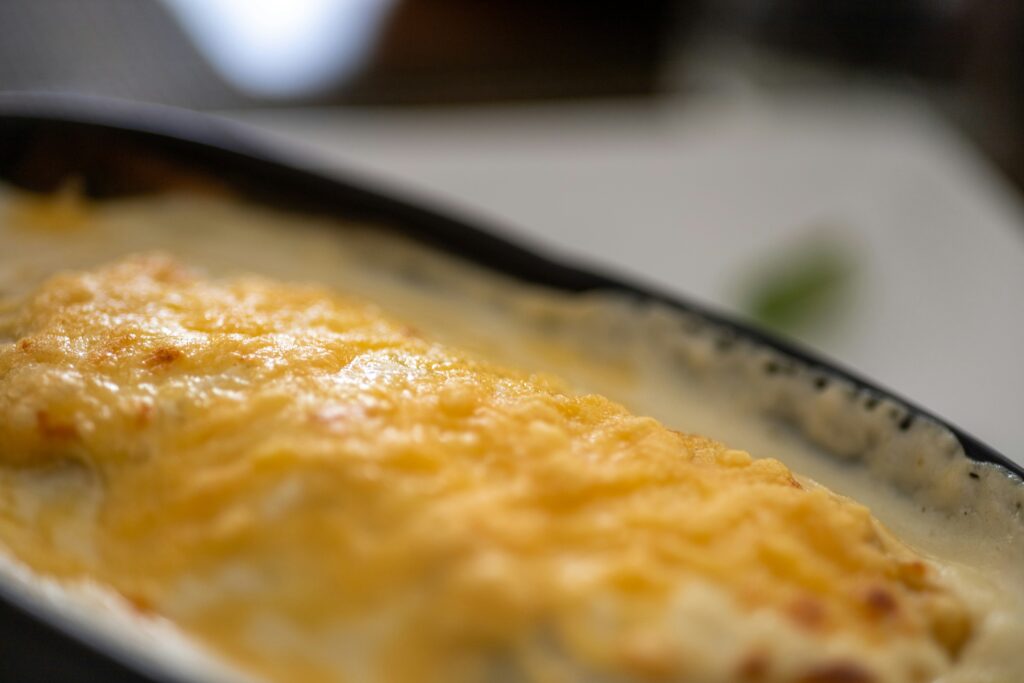
Dinner Is Sorted
Serve the enchiladas with a crisp green salad, sliced avocado or a dollop of sour cream if you have some in the fridge. Then do yourself a favour. Put the phones away. Switch off the television. Sit around the table and actually talk to each other for half an hour. It’s probably not going to happen, but still…
Don’t Forget Dessert
You’ve earned it.
Go straight for the ice cream. Warm a couple of chocolate cookies if you’re feeling indulgent. If the kids are already in bed, pour yourself a small Amaretto, an espresso or another favourite after-dinner treat and enjoy the fact that you’ve successfully fed the family without anyone complaining, rare these days.
by Craig Jarvis | Jul 26, 2026 | Notes From The Editor, St Francis
One of the strangest things about living in St Francis is how quickly we stop seeing it.
Not the obvious things. We all notice a pumping swell at Seal Point or a pod of dolphins heading east. But the everyday changes are different. They happen so gradually that they become part of the background, until one day you stop and realise the place isn’t quite the same as it was a year ago.
Take the groynes.
They’re either the most talked-about structures in town or the most controversial. Everyone has an opinion, and social media has ensured we’ve heard most of them. Yet I wonder how many people have actually stood there for twenty minutes and watched the work unfold.
The coastline is changing
It isn’t dramatic. There’s no ribbon-cutting moment or overnight transformation. A truck arrives, a massive rock is lifted into place, another follows, then another. Sometimes work slows while larger armour rock is sourced from the quarry. Then it starts again. Day after day, week after week, the coastline is changing almost imperceptibly.
The funny thing about projects like this is that they only attract attention while they’re being built. A few years from now, children will scramble over those rocks, anglers will cast from them, photographers will include them in sunrise pictures, surfers will take the epic waves for granted, and visitors will assume they’ve always been there.
That’s how most good infrastructure works. We only notice it while it’s missing or under construction.
The same applies to plenty of other things around town.
A cup of coffee and an opinion
The walking paths, the harbour, the lighthouse, the bridges and even the rows of coral trees that define so much of St Francis all exist because somebody, somewhere, put in the work long before the rest of us arrived with a cup of coffee and an opinion.
Perhaps that’s why it’s worth occasionally standing still. Not to admire a construction site, but to remind ourselves that places don’t simply stay beautiful by accident. They are constantly changing, usually through the quiet efforts of people we’ll never meet, doing the hard work, finding solutions where they don’t exist.
By next summer, most of us will have forgotten how the groynes were built. We’ll simply enjoy the beaches a lot more. The best work in a town is rarely the work that gets remembered. It’s the work that quietly becomes part of everyday life.
—
Read more:
Meet Our New Editorial Assistant at St Francis Today – She’s The Real Deal
Rain and Panic And Rural Indonesia – Notes From The Editor





Recent Comments