
There were moments in the taxi when I thought he was going to die, here, in a taxi on a nondescript road in rural Indonesia.
The rain hammered against the windscreen as we raced through rural Indonesia on the island of Sumbawa towards the nearest hospital. Scooters appeared from nowhere. Cows wandered across the road. The driver overtook lumbering cattle trucks on blind corners. Every minute felt important.
In the back seat, a badly injured surfer drifted in and out of awareness while his wife held him upright and spoke to him constantly.
Earlier that afternoon, the day had started perfectly.
The waves were firing. Surfers filled the lineup. Then suddenly there was shouting in the channel.
Trouble In The Channel
A surfer had suffered a heavy blow to the head and spent a significant amount of time underwater before being rescued and brought to shore.
When he arrived on the beach he was conscious, but only just.
He seemed confused. He struggled to answer simple questions. Most concerning of all, he repeatedly complained that he could not breathe properly.
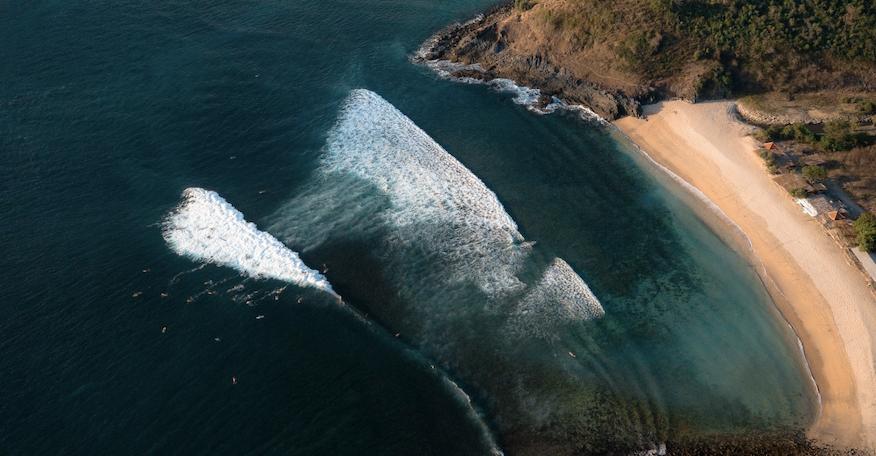
As often happens in remote places, plenty of people wanted to help. Advice arrived from every direction. Everyone meant well. Very few people knew exactly what to do.
The priority seemed obvious.
Keep him calm.
Help him breathe.
Get him to a hospital.
Eventually, the transport arrived.
It took several of us to carry him into the vehicle. His wife climbed in beside him. I climbed in as well with these two strangers, for support.
Nobody else seemed particularly enthusiastic about an hour-long taxi ride through rural Sumbawa to the very rudimentary RSUD Dompu (Rumah Sakit Umum Daerah Dompu), the public hospital serving the Dompu region of Sumbawa.
One Long Hour
The next hour felt considerably longer than sixty minutes.
We spoke to him the entire way, and we encouraged him. We reassured him, and we counted down the kilometres, asking simple questions to keep his mind working.
Whenever he replied, everybody relaxed slightly.
Whenever he fell silent, the anxiety returned.
Eventually, we arrived.
The hospital was crowded, chaotic and operating under pressure. Nevertheless, doctors and nurses immediately got to work.
Tests followed.
Treatment followed.
Then the seriousness of the situation became clear.
Blood Oxygen Saturation
Doctors discovered a significant head wound. They found fluid in his lungs. Most alarming of all, his blood oxygen saturation had fallen to around 67 per cent, a figure frighteningly low by any standard.
For a while, nobody offered predictions.
Fortunately, the oxygen levels slowly climbed. His condition stabilised. The immediate danger passed.
By the following day, he was able to stand. Soon afterwards, he was walking like Robocop.
The surfer recovered.
His wife got her husband back.
The doctors did their job.
After all the stress, uncertainty, panic, tropical downpours, overloaded cattle trucks, a serious head injury, oxygen levels of 67 percent and an hour-long race to the hospital, I learned one thing.
A developing rural corner of an Indonesian island, populated by farmers and fishermen, crossed daily by overloaded cattle trucks, hammered by tropical rain, floods and landslides, and corruption, still has better roads than St Francis Bay.
the editor
—
Read more: Rip Curl Vic Bay Surf Pro Adds New Prizes And Partner Activations



Recent Comments