
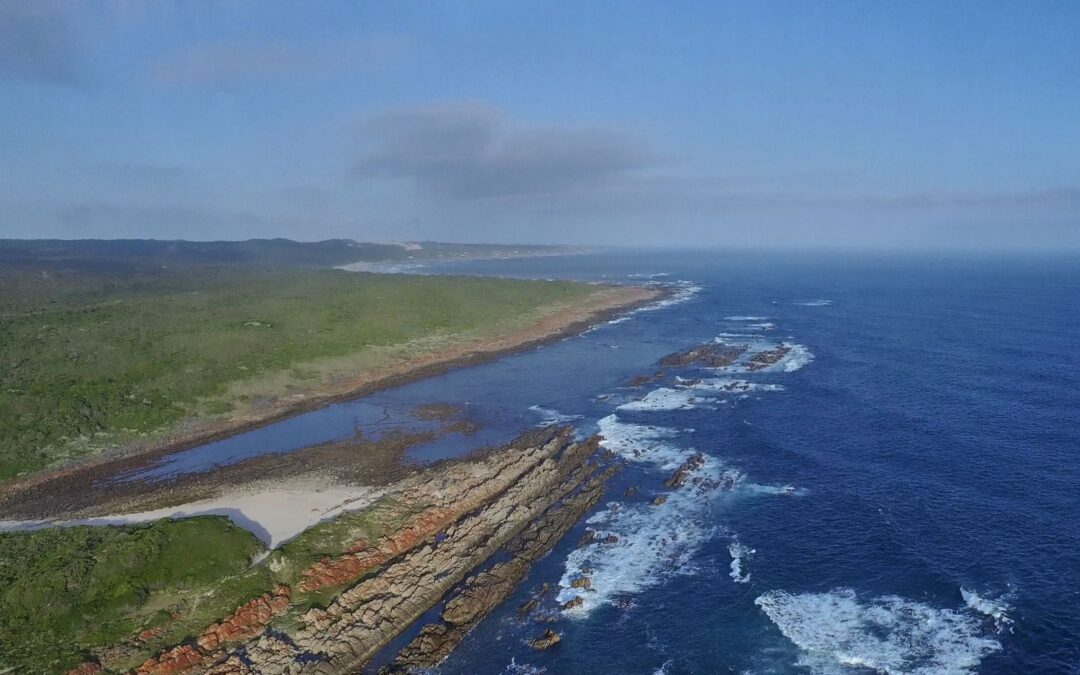
There has been an important development in the proposed 5 200 MW nuclear power project at Thyspunt.
The Department of Forestry, Fisheries and the Environment (DFFE) has accepted Eskom’s Final Scoping Report, which means that the application can now move into the full Environmental Impact Assessment (EIA) phase.
That sounds significant, and it is, however, it is equally important to understand what it does not mean.
Following questions raised about the acceptance, DFFE has specifically clarified that it does not constitute “approval of the proposed project or predetermine the outcome.” A decision on whether Environmental Authorisation should ultimately be granted will only be made after the Environmental Impact Assessment Report and supporting information have been submitted and considered.
In simple terms: the project has been allowed to move to the next stage. It has not been approved.
The Relevance for St Francis Bay
It is worth reminding ourselves just how local this issue is.
St Francis Bay lies within a 12 km radius of the proposed Thyspunt site. This is not a development happening somewhere far removed from our community. The EIA will need to consider not only the proposed nuclear power station itself, but also the infrastructure and activities that would be required to construct and operate a project of this scale.
These include roads and transport, transmission infrastructure, construction facilities, worker accommodation, cooling systems, desalination and water infrastructure, wastewater treatment, marine intake and outfall structures, spoil disposal and spent fuel storage. DFFE has specifically required Eskom to assess the reasonable and feasible alternatives for this associated infrastructure as part of the EIA.
The potential effects therefore extend well beyond the footprint of the power station itself.
Full story on the Kromme Enviro-Trust website



Humansdorp is 17 kilometers from Thyspunt. Are we supposed to believe that only people in a 12km radius will be affected? The difference is only 5km, which is also the distance between St Francis Bay and Cape St Francis. Not very far!! With our prevailing south westerly wind that is a very short distance to cover should an accident occur. I do not understand why Humansdorp is not involved in this discussion. Inclusion zone was very conveniently set at 16km. A joke actually. Thousands upon thousands of people in Humansdorp. Not to mention schools and hospitals etc. They would be far from safe. Never mind how will the power station be protected against our regular raging wildfires?