
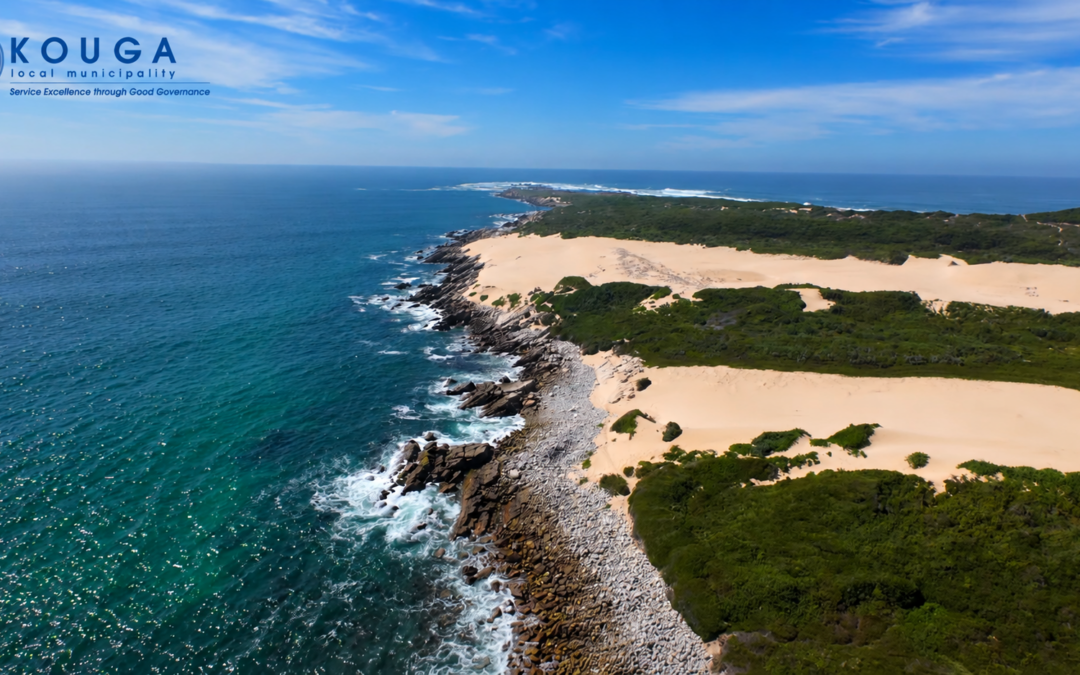
Kouga Local Municipality has secured a conservation agreement covering approximately 235 hectares of state-owned land near Cape St Francis. The agreement follows a community-driven process that began in 2015.
Minister of Public Works and Infrastructure Dean Macpherson announced the agreement on Friday, 16 October 2026. It gives the municipality responsibility for managing conservation land at Ongegunde Vryheid.
According to Macpherson, this is the department’s largest management lease. It also creates opportunities to protect the coastal landscape and support carefully managed nature-based tourism.
“This is a milestone for conservation, for the Kouga community and for the responsible management of public assets,” he said.
Macpherson explained that responsible management means assessing each property’s environmental, social and economic value.
“At Ongegunde Vryheid, that right use is conservation,” he said.
A conservation agreement more than a decade in the making
Kouga Municipality first approached the department about the land in 2015. Over the following years, discussions considered different portions for housing, municipal infrastructure and conservation.
However, environmental assessments identified significant areas as too sensitive for development. A solution therefore needed to protect these areas while allowing separate housing plans to proceed.
In October 2025, Macpherson directed the department to find a definitive solution. Officials then developed an approach separating the conservation land from the portion earmarked for future housing.
Following legal review and the necessary approvals, Macpherson granted final approval on 29 September 2026.
Under the agreement, national government will retain ownership. The arrangement provides for formal protection as a nature reserve under the National Environmental Management: Protected Areas Act.
Meanwhile, Kouga Municipality will serve as the management authority. FOSTER will play an operational role through a formal co-management arrangement.
This approach allows conservation work to move forward alongside the separate housing process.
Protecting the Cape St Francis coastal landscape
The property contains sensitive coastal habitats, wetlands and vegetation that support the region’s biodiversity.
Among its key features is St Francis Strandveld. This critically endangered vegetation type occurs only in the Eastern Cape and has limited protection elsewhere.
In addition, the land supports plant species of special conservation concern, including species threatened with extinction.
Coastal dunes help regulate sand movement and maintain beach stability. Wetlands also manage water flows and provide valuable natural services.
The landscape provides habitat for Cape grysbok, bushbuck, Cape clawless otters and diverse birdlife. Its archaeological heritage also connects the area to people who lived there thousands of years ago.
“These are assets that cannot simply be replaced once they are lost,” Macpherson said.
Formal protection would strengthen the conservation network around Cape St Francis. This includes the Cape St Francis Nature Reserve, Irma Booysen Flora Reserve and Seal Point Reserve.
Together, connected conservation areas help protect wildlife habitats and support the long-term health of the coastal environment.
Building on Irma Booysen’s conservation legacy
The agreement also builds on a longstanding local conservation effort.
Irma Booysen’s family owned the original Ongegunde Vryheid farm. During its development, she advocated for setting aside land to protect the fragile coastal fynbos.
The resulting Irma Booysen Flora Reserve now offers walking trails and opportunities to explore the area’s botanical diversity.
The additional conservation land creates an opportunity to extend that legacy. It also broadens the coastal landscape available for protection for future generations.
Supporting nature-based tourism
Kouga Executive Mayor Hattingh Bornman welcomed the agreement and the opportunities it creates for the area.
“The natural beauty makes Kouga a nice place to live, but the people make it special,” he said.
Bornman highlighted the connection between conservation and tourism. Protecting the landscape helps preserve the natural attractions that draw residents and visitors to Kouga.
With suitable planning, carefully managed public access could complement existing attractions. It could also support local tourism businesses and related economic activity.
However, visitor activities will need to suit the land’s environmental sensitivity. Any future facilities will depend on planning and the conservation management framework.
Partnerships will therefore play an essential role. The municipality, conservation organisations, tourism businesses and community representatives will help identify suitable opportunities and promote the area responsibly.
Macpherson also highlighted the wider public benefit of protecting government land.
“The value of a government asset is not measured only by what can be built on it or how much revenue it can generate,” he said.
For Cape St Francis, that value includes protecting biodiversity and maintaining the landscape that supports its tourism appeal.
The next steps for conservation
The next phase will focus on cooperation, oversight and implementation of the protected area’s management plan.
Macpherson acknowledged Kouga Municipality, FOSTER and the wider conservation community for their commitment. He also thanked Director-General Sifiso Mdakane and his team for helping resolve the longstanding matter.
For community members who supported the initiative from 2015, the announcement marks more than a decade of persistence.
That local effort has now developed into a partnership between national government, local government and conservation stakeholders. Its lasting value will depend on protecting the land’s natural habitats and heritage for future generations.


Recent Comments