
by SFT | Jul 27, 2026 | St Francis
Kouga Local Municipality celebrated World Conservation Day by giving local learners an opportunity to experience environmental work first-hand at the Kabeljous Nature Reserve. The Environmental Education and Awareness Programme introduced young people to conservation careers while highlighting the importance of protecting the region’s natural resources.
Learners Explore Conservation in Action
The programme welcomed 20 Grade 10 and Grade 11 learners from Jeffreys Bay Comprehensive School. They spent the day job-shadowing environmental professionals and learning about the many roles involved in protecting the environment.
World Conservation Day, observed each year on 28 July, promotes the protection of biodiversity, sustainable living and responsible use of natural resources. It also encourages communities to take practical steps that help preserve the planet for future generations.
The initiative was presented through a partnership between Kouga Local Municipality, Greater Kromme Stewardship and Roaming Lions Adventures. Together, the organisations created a practical learning experience designed to build environmental awareness while introducing learners to career opportunities in conservation.
Practical Lessons Beyond the Classroom
The programme included interactive presentations covering recreational water quality monitoring, domestic drinking water quality testing, nature conservation and the fascinating geology of the Kouga region.
These sessions showed learners how environmental professionals monitor and protect local ecosystems every day. Rather than simply discussing conservation, the programme demonstrated how scientific knowledge is applied in the field.
The learners also gained a better understanding of the challenges involved in managing natural resources while maintaining healthy communities.
Kabeljous Nature Reserve Provides the Perfect Classroom
One of the day’s highlights was a guided walk through the Kabeljous Nature Reserve. Surrounded by indigenous vegetation and diverse wildlife, the learners experienced the area’s natural beauty while discovering why these ecosystems deserve careful protection.
The reserve provided an ideal outdoor classroom where lessons about biodiversity became real through direct observation and hands-on learning.

Investing in the Future
Environmental education plays an important role in developing future conservation leaders. Programmes such as this help young people appreciate the value of protecting natural resources while encouraging responsible environmental stewardship.
By working together with local partners, Kouga Local Municipality continues to invest in educational opportunities that strengthen environmental awareness across the community. The programme not only celebrated World Conservation Day but also inspired a new generation to play an active role in protecting the natural heritage of the Kouga region.
by SFT | Jul 27, 2026 | St Francis
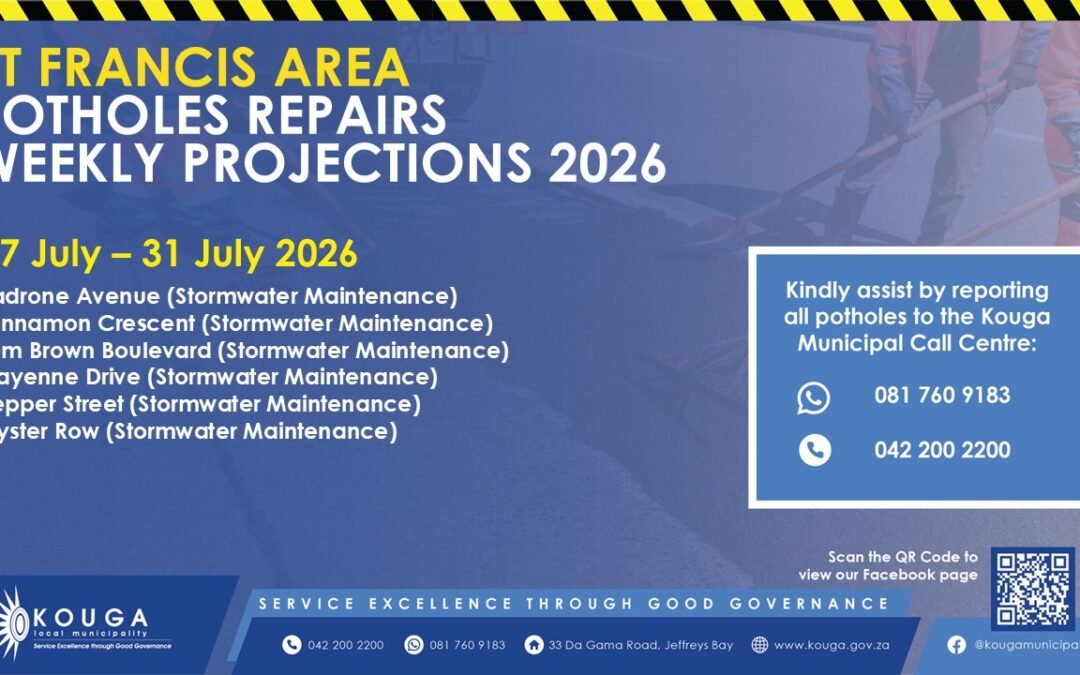
Weekly Road Works Update For Greater St Francis
Kouga Local Municipality has released its latest weekly road works schedule for 27 July to 31 July 2026, with road resurfacing, pothole repairs and stormwater maintenance planned across St Francis Bay, Cape St Francis and Oyster Bay.
The programme includes asphalt overlays, slurry sealing, road pre-treatment and maintenance work aimed at improving road surfaces and preparing streets for future upgrades.
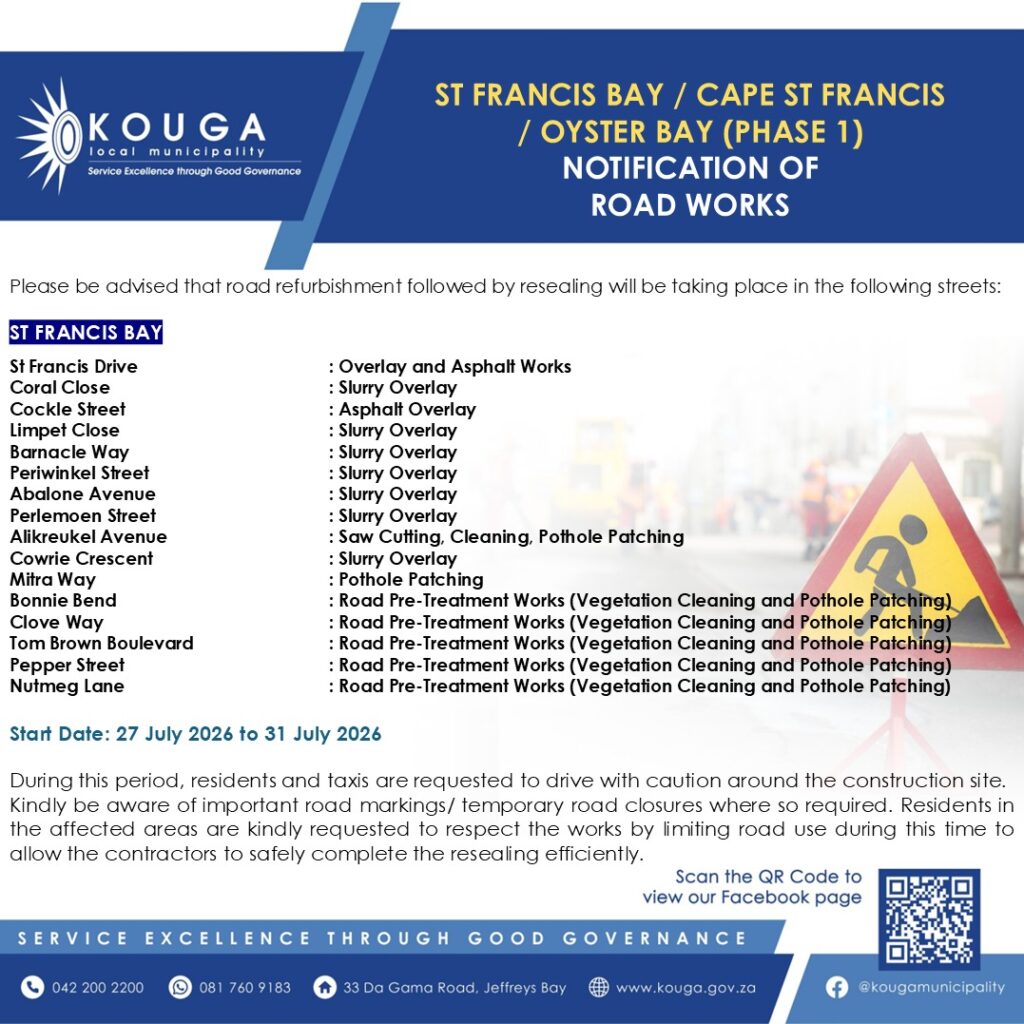
Road Refurbishment Schedule
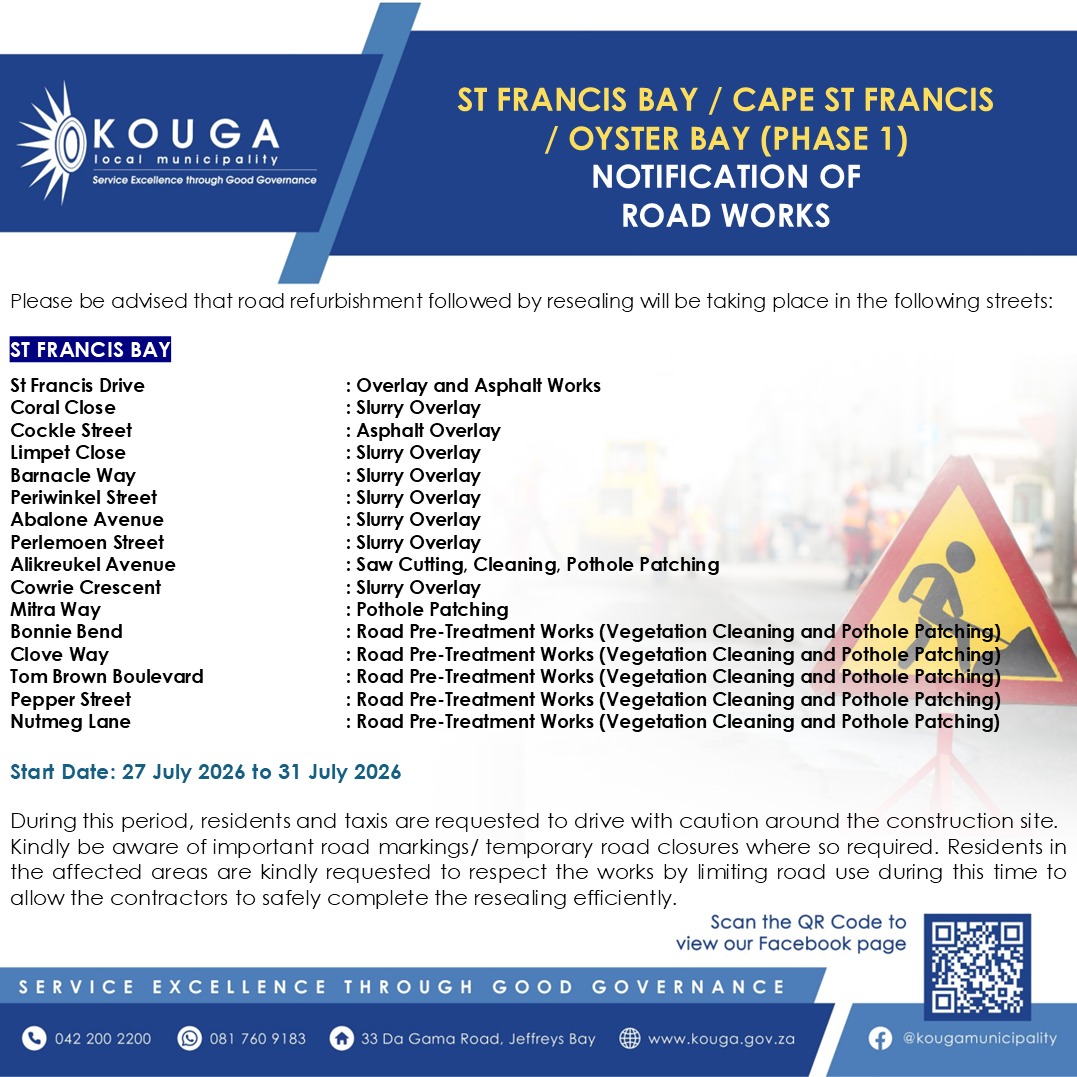
St Francis Drive is scheduled for overlay and asphalt works, while Cockle Street will receive an asphalt overlay.
Slurry overlay work is planned for Coral Close, Limpet Close, Barnacle Way, Periwinkel Street, Abalone Avenue, Perlemoen Street and Cowrie Crescent.
Alikreukel Avenue will undergo saw cutting, cleaning and pothole patching, while Mitra Way is scheduled for pothole repairs.
Road pre-treatment work, including vegetation clearing and pothole patching, will take place on Bonnie Bend, Clove Way, Tom Brown Boulevard, Pepper Street and Nutmeg Lane.
Stormwater Maintenance
Stormwater maintenance is also scheduled for several roads during the week. The affected streets are Padrone Avenue, Cinnamon Crescent, Tom Brown Boulevard, Cayenne Drive, Pepper Street and Oyster Row.
Please Drive With Care
Residents and taxi operators are asked to drive carefully near work areas throughout the week.
Temporary road closures and road markings may be introduced where required. Residents in affected streets are encouraged to limit vehicle movements where possible to allow contractors to complete the work safely and efficiently.
Motorists can also help by reporting potholes to the Kouga Municipal Call Centre on 042 200 2200 or 081 760 9183.

by SFT | Jul 26, 2026 | St Francis, Surf Editorial
News Release
27 July 2026
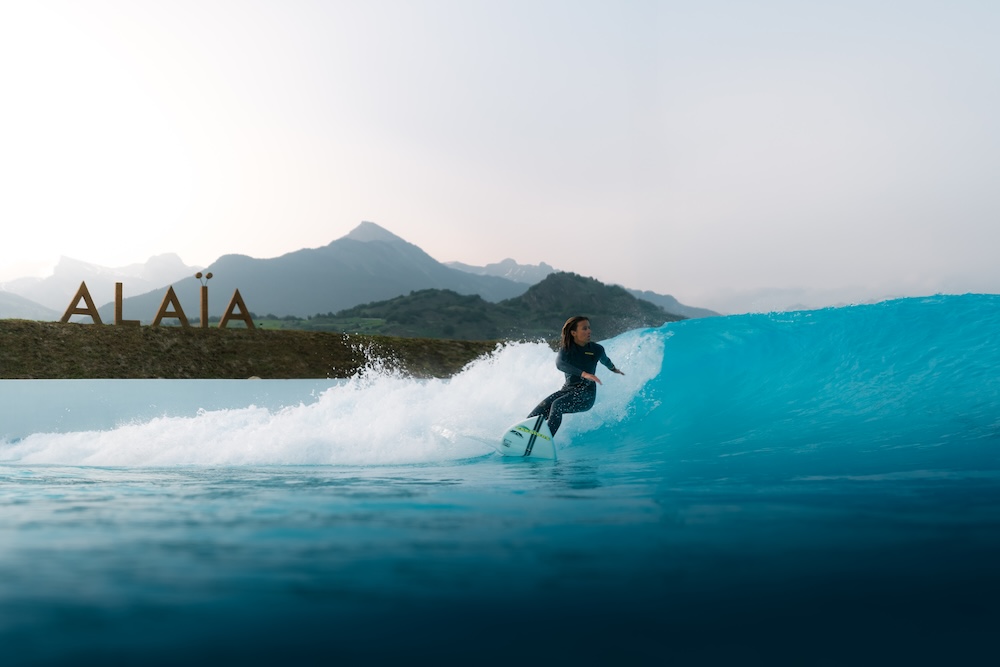
When Alaïa Bay opened beneath the Swiss Alps in 2021, it challenged long-held perceptions of where world-class surfing could exist. Five years later, the iconic Swiss wavepool is hosting the first Wavepool Surf Tour event, bringing together surfers from around the world for the launch of a new international competition.
The Wavepool Surf Tour could only begin at a venue that reflects how far wavepool surfing has evolved. Set beneath the Swiss Alps, Alaïa Bay has established itself as one of the best-known destinations of the wavepool era.
Since opening in 2021, Alaïa Bay has welcomed everyone from first-time surfers to elite professionals. Built using Wavegarden Cove technology, it has become a venue for coaching, high-performance training, and international events, demonstrating the growing role wavepools now play in surfing.
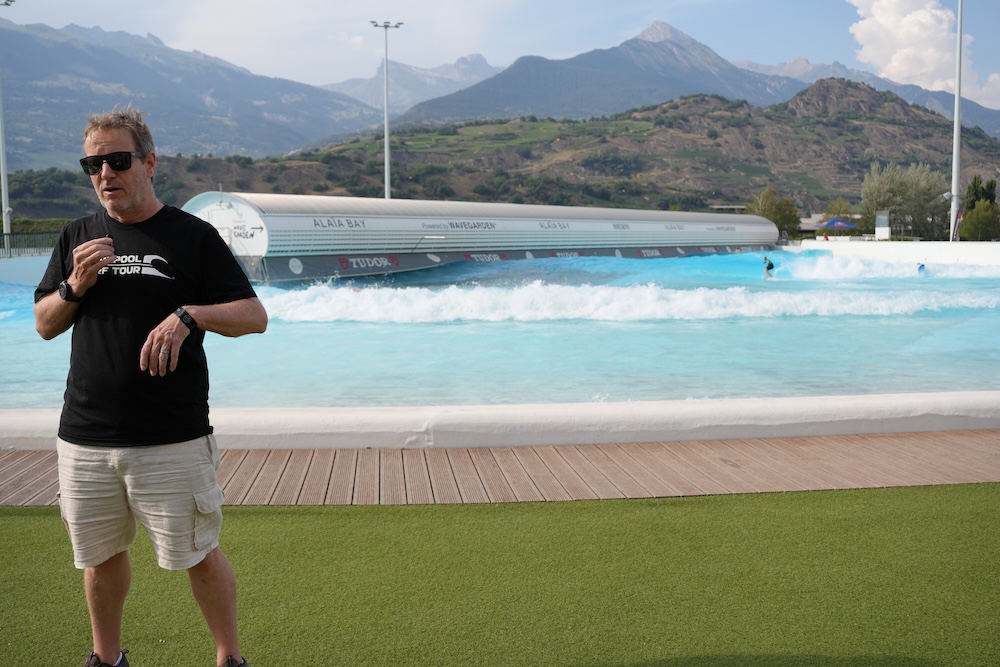
Alaïa Bay, where the Wavepool Surf Tour starts.
Those qualities make Alaïa Bay the natural home of the Alaïa Surf Challenge, the first event on the Wavepool Surf Tour calendar. From 1 August, surfers will submit their best rides for judging through Surf Eye Technology, establishing the first rankings of a competition designed specifically for wavepools.
Launching the tour at Alaïa Bay also reflects the international reach of surfing today. A purpose-built surfing venue in the heart of Switzerland would once have seemed improbable. Today, it stands as one of the sport’s most distinctive destinations, illustrating how surfing has expanded beyond traditional coastlines while remaining firmly rooted in performance and community.
Wavepool Surf Tour CEO Mark Fessler at Alaïa Bay.
For decades, competitive surfing has been built around the same contest model. As the Wavepool Surf Tour’s first season gets underway at Alaïa Bay, a new competitive format is taking shape, one shaped by wavepool technology and built around accessibility, inclusivity, and performance.
–
For more information, visit:
www.wavepoolsurftour.com
Alaïa Bay
https://alaia.ch/bay/
Partnership & Sponsorship Enquiries
Mark Fessler
Founder
mark@wavepoolsurftour.com
Athlete & Competition Enquiries
Clyde Martin
Co-Founder
clyde@wavepoolsurftour.com
Media Enquiries
Craig Jarvis
Head of Marketing & Communications
craig@truthcollective.co.za
FAQ’s
www.wavepoolsurftour.com/faq
About The Wavepool Surf Tour
The Wavepool Surf Tour connects surfers from wavepools around the world through a shared online competitive format built specifically for wavepool surfing. Competitors participate throughout the season from their local wavepools, with the leading performers advancing to the Wavepool World Finals, the first live event of the season.

by SFT | Jul 26, 2026 | Financial Planning, St Francis
Most of what I write about lives in the world of retirement and investing. Today I want to talk about something we tend to skip over entirely — protecting our children’s income the moment they start earning it.
When I began my career, most of us worked for corporates with a pension or provident fund, and tucked inside that fund was usually life cover and disability benefit, often without us even asking for it. Today, that safety net has largely disappeared. Smaller businesses in particular rarely offer it, which means the responsibility now sits squarely with the individual — often a 22 or 25-year-old who has never been asked to think about it.

Of all the risk benefits available, I believe income protection is the most important by far. Here’s why: you can lose your ability to earn through illness or injury and still live a long, full life. That’s not a tragedy in the dramatic sense — it’s simply a long life without an income. And when that happens, who carries the cost? The state? A spouse? Your own children one day? None of us want to be on either end of that arrangement.
Let’s look at the numbers. A 25-year-old earning R30,000 a month, with income growing at 6.5% a year until retirement at 65, will earn roughly R63.2 million over their working life. That’s the asset we’re talking about protecting. To insure it costs in the region of R300 a month — about R3,600 a year.

And the likelihood of needing it is far higher than most young people assume. For a healthy, non-smoking 25-year-old male, the risk of being unable to work for more than 14 days due to illness or injury before age 70 sits at around 92%. Permanent disability risk is closer to 15%, and critical illness around 37%.
These aren’t figures meant to alarm — they’re simply the reality our children are stepping into without the structures we once had. This is a conversation worth having early, gently, and often. Not because insurance is exciting, but because it buys the one thing none of us can otherwise guarantee: the ability to keep providing for the people we love, no matter what life throws at us.
—
Dirk Groeneveld, Certified Financial Planner
t. 083 261 9287
e. dirk@clientcare.co.za
An Investment Portfolio Without a Plan is Meaningless
Five Dangers Of DIY Financial Planning
Finding The Delicate Balance In Giving
Dead Money, Living Money
—

Disclaimer:
This article is for information purposes only and does not constitute financial advice in any way or form. It is important to consult a financial planner to receive financial advice before acting on any information contained herein. Client Care and PWM and its directors, officers, and employees shall not be responsible and disclaim all liability for any loss, damage (whether direct, indirect, special or consequential) and/or expense of any nature whatsoever, which may be suffered as a result of, or which may be attributable, directly or indirectly, to the use of, or reliance upon any information contained in this article.

by Craig Jarvis | Jul 26, 2026 | Notes From The Editor, St Francis
One of the strangest things about living in St Francis is how quickly we stop seeing it.
Not the obvious things. We all notice a pumping swell at Seal Point or a pod of dolphins heading east. But the everyday changes are different. They happen so gradually that they become part of the background, until one day you stop and realise the place isn’t quite the same as it was a year ago.
Take the groynes.
They’re either the most talked-about structures in town or the most controversial. Everyone has an opinion, and social media has ensured we’ve heard most of them. Yet I wonder how many people have actually stood there for twenty minutes and watched the work unfold.
The coastline is changing
It isn’t dramatic. There’s no ribbon-cutting moment or overnight transformation. A truck arrives, a massive rock is lifted into place, another follows, then another. Sometimes work slows while larger armour rock is sourced from the quarry. Then it starts again. Day after day, week after week, the coastline is changing almost imperceptibly.
The funny thing about projects like this is that they only attract attention while they’re being built. A few years from now, children will scramble over those rocks, anglers will cast from them, photographers will include them in sunrise pictures, surfers will take the epic waves for granted, and visitors will assume they’ve always been there.
That’s how most good infrastructure works. We only notice it while it’s missing or under construction.
The same applies to plenty of other things around town.
A cup of coffee and an opinion
The walking paths, the harbour, the lighthouse, the bridges and even the rows of coral trees that define so much of St Francis all exist because somebody, somewhere, put in the work long before the rest of us arrived with a cup of coffee and an opinion.
Perhaps that’s why it’s worth occasionally standing still. Not to admire a construction site, but to remind ourselves that places don’t simply stay beautiful by accident. They are constantly changing, usually through the quiet efforts of people we’ll never meet, doing the hard work, finding solutions where they don’t exist.
By next summer, most of us will have forgotten how the groynes were built. We’ll simply enjoy the beaches a lot more. The best work in a town is rarely the work that gets remembered. It’s the work that quietly becomes part of everyday life.
—
Read more:
Meet Our New Editorial Assistant at St Francis Today – She’s The Real Deal
Rain and Panic And Rural Indonesia – Notes From The Editor



Recent Comments