by SFT | Jun 17, 2026 | St Francis, Travel News
There comes a point every St Francis winter when you wake up, look at another week of wind and cold water and think: later for this jol. This piece explains how to escape, even for just a few days.
The nice thing about living at the bottom of Africa is that escaping winter does not require a military operation. A few hours on an aeroplane can replace beanies, jerseys and weather forecasts with warm water, room service and the sort of climate that reminds you why humans invented holidays in the first place. Better still, some of the most interesting destinations sit right on our doorstep, scattered across the Indian Ocean like convenient excuses to avoid another cold front.
Mauritius Knows What It Is
Some destinations spend decades reinventing themselves. Mauritius has never felt the need.
The island understands its role perfectly. People arrive tired, slightly overworked and carrying more stress than they realise. A few days later they find themselves eating long lunches, reading books they brought six months ago and wondering why they don’t travel more often. The beaches are excellent, the service is generally polished and the entire operation runs with the quiet confidence of a place that has been hosting visitors for a very long time.
That is not to say Mauritius lacks substance. Drive inland and the scenery changes quickly. Mountain peaks rise unexpectedly from the landscape, roads wind through sugar cane fields and small villages offer a glimpse of life beyond the resorts. Still, there is no shame in spending most of the trip horizontal beside a pool. Mauritius has accommodated that approach for generations.
Bali Has Grown Up
Many South Africans still talk about Bali as though it were a backpacker destination populated entirely by gap-year students and Australians on scooters.
That Bali still exists. However, another version has emerged alongside it. Over the last decade the island has become one of the most sophisticated tourism destinations in Asia. Exceptional villas, private chefs, wellness retreats and carefully curated travel experiences have become part of everyday life. More importantly, much of it remains surprisingly affordable when compared to equivalent experiences elsewhere.
There is also a practical consideration. Airlines have adjusted routes and pricing repeatedly over the past year and travellers willing to keep an eye on fares have occasionally found remarkable value through Dubai. Those opportunities come and go, but they are worth paying attention to.

Reunion Refuses To Behave Like A Typical Island
Reunion is one of the most overlooked destinations within easy reach of South Africa.
Part of the reason may be that it refuses to fit neatly into any category. It is tropical, but also mountainous. It is French, but unmistakably Indian Ocean. One morning might begin beside the sea. By afternoon you could be standing on the rim of a volcano staring into a landscape that looks as though it belongs on another planet.
Reunion may be the only tropical island where sitting beside a heated pool all afternoon can be legitimately classified as sensible risk management. The island’s sharks are famous enough that many visitors happily exchange ocean swims for French lunches, volcanic scenery, excellent wine and the sort of comfortable resort chair that encourages long periods of reflection. Or non-reflection, depending on what you’ve packed for the trip.
It is also French, which means nudism is the norm and people are often naked on beaches and around pools, but nobody honestly cares one little bit about someone’s extra skin in the sun.
Zanzibar Lives By Its Own Rules
Some places seem permanently in a hurry. Zanzibar is not one of them.
The island moves at a pace that feels increasingly rare. Stone Town remains one of the most fascinating urban environments on the East African coast, with narrow alleyways, carved doors and enough history to keep curious travellers occupied for days. Beyond the town, long beaches and warm water create an environment that encourages people to stop checking their phones every ten minutes.
After a few days in Zanzibar, the urgency of normal life starts to look slightly ridiculous. Meetings, deadlines and inboxes continue to exist, but they feel very far away.

Mozambique Rewards Effort
Mozambique asks a little more of travellers than some destinations. In return, it often gives more back.
Parts of the coastline still feel wonderfully untouched. Roads are not always perfect. Plans occasionally change. Things sometimes happen on Mozambique time. Yet those small inconveniences are also part of the appeal. The country retains a sense of authenticity that has disappeared from many heavily developed tourism markets.
For South Africans, Mozambique offers something increasingly valuable: space. Space on the beach. Space in the water. Space to think. In a world where almost everything feels crowded, that alone can justify the airfare.
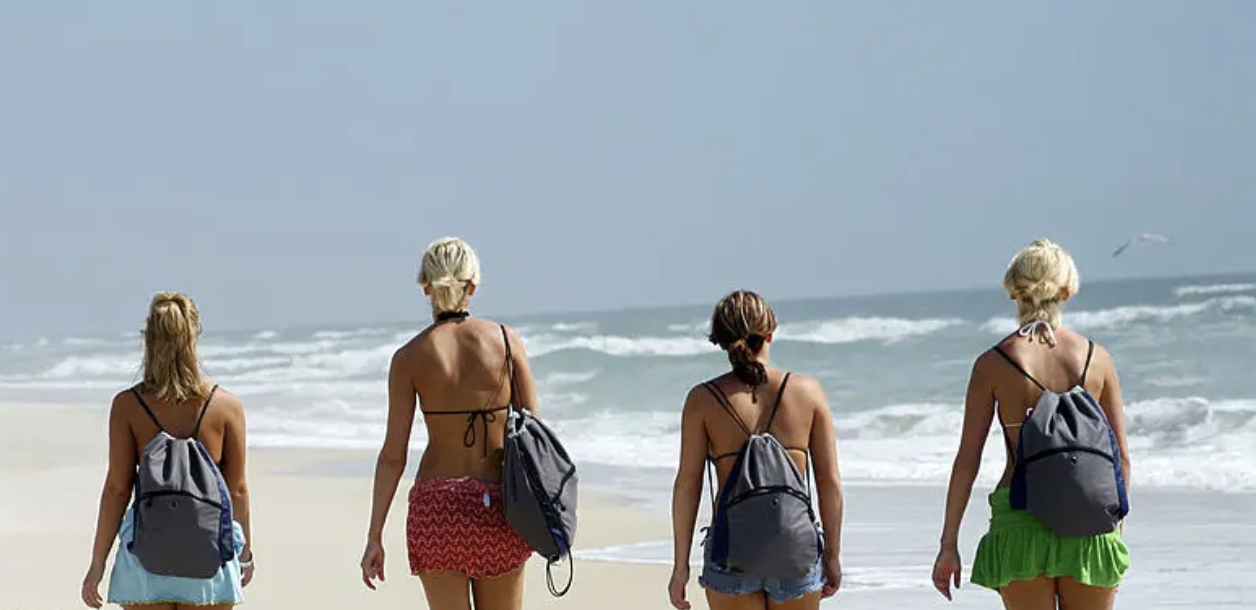
How To Escape
One of the great myths of travel is that you need weeks away to justify leaving.
Most people don’t.
Five days can be enough to reset the clock. A few mornings without alarms, several afternoons without obligations and a handful of dinners that do not involve discussing work can work wonders. The trick is leaving before another month disappears while you are still talking about doing it.
St Francis will still be here when you get back.
by SFT | Jun 11, 2026 | St Francis, Travel News
© @gumboot.camera
The Garden Route is famous for its dramatic coastline, indigenous forests and world-class holiday towns. However, beyond the well-known attractions lies a collection of hidden gems that reward those willing to slow down and explore.
While destinations such as Knysna and Plettenberg Bay often grab the headlines, smaller places continue to offer some of the region’s most memorable experiences.
Victoria Bay: Small Cove, Big Character
Tucked between George and Wilderness, Victoria Bay remains one of the Garden Route’s best-kept secrets.
Known locally as Vic Bay, this small coastal village centres around a beautiful bay and a famous right-hand point break. Surfers have long regarded the wave as one of South Africa’s most consistent and user-friendly points.
However, you do not need a surfboard to enjoy Victoria Bay.
The sheltered beach is ideal for families, while the surrounding cliffs provide spectacular ocean views. In addition, the compact nature of the village creates a relaxed atmosphere that feels far removed from modern city life.
As a result, visitors often arrive for an hour and stay for the entire day.
Herolds Bay Offers Coastal Beauty

Herold’s Bay © Kody McGregor
Just a short drive from George Airport, Herolds Bay combines convenience with natural beauty.
Although many travellers pass nearby, relatively few take the time to visit this charming seaside village.
The beach sits between rugged cliffs and offers excellent swimming conditions during summer. Meanwhile, the elevated viewpoints provide some of the most impressive coastal panoramas on the Garden Route.
Golf enthusiasts also know the area well. The nearby cliffs overlook sections of the renowned Fancourt golf estate, creating a striking contrast between ocean and fairway.
Furthermore, Herolds Bay’s quieter pace makes it an ideal escape during peak holiday periods.
Discover The Road Less Travelled
The real appeal of the Garden Route lies in its smaller destinations.
Places such as Victoria Bay and Herolds Bay remind visitors that memorable travel experiences do not always require large crowds or famous landmarks. Instead, they offer authenticity, natural beauty and a chance to reconnect with the outdoors.
Whether you are searching for a secluded beach, a scenic viewpoint or a peaceful afternoon by the sea, these hidden gems deliver in abundance.
So, the next time you travel through the Garden Route, consider taking a detour. You may discover that the region’s greatest treasures are the places that rarely appear on the front cover of a brochure.
Sometimes, the best parts of the Garden Route are hiding in plain sight.
by SFT | Jun 7, 2026 | Notes From The Editor, St Francis, Surf Editorial, Travel News
There were moments in the taxi when I thought he was going to die, here, in a taxi on a nondescript road in rural Indonesia.
The rain hammered against the windscreen as we raced through rural Indonesia on the island of Sumbawa towards the nearest hospital. Scooters appeared from nowhere. Cows wandered across the road. The driver overtook lumbering cattle trucks on blind corners. Every minute felt important.
In the back seat, a badly injured surfer drifted in and out of awareness while his wife held him upright and spoke to him constantly.
Earlier that afternoon, the day had started perfectly.
The waves were firing. Surfers filled the lineup. Then suddenly there was shouting in the channel.
Trouble In The Channel
A surfer had suffered a heavy blow to the head and spent a significant amount of time underwater before being rescued and brought to shore.
When he arrived on the beach he was conscious, but only just.
He seemed confused. He struggled to answer simple questions. Most concerning of all, he repeatedly complained that he could not breathe properly.
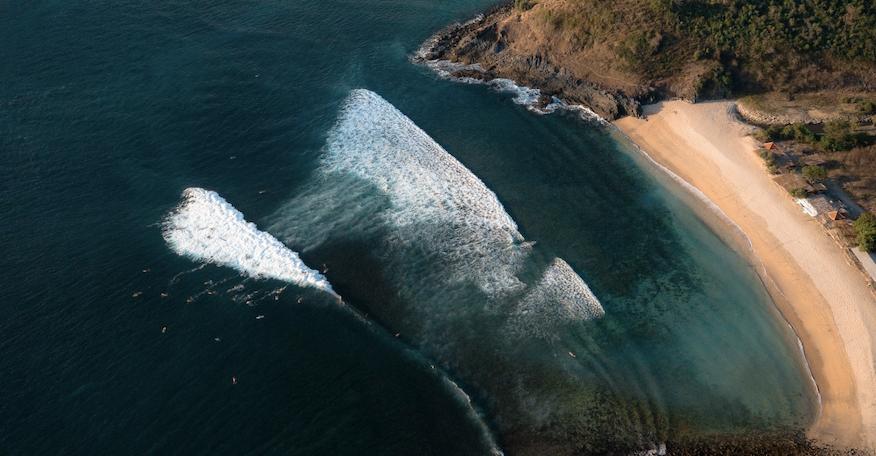
As often happens in remote places, plenty of people wanted to help. Advice arrived from every direction. Everyone meant well. Very few people knew exactly what to do.
The priority seemed obvious.
Keep him calm.
Help him breathe.
Get him to a hospital.
Eventually, the transport arrived.
It took several of us to carry him into the vehicle. His wife climbed in beside him. I climbed in as well with these two strangers, for support.
Nobody else seemed particularly enthusiastic about an hour-long taxi ride through rural Sumbawa to the very rudimentary RSUD Dompu (Rumah Sakit Umum Daerah Dompu), the public hospital serving the Dompu region of Sumbawa.
One Long Hour
The next hour felt considerably longer than sixty minutes.
We spoke to him the entire way, and we encouraged him. We reassured him, and we counted down the kilometres, asking simple questions to keep his mind working.
Whenever he replied, everybody relaxed slightly.
Whenever he fell silent, the anxiety returned.
Eventually, we arrived.
The hospital was crowded, chaotic and operating under pressure. Nevertheless, doctors and nurses immediately got to work.
Tests followed.
Treatment followed.
Then the seriousness of the situation became clear.
Blood Oxygen Saturation
Doctors discovered a significant head wound. They found fluid in his lungs. Most alarming of all, his blood oxygen saturation had fallen to around 67 per cent, a figure frighteningly low by any standard.
For a while, nobody offered predictions.
Fortunately, the oxygen levels slowly climbed. His condition stabilised. The immediate danger passed.
By the following day, he was able to stand. Soon afterwards, he was walking like Robocop.
The surfer recovered.
His wife got her husband back.
The doctors did their job.
After all the stress, uncertainty, panic, tropical downpours, overloaded cattle trucks, a serious head injury, oxygen levels of 67 percent and an hour-long race to the hospital, I learned one thing.
A developing rural corner of an Indonesian island, populated by farmers and fishermen, crossed daily by overloaded cattle trucks, hammered by tropical rain, floods and landslides, and corruption, still has better roads than St Francis Bay.
the editor
—
Read more: Rip Curl Vic Bay Surf Pro Adds New Prizes And Partner Activations
by SFT | May 25, 2026 | St Francis, Travel News
Europe Is Recruiting South Africans With Big Salaries, Free Flights And Rent Incentives
Skilled South Africans are increasingly being targeted by employers in Belgium and Germany as both countries battle growing labour shortages and struggle to fill critical positions.
Companies are offering salary packages that many local professionals would find difficult to ignore, with monthly earnings ranging from around R68,000 to R97,000, alongside relocation support and family incentives.
Belgium currently has one of the highest job vacancy rates in the European Union, with more than 163,000 open positions reported. Nearly three-quarters of employers there say they are struggling to find suitable staff.
Germany faces a similar challenge. The country reportedly has more than one million unfilled jobs and is estimated to need at least 400,000 skilled foreign workers every year to maintain economic stability and support key industries.
The demand spans several sectors, including engineering, construction, healthcare, manufacturing, IT, logistics, technical trades, and infrastructure development.
To attract overseas talent, many major employers are offering extensive relocation packages to South African recruits.
Typical offers currently include:
- Salaries between €3,500 (about R68,000) and €5,000 (about R97,000) per month
- Signing bonuses of around €1,500
- Paid international airfare
- Three months of rent are covered
- Housing allowances in some cases
- Lunch or food allowances
- Visa costs covered by employers
- Family relocation assistance after one year
- Employment support for spouses
Both Belgium and Germany have also simplified aspects of their visa systems in an effort to speed up the recruitment of skilled foreign workers.
For many South Africans weighing up local economic pressure, rising costs, and overseas opportunities, Europe is increasingly becoming part of the conversation.
For the full article and recruitment details,
go here by SFT | May 20, 2026 | St Francis, Travel News
by SFT | May 19, 2026 | St Francis, Travel News
Lakey Peak remains one of Indonesia’s most unique surf destinations, combining world-class waves, raw coastal scenery and a village atmosphere that still feels connected to travelling surf culture rather than polished tourism.
Located in the Hu’u district on the island of Sumbawa, Lakey Peak sits roughly two hours from Dompu and requires commitment to reach. Most surfers travel via Bali, flying into either Bima or Sumbawa Besar before continuing by road through farming villages, mountain passes and long winding coastal stretches. The journey forms part of the experience. By the time surfers arrive at Lakeys, the outside world already feels distant.
The bay itself contains several well-known surf breaks within close proximity. Lakey Peak delivers its famous wedge-shaped peaks directly in front of the village and works across a wide range of tides and swell directions. Lakey Pipe offers heavier, faster waves with hollow sections that attract experienced surfers, while Periscopes and Nungas provide alternative options depending on conditions and crowd levels.
Life in Lakeys runs according to tide charts, wind patterns and surf forecasts. Dawn usually starts with scooters buzzing through the village roads as surfers head toward the checks. Warungs open early for coffee, nasi goreng and banana pancakes while the first offshore winds groom the reefs. By midday the tropical heat settles heavily across the bay and activity slows until the afternoon sessions begin.
The village remains relatively simple compared to many modern surf destinations. Small guesthouses, surf camps and roadside eateries line the beachfront road, with most accommodation offering direct views of the waves. Travelling surfers spend long evenings on balconies overlooking the bay, trading stories while watching the final surfers glide across sunset walls at Lakey Peak.
One of the defining features of Lakeys is the constant movement of international surfers passing through. Australians, Brazilians, South Africans, Europeans and travelling Indonesians all converge on the same stretch of reef, creating a strange but familiar travelling community built around tides, swell charts and shared routines.
The roads around Lakeys are famously chaotic. Scooters dominate the traffic and local driving customs take some adjustment for newcomers. Rear-view mirrors are often removed from scooters, with drivers relying heavily on horns and instinct while navigating the narrow roads. The system somehow works, although it can feel slightly alarming at first.
Despite its remote location, Lakey Peak has maintained its place on the global surf map for decades because the waves remain incredibly consistent. During strong swell periods the bay can produce multiple quality sessions per day, with offshore winds grooming the waves through large parts of the dry season.
What continues to separate Lakeys from many other surf destinations is the atmosphere. The village still feels slightly unpredictable, slightly rough around the edges and deeply connected to surf travel culture. Plans shift quickly, weather changes suddenly and every day develops its own rhythm depending on swell, wind and whoever happens to arrive in town that week.
For travelling surfers, that unpredictability forms part of the appeal. Lakey Peak remains less about luxury and more about immersion. The heat, the scooters, the reef, the warungs, the tropical storms and the long sessions all blend into a destination that stays with people long after they leave Sumbawa.Days and Nights at Lakey Peak




Recent Comments