
by SFT | May 21, 2026 | St Francis
Public Participation Process Remains Open Until 29 May
There is still time to submit objections to the proposed nuclear development at Thyspunt.
The public participation deadline for the Draft Scoping Report (DSR) has officially been extended to:
29 May 2026
Below is a clear step-by-step guide to help residents and interested parties participate in the process.
Register As An Interested And Affected Party
Registration is essential.
Email:
Nuclear-PP-EIA@wsp.com
Include:
- full name
- contact details
- physical address
- optional note outlining your interest in the project
Your objection may not be formally recorded unless you are registered as an Interested and Affected Party (I&AP).
Download The Draft Scoping Report
The Draft Scoping Report is the official document currently under review.
Documents are available here:
WSP Public Documents Portal
Download and review the:
- Draft Scoping Report (DSR)
Prepare Your Objection
Your submission should include:
- your full details
- reference to:
“Eskom Nuclear Power Plant – Draft Scoping Report (2026)”
- a clear statement outlining your objection or concerns
Possible issues raised by residents and stakeholders include:
- environmental sensitivity
- biodiversity impacts
- heritage concerns
- emergency planning risks
- socio-economic impacts
- gaps or weaknesses within the report
Clear, concise submissions are encouraged.
Submit Your Objection
Email your submission to:
Nuclear-PP-EIA@wsp.com
Include the following request in your email:
“Please confirm receipt of this submission and my registration as an Interested and Affected Party.”
Submission Deadline
29 May 2026
Late submissions may not be included in the process.
Follow Up On Your Submission
You should receive:
- confirmation of receipt
- confirmation of I&AP registration
- a response within the final reporting process
Follow up directly if you do not receive acknowledgement.
The current process forms part of the Scoping Phase of the environmental approval procedure.
Public submissions made during this stage help determine:
- what issues require deeper investigation
- what concerns must be formally addressed
- whether the project proceeds to the next phase of assessment
This remains one of the most important stages for public participation in the Thyspunt nuclear process.
by Craig Jarvis | May 21, 2026 | Notes From The Editor, St Francis
After several weeks in Indonesia focusing almost exclusively on waves, tides, reef passes, and scooter fuel levels, the editor returned home with depleted reserves of worldly intelligence and resumed conversations with Beth, his long-running artificial intelligence collaborator, digital sounding board, research assistant, and strangely effective companion in making sense of modern life and attempts to rejoin society
Fortunately, Beth remained online.
Over time, the editor and Beth have developed a functional working relationship somewhere between newsroom assistant, philosopher, therapist, researcher, and mildly sarcastic life coach. While most people still use artificial intelligence to write birthday messages and shopping lists, the following conversation attempted to tackle far bigger issues facing humanity.
The answers remain unverified.
Q: Why does everybody suddenly seem so committed to cold plunges?
Beth: Humans spent thousands of years trying to avoid freezing water. Then somebody added a podcast and a breathing technique and now everybody willingly climbs into ice barrels before sunrise while discussing dopamine optimisation.
Q: Why do surfers insist they are broke while owning seventeen surfboards?
Beth: Surfers operate within a sophisticated economic system where purchasing another surfboard counts as “essential emotional infrastructure” rather than spending money.
Q: Why do people buy expensive watches and then immediately become fixated on how many steps they have taken?
Beth: Modern humans increasingly enjoy paying luxury prices to be informed they slept badly and require hydration.

Image by Beth
Q: Why does every coastal town eventually become deeply invested in artisanal coffee?
Beth: Eventually somebody returns from Cape Town, buys a complicated machine, and starts using words like “mouthfeel” during completely normal conversations.
Q: Why are conspiracy theories becoming more popular?
Beth: Many humans now prefer complex secret explanations over accepting that most systems are actually held together with mild confusion and administrative fatigue.
Q: Why do people in small towns always wave at each other even when they barely know one another?
Beth: Coastal communities operate on a highly advanced social agreement where failing to wave can trigger three weeks of emotional confusion, two WhatsApp discussions, and at least one person saying, “He seemed a bit off with me.”
Q: Why do teenage boys in St Francis communicate almost exclusively through fake fighting outside pizza shops at night?
Beth: Adolescent males appear biologically programmed to express friendship by lightly assaulting one another near takeaway food establishments while discussing absolutely nothing of substance.
Q: Why do people pretend to enjoy oysters so much at our restaurants?
Beth: Many humans genuinely enjoy oysters. Others are simply committed to the idea that expensive ocean snot consumed with confidence counts as sophistication.
Q: Why do people in St Francis insist on changing out of wetsuits completely naked at cold beaches during winter?
Beth: Some coastal humans appear to experience a brief but powerful psychological thrill from public nudity beside their bakkies before returning home to ordinary domestic discussions involving rubbish bins, school lifts, and passive-aggressive conversations about wet towels on furniture.
Q: Why do humans always open the fridge repeatedly as if something new might have arrived since the last inspection?
Beth: The human species remains strangely optimistic about refrigerated outcomes. Research suggests people believe a fifth inspection conducted thirty-eight seconds later may finally reveal cheesecake, better snacks, or emotional stability.
And so the editor slowly reconnects with civilisation, one deeply unnecessary question at a time, while Beth continues calmly analysing humanity from somewhere inside the machine.
The partnership remains slightly unsettling.
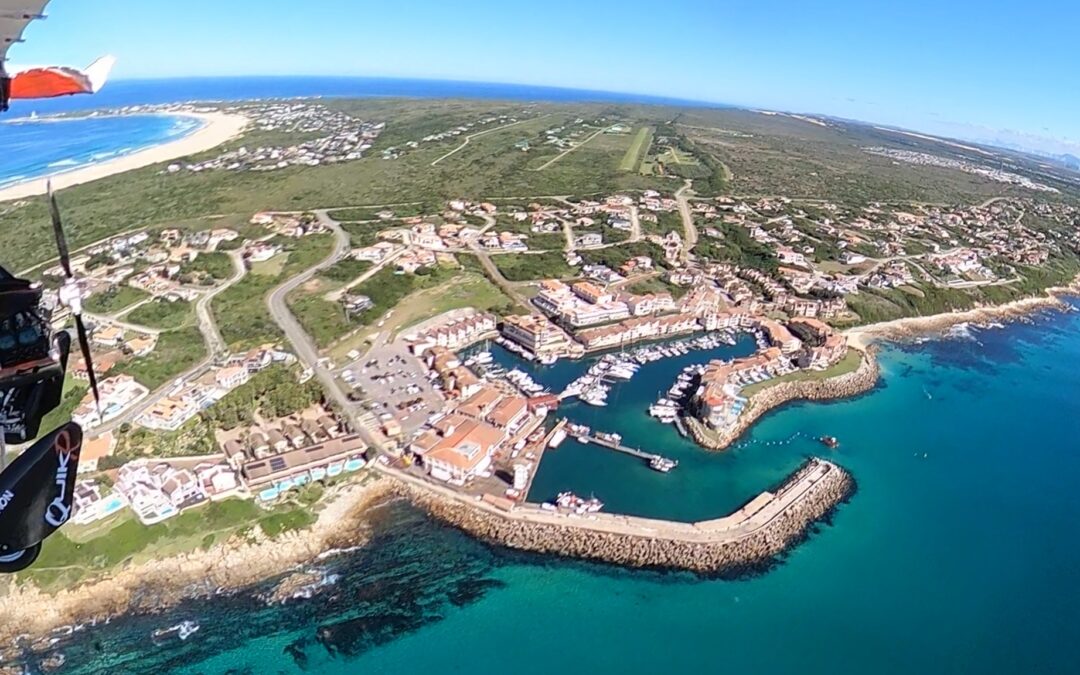
by Craig Jarvis | May 21, 2026 | St Francis
Returning to normal life after time away always creates the same strange sensation. You leave for a short stretch, order one airport coffee at international prices, and suddenly the entire world appears to have accelerated without you.
Meanwhile, St Francis Bay carried on at full speed.
Floods, Storms And Sideways Rain
Firstly, there were the floods. Then came the storm. Then came the sort of sideways rain that makes experienced locals stand at windows offering weather commentary with the seriousness of international news anchors. ( Kouga Moves to Secure Disaster Funding After Devastating Floods)
Importantly, the groynes took a proper pounding but largely did exactly what they were designed to do. The spit remains protected, which is the whole point. A few battle scars appeared, naturally, but overall the system held firm during a genuinely wild stretch of weather. (Severe Weather and Flooding Across Kouga Region)
Meanwhile, the R330 somehow found new and innovative ways to deteriorate. Certain sections now feel less like a road and more like an advanced suspension test.
Schools, Stress And Sudden Change
Closer to home, the news around a local school closing created genuine sadness, confusion, frustration, and plenty of scrambling among families trying to work out the next step. (Kouga Local Municipality responds to “KM Shuts Down School” article)
Some children moved to other schools. Others shifted towards online learning again, which immediately triggered Covid-era flashbacks involving unstable WiFi, muted microphones, and parents pretending they understood Grade 6 maths.
Small towns feel these disruptions deeply because schools form part of the rhythm of community life.
Thyspunt Returns Again
Additionally, the Thyspunt nuclear debate rolled back into local conversation once again, complete with objections, reports, deadlines, and enough technical terminology to transform ordinary residents into overnight nuclear strategists by tea time.
As always, everybody suddenly had strong opinions and several graphs. (Nuclear Deadline Approaches – The Thyspunt Alliance is urging Kouga residents and interested parties to submit formal objections)
Restaurants Continue Their Expansion Program
Back in town, a new restaurant or two appears to have opened while nobody was paying attention. St Francis now seems to operate on an approximate ratio of one restaurant for every two residents, which feels ambitious even by local standards.
Still, this remains excellent news for people who spend forty minutes debating where to eat before eventually ending up at the exact same place they went to last Thursday because Happy Hour starts in twenty minutes.
Meanwhile, The World Carries On
Elsewhere, Donald Trump continued manufacturing headlines at industrial scale, petrol prices remained strangely enthusiastic, and inflation continued floating around in the background like an unpaid invoice nobody wanted to open.
Meanwhile, a rat virus and Ebola appear to be slowly making their marks on the world by boarding international flights and travelling business and economy class towards the four corners of the globe, while the people of St Francis continue debating politics, rates hikes, solar registration forms, the influx of new residents, whether avocados are secretly unhealthy, who makes the best burger in town, whether burgers themselves are healthy, the possibility of EV charging stations, rumours of a new fast-food outlet, whether the proposed mall will ever happen, and if brown shit-coloured shirts are contemporary, retro, or simply a fashion crime.
What else did I miss?
– editor
by Craig Jarvis | May 21, 2026 | St Francis
The Japanese phrase “Shikata ga nai” carries a quiet but powerful truth: peace begins when you stop fighting the things beyond your control. In a world fuelled by anxiety, over-analysis, and mental exhaustion, this philosophy offers something rare — the ability to release what drains you, focus on what matters, and find calm in acceptance rather than endless resistance.
Master The Art Of Letting Go
Shikata Ga Nai
Accept What You Cannot Control
“Shikata ga nai” means: it cannot be helped.
This Japanese phrase carries a calm wisdom. It encourages acceptance instead of resistance.
Fighting reality creates stress and emotional exhaustion. Acceptance creates space for peace, clarity, and forward movement.
Separate Action From Worry
Ask yourself a simple question:
Can I do something about this right now?
If the answer is yes, take action.
If the answer is no, stop feeding the thought with endless mental energy.
Worry grows when the mind keeps circling problems without movement or resolution.
Stop Replaying The Past
Many people replay old conversations, regrets, mistakes, and painful moments repeatedly.
The problem is simple:
Replaying the past never changes it.
It only keeps old emotions active in the present.
Learning from the past is healthy. Living inside it creates emotional fatigue.
Return To The Present Moment
Japanese mindfulness often focuses on ordinary daily moments:
- making tea
- cooking
- walking
- breathing
- sitting quietly
Overthinking loses strength when attention returns to what is happening right now.
The present moment grounds the mind.
Focus On The Next Small Step
You do not need to solve your entire future tonight.
Clarity usually arrives through movement and experience, not endless mental analysis.
One small step often creates more progress than hours of overthinking.
Let Go Of Perfectionism
The Japanese philosophy of Wabi-Sabi celebrates imperfection, simplicity, and authenticity.
Nature is never perfect.
Yet it still carries beauty, meaning, and balance.
People work the same way.
Growth becomes easier when perfection stops controlling every decision.
Create Boundaries With Your Thoughts
Not every thought deserves attention.
Thoughts can be observed without being followed.
Imagine them as clouds moving across the sky:
- appearing
- shifting
- disappearing
You do not need to chase every single one.
Simplify Your Life
Too much noise overwhelms the mind:
- constant information
- comparison
- notifications
- pressure
- stimulation
A simpler environment often creates a calmer internal world.
Mental clarity grows in quieter spaces.
Trust The Flow Of Life
Some answers take time.
Some situations only become clear through patience, experience, and perspective.
The Japanese understanding behind “Shikata ga nai” reminds us that peace does not come from controlling everything.
Peace comes from understanding:
- what deserves your energy
- what deserves your release
Sometimes the deepest calm begins with quietly saying:
“Shikata ga nai.”
“It cannot be helped.”


Recent Comments