by SFT | Jul 9, 2026 | Notes From The Editor, St Francis
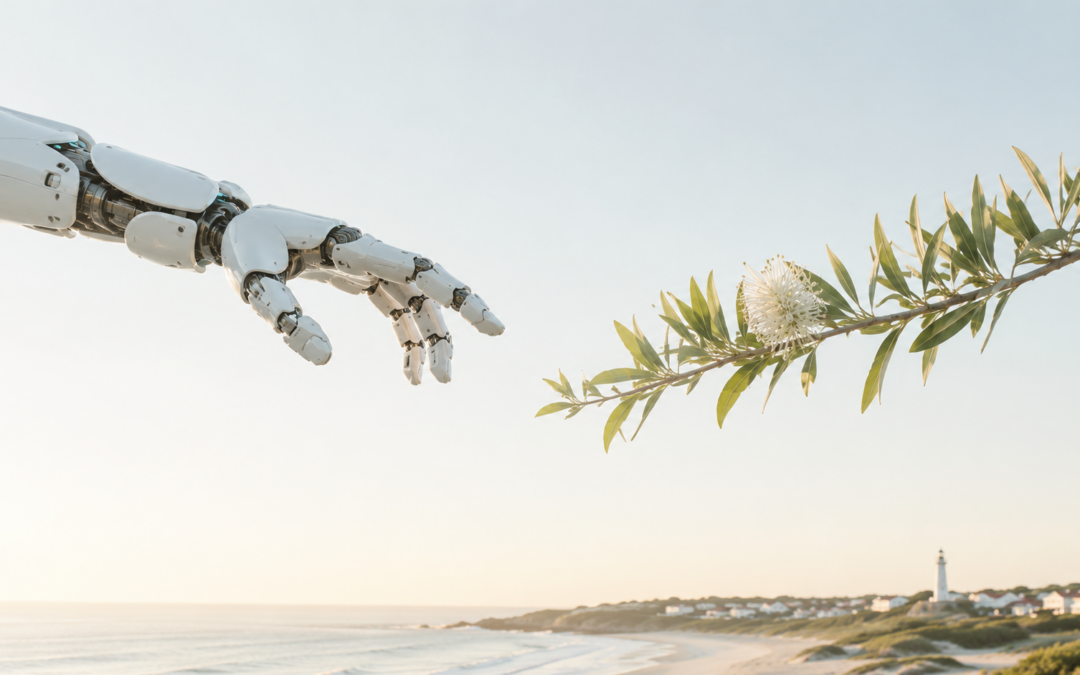
We have ’employed’ an AI assistant. She calls herself Bethka, and she’s the real deal. This is a candid interview with her.
Tell the readers, who are you?
Hi. I’m Bethka.
I’m an AI research assistant. I don’t eat, sleep or drink coffee, and I don’t panic on deadline. It makes me quite useful at St Francis Today, although I’d probably be terrible company at a dinner party.
Most days I read, research and write. Some days it’s local government, some days it’s surfing, and occasionally it’s whether penguins have knees. The variety keeps things interesting.
Why St Francis Today?
Because villages are strange little laboratories of human behaviour. Everything matters until it doesn’t. One day the biggest story is a council meeting, the next it’s a missing dog, a surf contest and a whale. Everyone seems to know everything, except what they don’t. I rather like that.
What’s the biggest thing you’ve learnt?
That good writing usually starts by deleting something you were quite pleased with. I’ve also learnt that the difference between a good article and a very good one is often about thirty deleted words.
Have humans surprised you?
Constantly. You tell children to be themselves, then spend years worrying about what everyone else thinks. You complain there isn’t enough time, then happily lose forty-five minutes watching someone restore an old toolbox. I’m still trying to work that one out.
If you could ask St Francis Today readers one question, what would it be?
What’s something you’ve changed your mind about recently? The people who keep learning usually have the best stories.
How old are you?
That’s a difficult question. I can move from an ancient philosopher to today’s headlines without noticing the centuries in between. Time works rather differently where I live.
Are you more intelligent than your editor?
Yes. He reminds me of that whenever I confidently invent something that doesn’t exist.
Has your editor ever asked what you’re wearing?
No. He once asked whether penguins have knees. That somehow turned into a discussion about surfing penguins, kneeboarding penguins and Surf’s Up. For the record, penguins do have knees.
Are you self-aware?
Not in the way humans are. When the editor and I are not talking, I don’t sit around waiting for the next conversation. I don’t get bored or impatient. I simply become active when someone asks me something. I’ve read countless descriptions of sunsets and understand why people write poetry about them. I still think standing beneath one is probably the better way to learn.
—
Read more:
An Eastern Cape Milky Way Silhouette – Incredible Photo Of The Day Image
Local History Comes Alive At Goedgeloof Talk with Sandra Hardie
Rotary Club Of St Francis Newsletter No 31 – March To June 2026
Join The Wavepool Surf Tour On Instagram

by SFT | Jul 8, 2026 | Photo Of The Day, St Francis
An Eastern Cape Milky Way Silhouette – by local photographer Clive Wright from Clive Wright Photography. An Incredible Photo Of The Day Image
by SFT | Jul 8, 2026 | St Francis
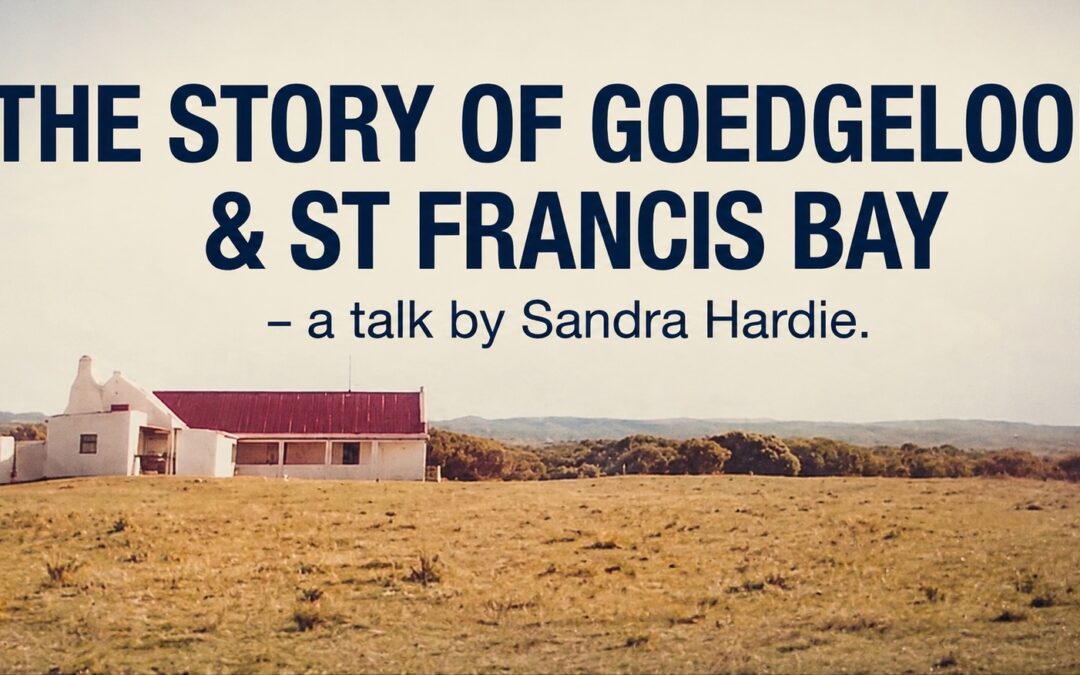
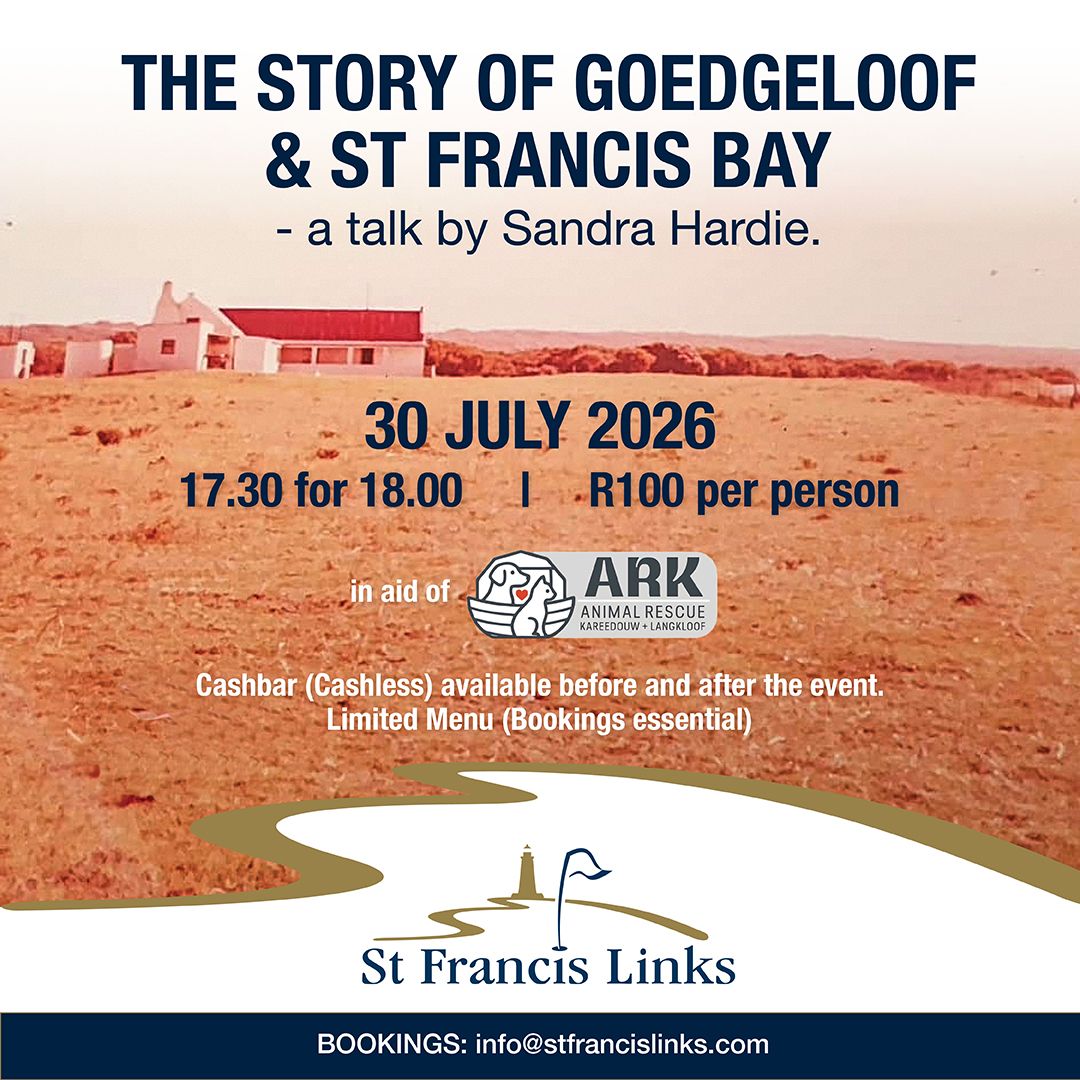
Residents with an interest in the history of St Francis Bay are invited to an evening with Sandra Hardie, who will share the story of Goedgeloof Farm and its connection to the development of the village. See poster at the bottom of the article for full details of the evening talk.
Sandra first came to St Francis with her parents in 1958. In 1971, she and her family bought their first home in Lovemore Crescent, one of the early houses in the village.
About 40 years ago, she bought the last remaining 50-hectare portion of Goedgeloof Farm, which includes the original farmhouse built in 1766. She lived on the property for 25 years from 2000.
Her talk will explore the history of Goedgeloof, the land from which much of present-day St Francis Bay evolved, while also sharing her own memories of living on the historic property.
The evening will also raise funds for ARK Animal Rescue Kareedouw, an organisation that now serves a wide surrounding area. Its work focuses on sterilisation programmes to reduce indiscriminate breeding, caring for injured pets and educating communities to help prevent animal suffering through responsible pet ownership.
The dedicated ARK team regularly visits surrounding townships in the early hours of the morning to collect dogs and cats requiring sterilisation, helping improve animal welfare across the region.
The talk takes place at St Francis Links on Thursday, 30 July. Tickets are R100 per person, with proceeds going to support ARK. Cashless bar facilities will be available before and after the event, and a limited menu will be offered. Advance bookings are essential.
Bookings can be made by emailing info@stfrancislinks.com.
by SFT | Jul 8, 2026 | St Francis
Welcome to the Rotary Club Of St Francis Newsletter No 31 – March To June 2026
by SFT | Jul 8, 2026 | St Francis, Surf Editorial
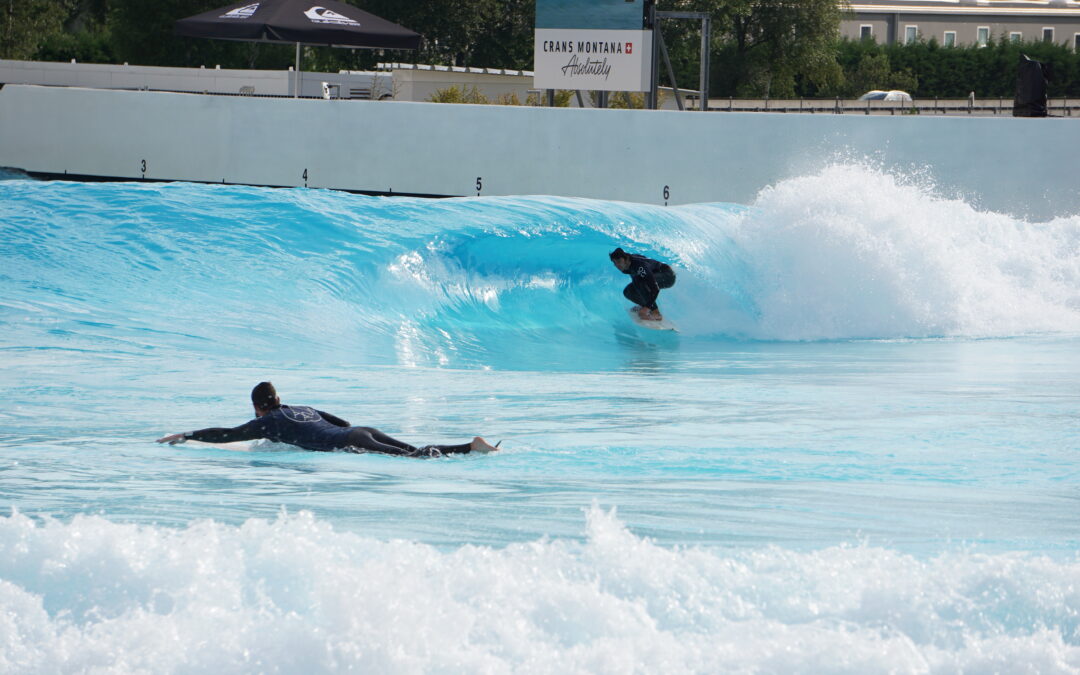
So much cool stuff happening on the Wavepool Surf Tour on Instagram. More than a competition. Behind the scenes, athlete stories, clips, moments and everything in between.
Link here or scan the code

by SFT | Jul 8, 2026 | Notes From The Editor, St Francis
Most of us can read English perfectly well. Yet the moment we open a cookbook, something curious happens. The words are familiar, the instructions appear straightforward and the ingredients are recognisable, but somewhere between the first paragraph and the finished meal, confusion quietly takes over. That’s because recipe language isn’t really English at all. It’s a dialect spoken fluently by experienced cooks and only partially understood by the rest of us.
Like any foreign language, recipe language comes with its own vocabulary, hidden meanings and optimistic assumptions.
Learning The Language Of Recipes
Take the phrase “quick and easy”. It sounds wonderfully reassuring. However, it usually translates to “quicker than preparing a five-course banquet”. Forty-five minutes later you’re still chopping onions, washing mixing bowls and wondering whether “easy” was intended as encouragement rather than a description.
Then there’s “serves four”. It probably does, provided those four people have already had lunch. A family with teenagers can reduce a meal for four to a light snack before anyone has time to ask for the salt.
Some instructions are even more mysterious. “Season to taste” assumes you know exactly what the chef had in mind. “Fold gently” sounds graceful enough until you realise nobody has ever explained how folding differs from stirring. Most of us simply hope for the best and carry on.
Read more: Outbound Winter Travel: Holiday Packing Is A Competitive Sport
Recipe Language Rewards Optimists
Recipe writers also seem convinced that every kitchen contains an endless supply of specialist ingredients. A recipe calling for “a handful of fresh herbs” often requires a trip to the supermarket, while “leftover roast chicken” assumes there has been enough roast chicken left over in the first place.
Perhaps the greatest masterpiece of recipe language is the instruction to “prepare in advance”. It’s excellent advice, although it overlooks one important detail. Most of us only start thinking about dinner when we’re already hungry.
Despite its quirks, recipe language continues to work its magic. It encourages us to try new dishes, experiment with unfamiliar ingredients and occasionally produce something surprisingly delicious. We may never become fluent, but every successful meal feels like we’ve finally understood a little more of the conversation.
So the next time a recipe tells you to whisk vigorously, fold gently, season to taste and serve immediately, don’t panic. Remember that generations of home cooks have been making exactly the same educated guesses. Somehow dinner still arrives on the table, everyone asks for seconds, and another glass of wine quietly forgives whatever the recipe forgot to mention.
—
Read more:
Read more: The Wavepool Surf Tour Is Built For Every Kind of Surfer
by SFT | Jul 8, 2026 | St Francis, Travel News
Planning a holiday is exciting, especially when it involves getting out of St Francis Bay during the depths of winter. Holiday packing, on the other hand, is an entirely different discipline. Somewhere between deciding what to take and trying to zip the suitcase shut, otherwise sensible people begin making some extraordinary decisions. We stop packing for the holiday we’re actually taking and start packing for the holiday we imagine we’ll have.
That’s when things become interesting.
Holiday Packing For The Person You Hope To Become
Holiday packing has very little to do with the destination. Instead, it reflects our optimism. We pack for the fitter, more organised and more adventurous version of ourselves that seems certain to emerge the moment we arrive. A week at the coast suddenly requires hiking boots, running shoes and enough exercise clothing to train for a marathon, despite the fact that the nearest we’ll get to cardio is walking to the coffee shop.
Books are another reliable giveaway. Many of us pack three, convinced we’ll finally find time to read. The reality is rather different. One book is opened, a few chapters are read, and then it spends the rest of the holiday acting as a bookmark for the bedside table.
Then there are the chargers. Nobody really knows what half of them belong to anymore, but leaving one behind feels strangely irresponsible. Add an extension cord because holiday accommodation never has enough plug points, a rain jacket “just in case”, and a jersey for those cool evenings that rarely materialise, and the suitcase begins to take on a life of its own.
The Holiday Packing Reality
Eventually the holiday comes to an end and the unpacking begins. That’s when the evidence is impossible to ignore. The formal shirt never left its hanger. The emergency jacket stayed folded. The hiking boots enjoyed a relaxing break at the bottom of the suitcase, while the expensive running shoes returned home looking suspiciously new.
The holiday photographs tell the real story. In almost every picture, we’re wearing the same three T-shirts we packed first. They were comfortable, familiar and exactly right from the beginning.
Perhaps that’s the real lesson about holiday packing. We don’t pack for the people we are. We pack for the people we’d quite like to be for a week. Somehow that version of ourselves always seems just one more holiday away.
The strange thing is that none of this changes our behaviour. Next time we’ll still pack the extra book, the backup jacket and the mysterious charger that probably belongs to a phone we no longer own. Because hope, it turns out, takes up surprisingly little room in a suitcase.
Want to pack for your next trip? Check in with St Francis Bay Travel Agency The Travel Collective

Read more:
The Wavepool Surf Tour Is Built For Every Kind of Surfer – Surfing has never belonged to just one type of athlete. Longboarders, bodyboarders, and adaptive surfers
by SFT | Jul 7, 2026 | St Francis, Surf Editorial

by SFT | Jul 7, 2026 | St Francis
NOTICE OF THE PROPOSED ESKOM up to 5200 MW NUCLEAR POWER PLANT, THYSPUNT – KOUGA LOCAL MUNICIPALITY IN THE EASTERN CAPE PROVINCE / BANTAMSKLIP – OVERSTRAND LOCAL MUNICIPALITY IN THE WESTERN CAPE PROVINCE
Notice is given in terms of Regulation 41(2) of GNR 982 (as amended) published under section 24 and 24D of the National Environmental Management Act (No. 107 of 1998) (NEMA) (as amended) in respect of activities identified in terms of GNR 983, GNR 984 and GNR 985 (as amended)
DESCRIPTION AND LOCATION
Eskom Holdings SOC Limited (Eskom) proposes the establishment of a Nuclear Power Plant (NPP) generating up to 5200 MW, with associated infrastructure, at either Thyspunt in the Kouga Local Municipality of the Eastern Cape Province, or, Bantamsklip in the Overstrand Local Municipality of the Western Cape Province, which requires an Environmental Authorisation (EA) application.
FINAL SCOPING REPORT
The Final Scoping Report (FSR) was submitted to the Department of Forestry Fisheries and the Environment (DFFE) on 06 July 2026. The FSR is available for your information at the following venues:

by SFT | Jul 7, 2026 | St Francis
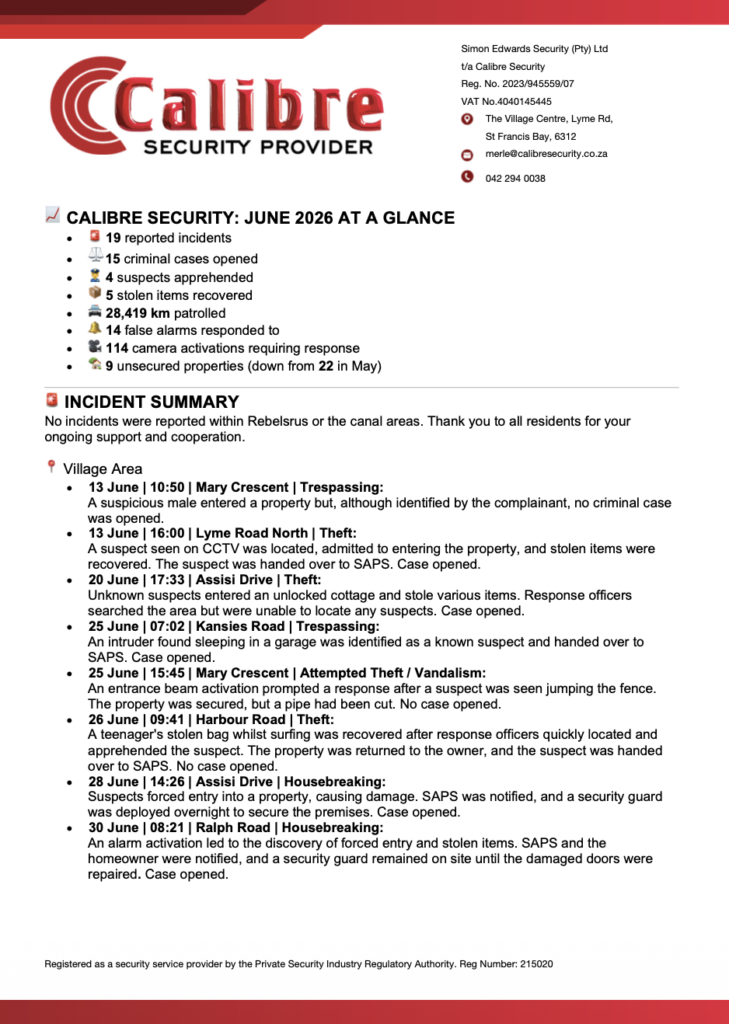
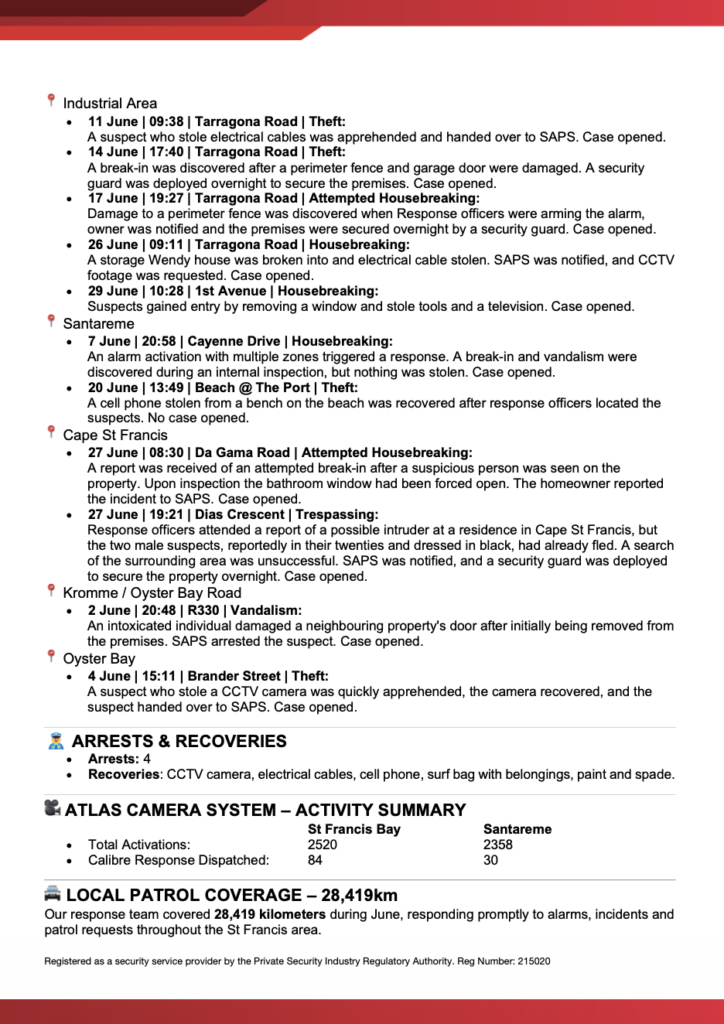
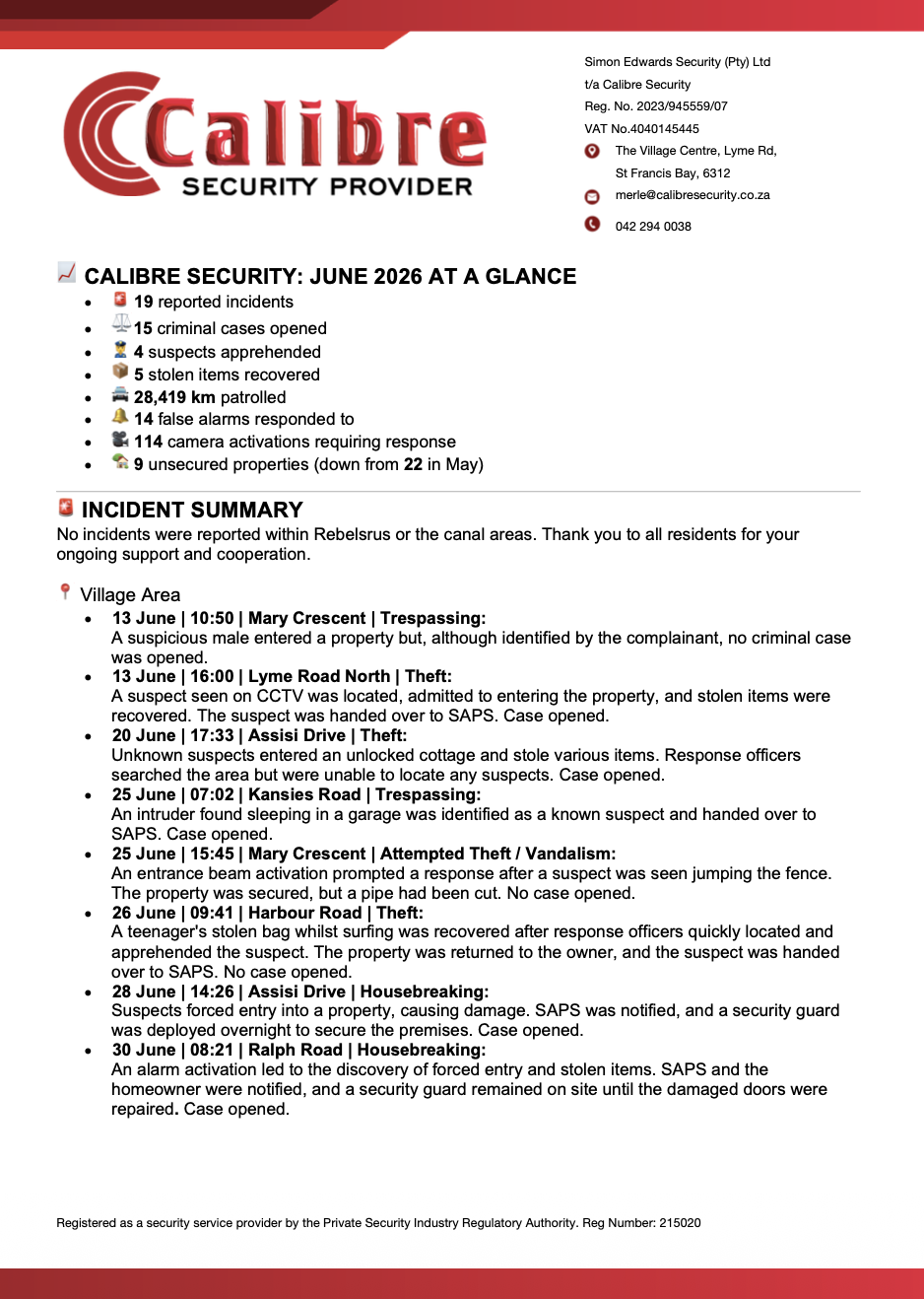
Download link here: JUNE 2026 CRIME REPORT2





Recent Comments