
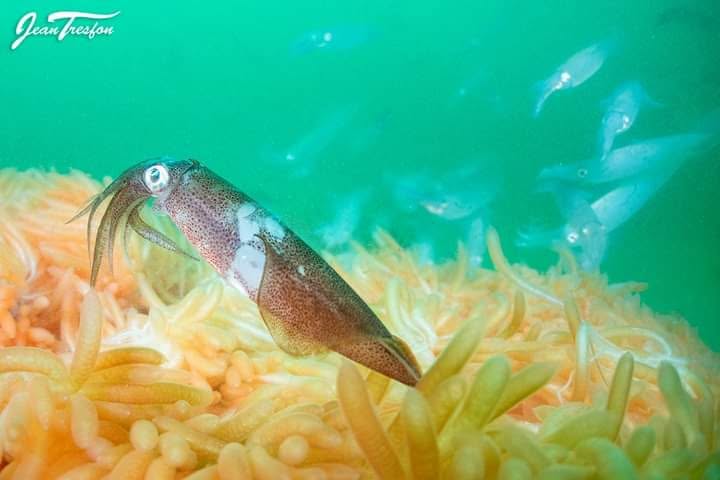
Photocredit: @Kromme Enviro-Trust St Francis Photographer: Jean Tresfon
The future of the Eastern Cape’s chokka squid industry depends on healthy chokka squid spawning grounds.
Unlike many marine species, chokka squid do not breed wherever conditions are favourable. Instead, they return to the same patches of seabed year after year. These established spawning grounds are essential to the survival of the species.
Their life cycle makes them particularly vulnerable. Chokka squid live for only 12 to 18 months. As a result, there is almost no buffer if a breeding season is disrupted. Two consecutive poor spawning seasons could dramatically reduce the population.
Dredging Raises Environmental Concerns
Eskom’s proposed Thyspunt nuclear development includes pumping up to 10 million cubic metres of dredged sand into the ocean. According to the South African Squid Management Industrial Association, the prevailing current flows from Oyster Bay towards Jeffreys Bay, directly across the chokka squid spawning grounds.
Industry spokesperson Greg Don Christy says the sediment is unlikely to remain where it is deposited. Instead, it could spread across the seabed and change the habitat that chokka squid have relied on for generations.
For the industry, this is one of the most important questions in the Environmental Impact Assessment. Any change to the spawning habitat could affect future breeding success and the long-term sustainability of the fishery.
Thousands Of Jobs Depend On Healthy Spawning Grounds
The importance of the chokka squid spawning grounds extends well beyond the marine environment.
The Eastern Cape’s squid industry supports approximately 2,500 jobs and generates around R500 million in wages. Between 50 and 55 vessels leave Port St Francis during the season, while hundreds of mechanics, engineers, refrigeration technicians, factory workers and other support staff in St Francis Bay, Humansdorp and Jeffreys Bay depend on the industry for their livelihoods.
For that reason, protecting the chokka squid spawning grounds is both an environmental and an economic priority. The Environmental Impact Assessment will need to determine whether the proposed dredging can proceed without causing irreversible damage to one of South Africa’s most valuable marine resources.
Read the full story here: https://www.citizen.co.za/news/thyspunt-will-be-environmental-economic-disaster-for-chokka-industry/
images and stoiry: Thyspunt Alliance


Recent Comments