

Dead Money, Living Money – The Human Side Of Money, Presented By Client Care
Over the years, working with families, you start to notice a pattern. Some money is quietly doing its job, growing, compounding, supporting a life well lived; while other money just sits there, safe, still, unused.
A simple way to think about this is with seeds.
You can plant them in the ground where they’ll face wind, rain, and the odd storm. or you can keep them in a tin on the shelf. In the tin, nothing happens they are protected. They look exactly the same tomorrow as they do today.
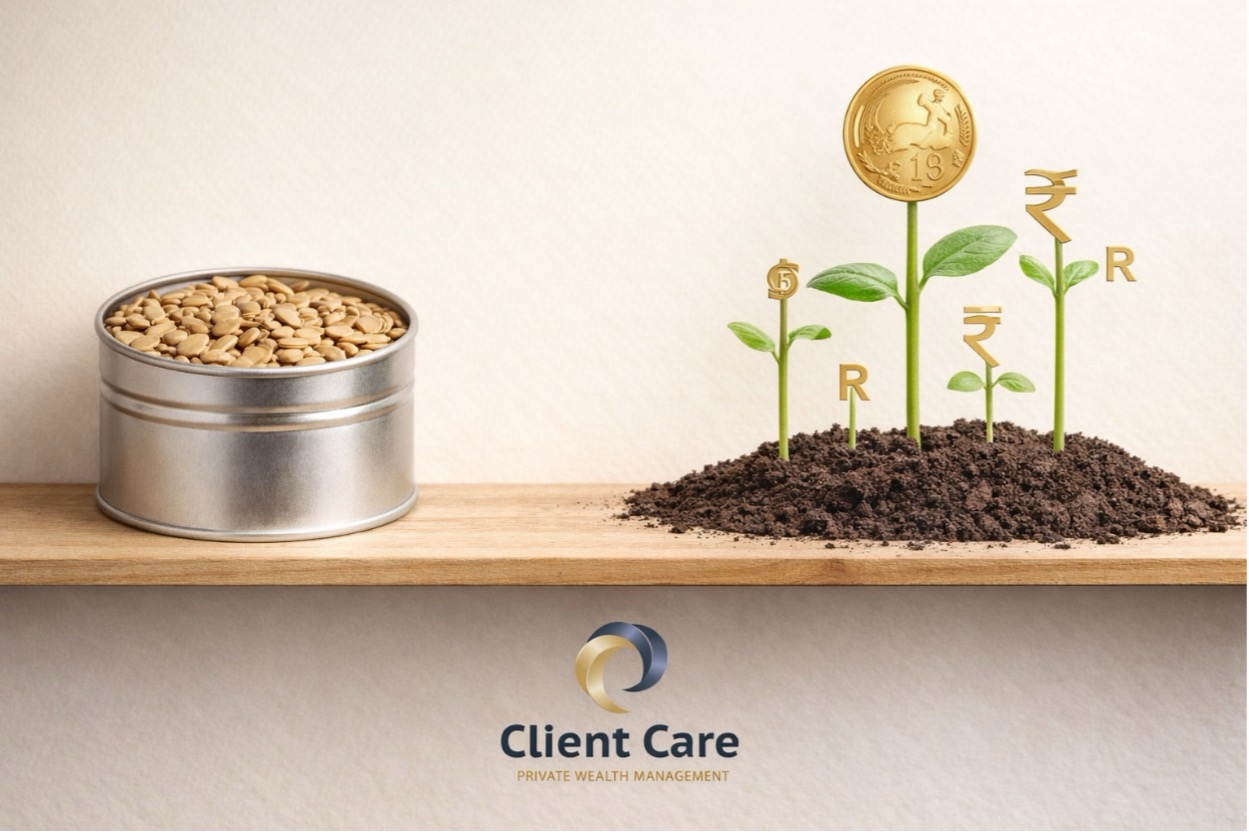
The problem is that they also never become anything. In a similar sense, money is no different. Most people’s instinct is to protect what they’ve built and that makes sense, especially when it has been hard-earned.
However, we believe that money isn’t just something to preserve, but rather it is something to use. At its core, money only really has one job, which is to fund your life. To maintain, and ideally improve, your ability to live the way you want over time.
That’s where the real challenge lies.
The world doesn’t stand still. Prices rise, life evolves, and if your money isn’t keeping up(with inflation), it’s quietly going backwards even if the number on the statement never changes. Unfortunately, and dangerously, this is the part many people miss because the real risk isn’t volatility but rather erosion of spending power.
The difference between “dead” and “alive” money.
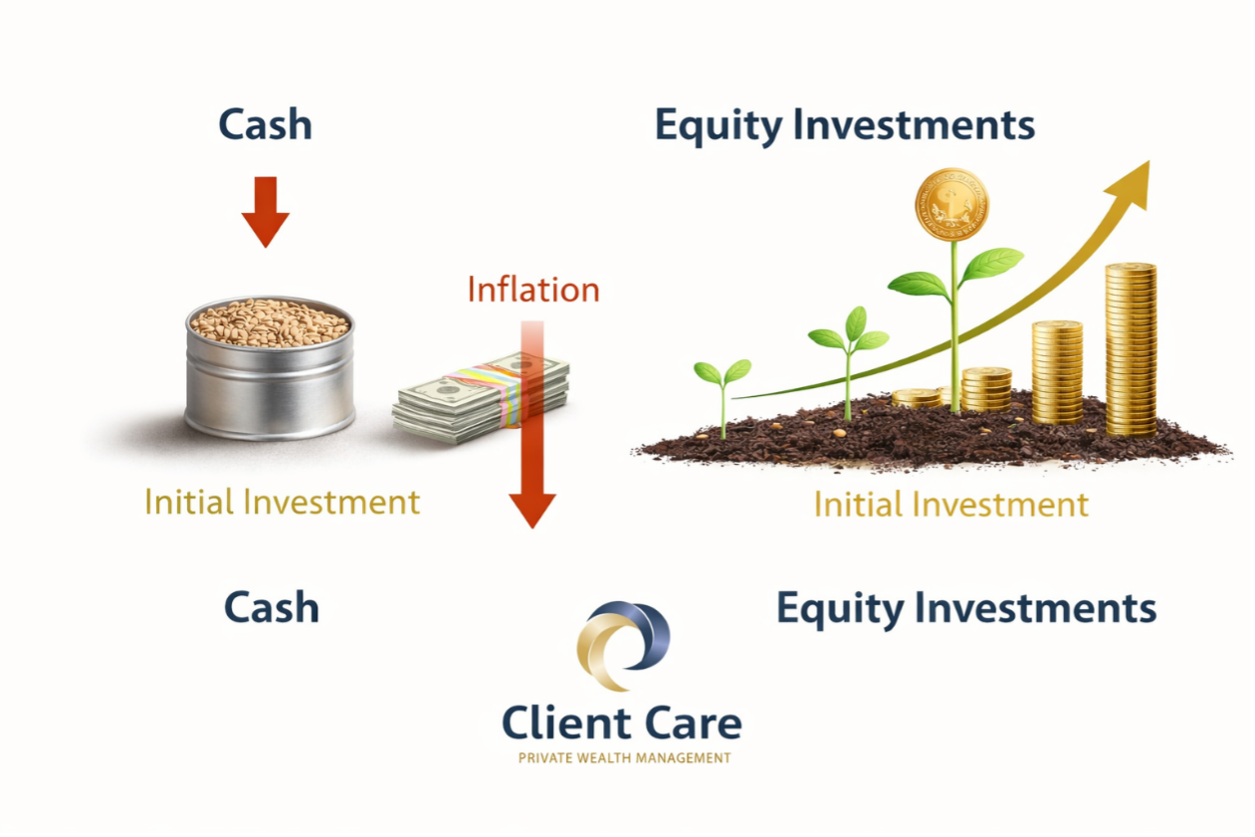
Some assets, by their nature, are static. Cash feels safe but it slowly loses purchasing power. Gold may shine but it doesn’t produce anything. Fixed income gives certainty but often struggles to keep pace with inflation over longer periods. There’s a place for all of these. But left on their own, they tend to fall behind. They’re the seeds in the tin on the shelf.
Then there are assets that are alive.
These are the ones that do something. They produce, they grow, they adapt. Think about owning great businesses, companies run by people, solving real problems, selling things the world needs. Over time, they generate profits, pay income, and increase in value. Not in a straight line but in a meaningful one and historically, this is what has kept investors ahead of inflation and preserved real wealth over time.
So why we default to safety? If the case for “living” assets is so clear, why do so many people still default to the tin?
Because of how it feels.
Living assets move around, they can be uncomfortable, and at times, they test your patience and your nerve. Dead assets, on the other hand, feel predictable, calm and controlled.However, that calm comes at a cost, one that’s easy to ignore because it happens slowly.

This is where one’s behaviour becomes everything. We are wired to avoid loss, even when that “loss” is invisible and happening in the background.
The quiet trade-off in the end isn’t really about investments, it’s about short-term comfort versus long-term outcome, certainty today versus possibility tomorrow.
The irony is that the habits that helped you build your wealth, such as being careful, disciplined, conservative can, if left unchecked, start to work against you.
Because at some point, money needs to move from being protected to being put to work.
The tin will always feel safer.
But it’s the garden that gives you a future.
—
Dirk Groeneveld, Certified Financial Planner
t. 083 261 9287
Recent columns:
- Let’s talk about your budget
- Enjoy yourself, it’s later than you think!
- Financial Planning, What It Really Is
- Planning Retirement Properly: Turning Wealth Into a Life Well Lived
—

Disclaimer:
This article is for information purposes only and does not constitute financial advice in any way or form. It is important to consult a financial planner to receive financial advice before acting on any information contained herein. Client Care and PWM and its directors, officers, and employees shall not be responsible and disclaim all liability for any loss, damage (whether direct, indirect, special or consequential) and/or expense of any nature whatsoever, which may be suffered as a result of, or which may be attributable, directly or indirectly, to the use of, or reliance upon any information contained in this article.








Recent Comments