

“The years go by, as quickly as a wink, enjoy yourself, enjoy yourself, it’s later than you think.”
— Guy Lombardo, “Enjoy Yourself”
It’s an old lyric, but it carries a timeless truth. The older we get, the faster the years seem to pass. One moment we are building careers and raising families, and the next we find ourselves in retirement wondering where the decades went.
A fascinating illustration of this reality comes from the American Time Use Survey, which tracks how people spend their time across their lives. The data shows a striking pattern: when we are young, we spend a great deal of time with our parents and siblings. As we grow older, friends and coworkers take up much of our daily interaction. Later in life, time with children peaks while they are still at home. And eventually, as the years move on, the graph shows something quite sobering — we spend more and more of our time alone.
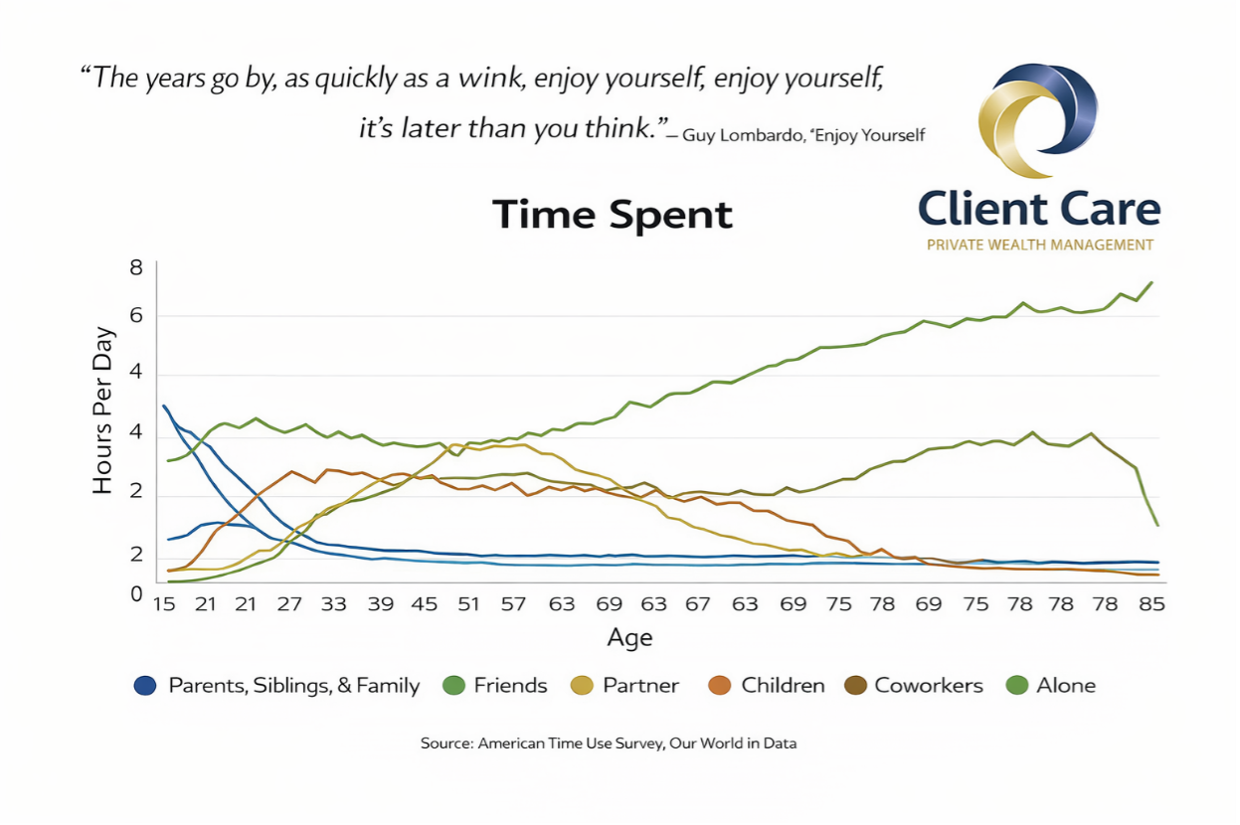
Although this study was conducted in the United States, it mirrors the lives of many people living in places like St Francis Bay, especially retirees. Many of us move here to enjoy a simpler and more fulfilling lifestyle, surrounded by nature and community. Yet if we are not deliberate about how we spend our time, we can slowly drift toward the same pattern shown in the survey. The good news is that this graph is not destiny. If we don’t like what it suggests, we have the power to change it. The best place to start is by taking control of how we spend our most valuable asset: our time.
One practical step is to revisit and update your financial plan. Often we look at a financial plan purely as numbers — expenses, investments, and projections. But those numbers represent something far more meaningful. They represent experiences, memories, and special moments with the people we love.
Take your annual holiday as an example. What does it actually look like? Is it still the experience you truly want, or could you do something different? Could you travel somewhere new, spend longer with family, or create an experience that will be remembered for years?
Then ask yourself a tougher question: How many healthy summers do you realistically have left?
If your children live overseas and you visit them once a year, how many more times will you see them and your grandchildren? Ten? Fifteen? Maybe fewer. That thought can be uncomfortable — and might be whats jolts you into action.

None of us knows how much time we or the people we love have left. So stop filling your days with things that don’t add value to your life. Start designing your weeks, months, and years around what truly matters.
Don’t accept the graph from the study as your future.
Rewrite your own graph. Create a new plan, regardless of your level of wealth. When you intentionally align your money and your time with what matters most, you change your life for the better. If you don’t know where to start, pop in for a chat.
Dirk Groeneveld, Certified Financial Planner
t. 083 261 9287
Recent columns:


Recent Comments