Returning to normal life after time away always creates the same strange sensation. You leave for a short stretch, order one airport coffee at international prices, and suddenly the entire world appears to have accelerated without you.
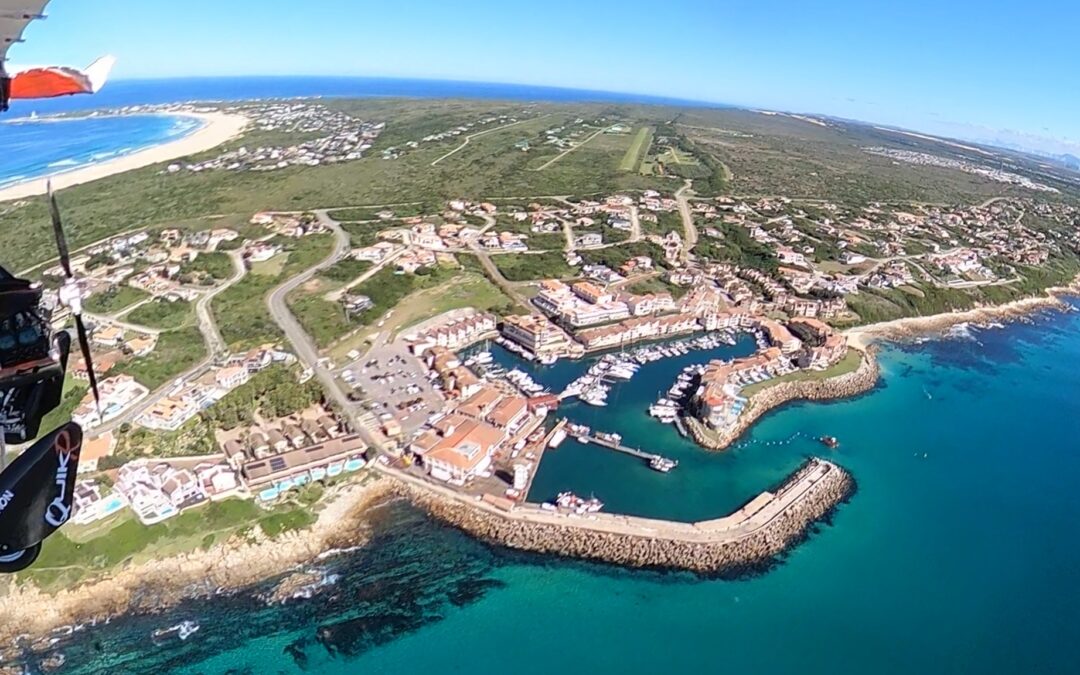
Meanwhile, St Francis Bay carried on at full speed.
Floods, Storms And Sideways Rain
Firstly, there were the floods. Then came the storm. Then came the sort of sideways rain that makes experienced locals stand at windows offering weather commentary with the seriousness of international news anchors. ( Kouga Moves to Secure Disaster Funding After Devastating Floods)
Importantly, the groynes took a proper pounding but largely did exactly what they were designed to do. The spit remains protected, which is the whole point. A few battle scars appeared, naturally, but overall the system held firm during a genuinely wild stretch of weather. (Severe Weather and Flooding Across Kouga Region)
Meanwhile, the R330 somehow found new and innovative ways to deteriorate. Certain sections now feel less like a road and more like an advanced suspension test.
Some children moved to other schools. Others shifted towards online learning again, which immediately triggered Covid-era flashbacks involving unstable WiFi, muted microphones, and parents pretending they understood Grade 6 maths.
Small towns feel these disruptions deeply because schools form part of the rhythm of community life.
Thyspunt Returns Again
Additionally, the Thyspunt nuclear debate rolled back into local conversation once again, complete with objections, reports, deadlines, and enough technical terminology to transform ordinary residents into overnight nuclear strategists by tea time.
Back in town, a new restaurant or two appears to have opened while nobody was paying attention. St Francis now seems to operate on an approximate ratio of one restaurant for every two residents, which feels ambitious even by local standards.
Still, this remains excellent news for people who spend forty minutes debating where to eat before eventually ending up at the exact same place they went to last Thursday because Happy Hour starts in twenty minutes.
Meanwhile, The World Carries On
Elsewhere, Donald Trump continued manufacturing headlines at industrial scale, petrol prices remained strangely enthusiastic, and inflation continued floating around in the background like an unpaid invoice nobody wanted to open.
Meanwhile, a rat virus and Ebola appear to be slowly making their marks on the world by boarding international flights and travelling business and economy class towards the four corners of the globe, while the people of St Francis continue debating politics, rates hikes, solar registration forms, the influx of new residents, whether avocados are secretly unhealthy, who makes the best burger in town, whether burgers themselves are healthy, the possibility of EV charging stations, rumours of a new fast-food outlet, whether the proposed mall will ever happen, and if brown shit-coloured shirts are contemporary, retro, or simply a fashion crime.
The Japanese phrase “Shikata ga nai” carries a quiet but powerful truth: peace begins when you stop fighting the things beyond your control. In a world fuelled by anxiety, over-analysis, and mental exhaustion, this philosophy offers something rare — the ability to release what drains you, focus on what matters, and find calm in acceptance rather than endless resistance.
Master The Art Of Letting Go
Shikata Ga Nai
Accept What You Cannot Control
“Shikata ga nai” means: it cannot be helped.
This Japanese phrase carries a calm wisdom. It encourages acceptance instead of resistance.
Fighting reality creates stress and emotional exhaustion. Acceptance creates space for peace, clarity, and forward movement.
Separate Action From Worry
Ask yourself a simple question:
Can I do something about this right now?
If the answer is yes, take action.
If the answer is no, stop feeding the thought with endless mental energy.
Worry grows when the mind keeps circling problems without movement or resolution.
Stop Replaying The Past
Many people replay old conversations, regrets, mistakes, and painful moments repeatedly.
The problem is simple:
Replaying the past never changes it.
It only keeps old emotions active in the present.
Learning from the past is healthy. Living inside it creates emotional fatigue.
Return To The Present Moment
Japanese mindfulness often focuses on ordinary daily moments:
making tea
cooking
walking
breathing
sitting quietly
Overthinking loses strength when attention returns to what is happening right now.
The present moment grounds the mind.
Focus On The Next Small Step
You do not need to solve your entire future tonight.
Clarity usually arrives through movement and experience, not endless mental analysis.
One small step often creates more progress than hours of overthinking.
Let Go Of Perfectionism
The Japanese philosophy of Wabi-Sabi celebrates imperfection, simplicity, and authenticity.
Nature is never perfect.
Yet it still carries beauty, meaning, and balance.
People work the same way.
Growth becomes easier when perfection stops controlling every decision.
Create Boundaries With Your Thoughts
Not every thought deserves attention.
Thoughts can be observed without being followed.
Imagine them as clouds moving across the sky:
appearing
shifting
disappearing
You do not need to chase every single one.
Simplify Your Life
Too much noise overwhelms the mind:
constant information
comparison
notifications
pressure
stimulation
A simpler environment often creates a calmer internal world.
Mental clarity grows in quieter spaces.
Trust The Flow Of Life
Some answers take time.
Some situations only become clear through patience, experience, and perspective.
The Japanese understanding behind “Shikata ga nai” reminds us that peace does not come from controlling everything.
Peace comes from understanding:
what deserves your energy
what deserves your release
Sometimes the deepest calm begins with quietly saying:
KOUGA – Kouga Local Municipality has taken a decisive step to safeguard its water future, with Council approving a revised Drought Mitigation Plan while intensifying water restrictions and conservation measures across the region.
The updated plan responds to ongoing operational challenges and follows the declaration of the current drought as a disaster by the National Disaster Management Centre on 31 January 2026.
It builds on interventions introduced since the 2021 drought plan and is aimed at strengthening water security, improving risk management, and aligning mitigation strategies with the municipality’s current capacity and long-term objectives.
Key interventions outlined in the plan include the development and expansion of groundwater sources, rehabilitation of existing boreholes, upgrades to water treatment works, enhanced leak detection and monitoring, and the implementation of emergency water carting where necessary. Priority areas identified for intervention include Patensie, Hankey, Loerie, Thornhill, Jeffreys Bay, Humansdorp, and St Francis Bay.
The plan also places strong emphasis on public awareness, water conservation, and demand management to reduce pressure on potable water supplies. Funding requirements for the implementation of these measures are estimated at R36.2 million, primarily directed towards infrastructure upgrades, groundwater development, and securing emergency supply.
Kouga Speaker, Lorraine Maree, said the approval of the revised plan marked an important milestone in the municipality’s response to ongoing drought conditions. “The revised Drought Mitigation Plan is a vital step in ensuring that our communities continue to have access to safe and reliable water, even during challenging conditions. It reflects Council’s commitment to proactive planning, sustainable resource management, and the well-being of every resident in Kouga,” she said.
In parallel with the adoption of the plan, Kouga has intensified water restrictions following directives from the Department of Water and Sanitation (DWS) affecting allocations from the Kouga, Churchill, and Impofu dams. Although these restrictions are still pending publication in the Government Gazette, they have been in effect since 1 November 2025.
The prolonged drought in the Eastern Cape has significantly reduced dam levels, with combined storage currently at 40.11%. To manage the constrained supply, a 10% restriction has been imposed on domestic allocations from the Kouga Dam, while a 25% restriction applies to domestic allocations from the Kromme system, which includes the Churchill and Impofu dams. Should storage levels in the Kromme system fall below 35%, Part C tariffs will be implemented.
The municipality is also rolling out an intensified public awareness campaign to encourage responsible water use. Residents are being urged to adopt water-saving practices and avoid excessive consumption.
Strict monitoring and enforcement of restrictions will continue as the municipality works to protect its limited water resources. Residents are encouraged to play their part in conserving water while Kouga explores additional supply options to mitigate the impact of the ongoing drought.
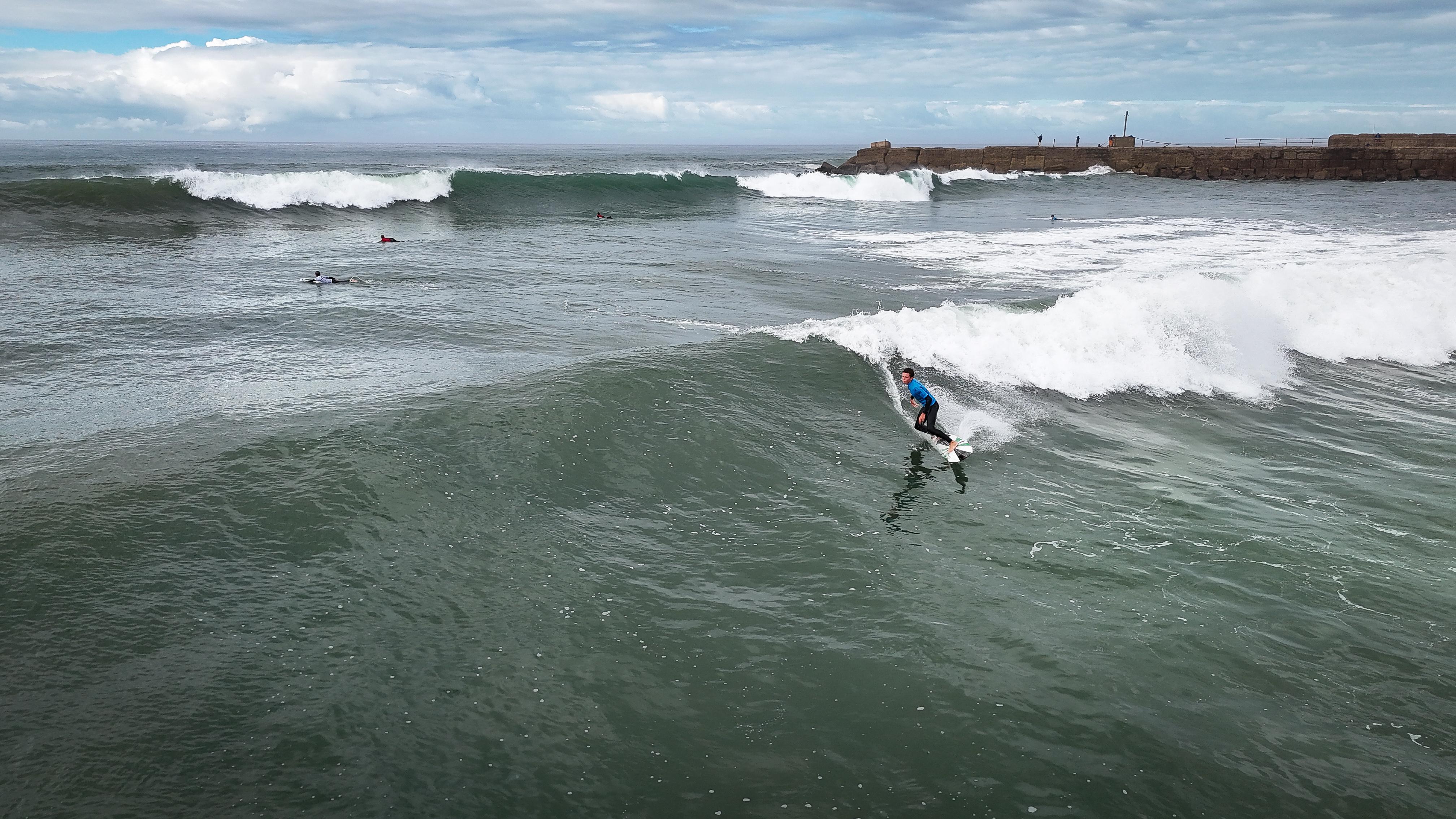
The Royal St Andrews Hotel Rip Curl Cup has been confirmed as a QS 4,000 event for the men and a QS 2,000 event for the women, significantly increasing the contest’s importance on the South African professional surfing calendar. Positioned as the final event of the Qualifying Series season, the Rip Curl Cup will play a key role in shaping end-of-season rankings and Challenger Series qualification outcomes.
Staged as an anchor event of the Port Alfred Easter Festival, this contest represents the last opportunity for many surfers to secure critical points before the close of the regional QS. With qualification scenarios coming down to final heats, performances in Port Alfred are expected to carry decisive weight.
A Pivotal Event on the Qualifying Series Calendar
As the final stop on the Qualifying Series, the Rip Curl Cup holds particular significance for surfers positioned around qualification cut-off points. The men’s QS 4,000 rating offers a substantial points allocation, while the women’s QS 2,000 rating remains a meaningful opportunity within the regional structure.
The contest operates within the competitive framework of the World Surf League, ensuring results contribute to internationally recognised rankings and career progression. Heat formats, judging criteria, and priority rules align with global standards, providing clarity and consistency for competitors and spectators alike.
With season outcomes on the line, the event is expected to attract a strong field, including surfers managing qualification pressure as well as those aiming to consolidate their positions heading into the Challenger Series.
Part of the Port Alfred Easter Festival Programme
A defining characteristic of the Rip Curl Cup is its lead role in the Port Alfred Easter Festival. The contest runs alongside a wide range of festival activities, creating a bustling, engaged town throughout the event window.
This setting allows spectators to watch high-level competitive surfing up close, while surfers benefit from competing in front of large, knowledgeable crowds. The combination of professional sport and festival atmosphere has become a hallmark of the event.
Supported by title sponsor Royal St Andrews Hotel and Rip Curl, the Royal St Andrews Hotel Rip Curl Cup hallmarks a new start to the festival’s gravitas. The current ratings reflect that progression and underline the event’s role as one of the most consequential contests on the regional calendar.
With final points, rankings and qualification outcomes in play, this year’s Royal St Andrews Hotel Rip Curl Cup is set to be a defining moment in the Qualifying Series season.
Royal St Andrews Hotel Rip Curl Cup Entries here – good luck!




Recent Comments