by SFT | Sep 23, 2026 | St Francis
Kouga Council is set to enter recess on 24 September 2026 as the current Council term draws to a close. The break will run until the term expires, ahead of the Local Government Elections on 4 November 2026.
The proposed recess means councillors will step away from the normal cycle of Council meetings during the election period. However, the municipality says urgent Council business will still receive attention, while municipal services and governance continue.
Urgent Matters During the Recess
Under the proposed arrangement, Kouga Executive Mayor Hattingh Bornman will receive delegated authority to deal with urgent Council affairs. He will exercise that authority in line with applicable legislation and the municipality’s Delegation Register.
In practical terms, recess changes how urgent Council matters are handled. Instead of waiting for the usual meeting cycle, matters requiring attention can be dealt with through the approved delegation.
The municipality says this follows the approach taken during previous Council recesses. Those arrangements also made provision for urgent business to continue while ordinary meetings were paused.
Delegation Runs Until the Council Term Ends
The proposed delegation will take effect on 24 September and remain in place until the end of the current Council term. It will be subject to the conditions in the approved delegation and applicable legislation.
For residents, the main point is that Council recess does not mean a pause in municipal services. The municipality says it will continue to attend to urgent matters and maintain the day-to-day work of local government during the election period.
The recess concerns the Council meeting schedule and the handling of urgent Council decisions. Once the current term ends, the local government election will determine the councillors who serve on the next Council.

by SFT | Sep 23, 2026 | St Francis
The Department of Forestry, Fisheries and the Environment’s acceptance of Eskom’s Final Scoping Report: a summary
In short
The Department of Forestry, Fisheries and the Environment has accepted Eskom’s Final Scoping Report for the proposed 5 200 MW nuclear power station at Thyspunt. The acceptance letter is dated 14 August 2026 and was issued under Regulation 22(a) of the Environmental Impact Assessment Regulations.
Acceptance is a procedural step, not a decision on the power station. The Department has confirmed in writing that it does not amount to “approval of the proposed project or predetermine the outcome”. It allows the application to move into the full Environmental Impact Assessment.
Almost all of the 14-page acceptance letter sets out work that Eskom and its consultants, WSP, have not yet done. For St Francis Bay, the most important of these concerns the coastline.
The implications for St Francis Bay
The Department’s own instructions to Eskom single out this stretch of coast. The letter calls for further investigation of shoreline erosion and altered sediment transport, “especially at Thyspunt”, and records that the site “may be more sensitive to shoreline and sediment transport impacts than Bantamsklip”, the alternative site in the Western Cape.
Eskom must also carry out modelling of sea-level rise, storm surge and coastal erosion over the full operating life of the plant, and assess how dredging and spoil disposal would change the movement of sediment along the shore.
St Francis Bay lies on the same stretch of coast, a short distance from the Thyspunt site, and the town’s property owners already fund an ongoing coastal protection scheme. How sediment moves along this coast is not a distant question here.
The connection to St Francis Bay is our own; the Department’s letter does not mention the town. Its concern about Thyspunt’s coastal sensitivity is on the record.
Acceptance is not approval
The application now moves from the scoping stage into the Environmental Impact Assessment phase. No construction may begin unless and until an environmental authorisation is granted.
In its letter of 21 September 2026 to the Thyspunt Alliance’s attorneys, Cullinan and Associates, the Department states that acceptance “does not constitute an environmental authorisation” and does not amount to “approval of the proposed project or predetermine the outcome”. The merits will be considered once the Environmental Impact Assessment Report is submitted.
For balance, the Department also made findings in Eskom’s favour:
• It is satisfied that the report meets the minimum requirements of the regulations.
• It found that Eskom’s revised specialist studies had “substantially addressed” its earlier comments.
• It considered that the scoping-phase public participation “appears to comply” with the regulations.
These are the Department’s starting positions, not its final decision.
Further work required from Eskom
The acceptance letter sets out what the Department requires Eskom to address in its Environmental Impact Assessment Report. A synopsis of those requirements follows.
The choice of site
Eskom must show that scoping out Bantamsklip is “environmentally defensible” and must provide a “transparent and evidence-based comparative assessment” of the two sites. Impacts must be “equitably and comparatively assessed across both sites to ensure there is no bias”. The Department’s own letter records that its dune specialist prefers Bantamsklip and that the radiological study prefers neither site.
Coast and climate
Beyond the shoreline and sediment work described above, the letter requires shoreline response modelling, disposal site alternatives and “quantitative modelling of sea-level rise, storm surge, coastal erosion” over the design life of the plant.
Water
Desalination is identified as “the only feasible long-term water supply option”. Eskom must show that groundwater will not become a long-term source, and must address drought, water security and competition with municipal water users.
Heritage
The Thyspunt site is “provisionally protected under Section 29 of the National Heritage Resources Act”, and the South African Heritage Resources Agency is investigating its “possible declaration as a Grade I National Heritage Site”. Eskom must assess “whether heritage impacts can realistically be mitigated”.
Fisheries
The letter flags the chokka squid fishery at Thyspunt and requires proper fisheries impact assessments.
Evacuation
The traffic study must assess emergency access and evacuation “in alignment with the National Nuclear Regulator’s emergency planning framework”.
Nuclear waste
Eskom must set out a long-term management strategy for spent fuel and high-level radioactive waste, addressing “societal, institutional, financial, and long-term stewardship considerations”.
Public comment
The Department repeats that a response such as “Noted” “will not be regarded as an adequate response”, and requires Eskom to show how the concerns raised by the public “have influenced the project design”.
The next stage of the process
Under Regulation 23(1) of the Environmental Impact Assessment Regulations, Eskom must submit its Environmental Impact Assessment Report within 106 days of acceptance, and that report must first be released for public comment for at least 30 days.
Counting 106 days from 14 August 2026 points to about the end of November 2026 at the earliest. The regulations allow the Department to extend the timeframe, and given the volume of further work required, an extension would not be unusual. No date has been confirmed.
The association will let members know as soon as the draft report is released for comment.
Public participation and registration
Anyone may register as an Interested and Affected Party and comment when the draft report is published. To register, email WSP’s Public Participation Office at Nuclear-PP-EIA@wsp.com, giving your name and contact details and quoting reference 14/12/16/3/3/2/2806. Registered parties are notified when the draft Environmental Impact Assessment Report is released for comment.
By St Francis Property Owners Association

by SFT | Sep 23, 2026 | St Francis
Kouga Local Municipality says it did not ask The Backyard in Jeffreys Bay to close. The clarification follows a recent Facebook post about the venue’s closure.
Executive Mayor Hattingh Bornman said the municipality would prefer to see the business continue operating while the current legal processes are addressed and workable solutions are explored.
“We encourage the establishment to continue operating while the current legal processes are addressed and until workable solutions can be found,” he said.
The Backyard has provided jobs and given residents and visitors a place to enjoy food, entertainment and live music. Bornman acknowledged that a closure would affect its owners, employees, suppliers and the wider community.
Land-Use Rules Still Apply
The municipality said property owners must ensure their buildings and the way they use their properties comply with the relevant laws and municipal by-laws.
Changes to land-use rights must go through a formal application process. The municipality cannot generally change a property’s zoning on its own. Kouga’s planning department identifies its 2016 Spatial Planning and Land Use Management By-law and the national Act as part of the framework governing land use.
Owners must also submit complete and correct information with their applications. According to the municipality, missing or incorrect details can delay an application, cause it to lapse or lead to its refusal. Where land-use rights conflict or lack approval, owners may need to take steps to regularise them.
Mayor Wants a Workable Way Forward
Bornman said the municipality must enforce the applicable rules, but remains willing to engage with businesses facing challenges.
“Our preference is to find a way forward that allows The Backyard to continue operating, where this can be achieved within the applicable legal and regulatory framework,” he said.
For now, the municipality’s position is clear: it says it did not order the venue to close and wants to work towards a lawful solution.
by SFT | Sep 23, 2026 | St Francis
For the past 28 years, the St Francis Bay Golf Club’s Calamari Classic has been the highlight of the local golfing calendar — and Pam Golding Properties is delighted to once again host the Pam Golding Best Dressed Four-Ball competition on the sixth tee.
From 7 am until 6 pm tomorrow, all 280 golfers will be refreshed with Springbokkies, “Albert Saunders” water and, of course, a tasty stukkie boerwors.

But that’s not all!
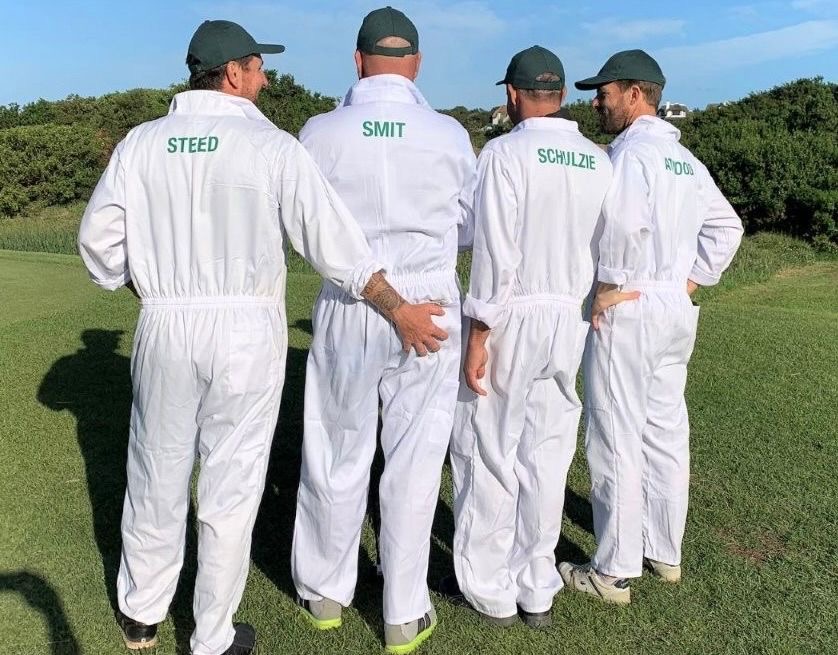
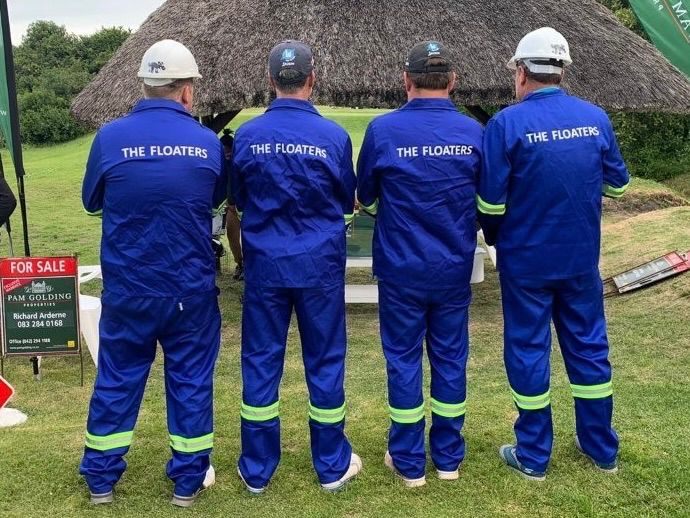
Each four-ball then lines up on the tee for a photo in front of the thatch afdak/lapa. We then print the 70 A4 colour photos and display them in the clubhouse. Golfers are welcome to take their photo home — although they can also find all the photos on our Pam Golding Facebook page.
Our team, working in rotation to keep the braai fire burning and the Springbokkies ready, provide polite applause for all shots which clear the dam right in front of the tees on this par 5, rather tricky in an easterly.
Then, once the last golfers have passed through, the serious business begins!

The Pam Golding Best Dressed team meets at 5.30 pm, after the last golfers have passed, to make the difficult decisions as to who are the best-dressed ladies’, mixed and men’s four-balls.
Ideally, they are still in their outfits for the prize-giving at the clubhouse, where they receive a sought-after bottle of Pam Golding red wine in front of a (sometimes raucous) packed audience of golfers and friends.
A special mention must go to the teams from Plettenberg Bay, who have produced some truly spectacular outfits over the years. If there were a prize for consistency, they’d certainly be in the running!

It’s a light-hearted way to support this evergreen golfing tradition — part of the fabric of life in St Francis.
Take a look at our gallery of just a few of the thousands of photos we’ve collected over the years.
—
Gallery – scroll down













—
Read More: Tops Classic Wine Tasting this weekend








Recent Comments