

I read a story recently that reminded me how many investors fail to learn from history and how human investing behaviour doesn’t change. This isn’t a story about hedge funds, I think it’s a story about all of us.
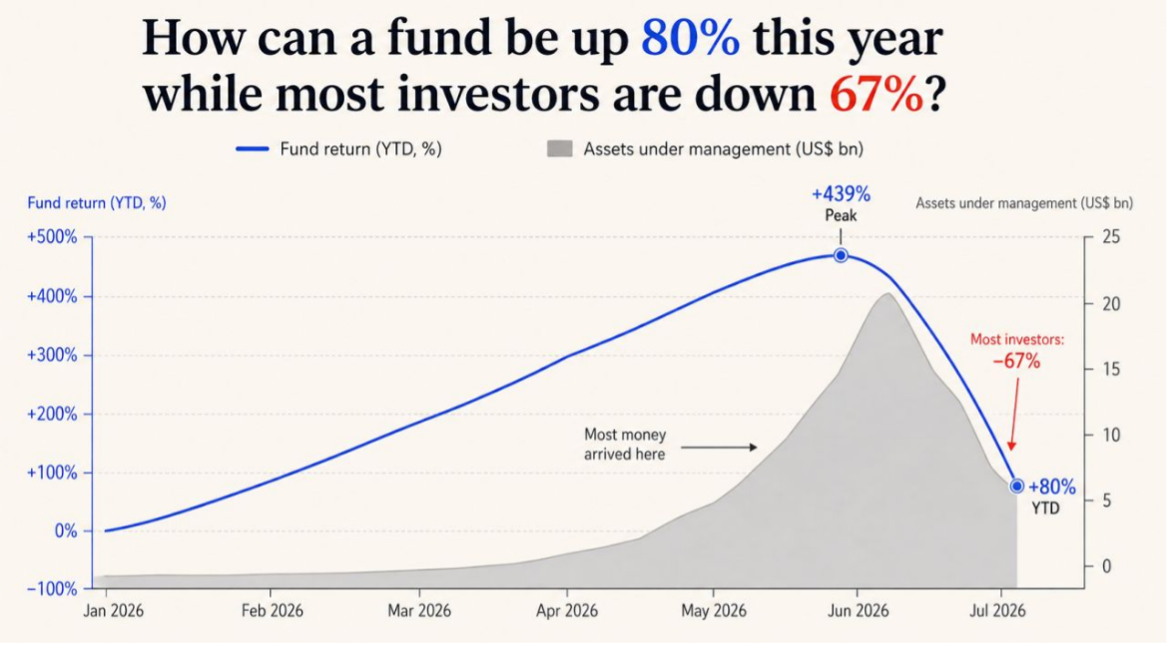
A 24-year-old former OpenAI researcher, Leopold Aschenbrenner, wrote an essay predicting the pace of AI development, he then became an overnight investing sensation and launched a hedge fund called Situational Awareness built around that conviction. The fund grew from a few hundred million dollars to an estimated $45 billion in under two years. At one stage it had returned over 1,000% since inception. People called him the Nostradamus of AI.

Then, in July this year, everything changed. He had borrowed heavily against his positions, leverage as high as four times his capital. Then a rough week for tech and semiconductor stocks triggered margin calls he couldn’t meet and he was forced to sell around two-thirds of the fund’s holdings at a discount. The fund fell from $45 billion to roughly $10 billion before a rescue injection kept it standing.
Here’s the part that really got my attention, the fund itself finished the year up around 80%while most of its investors were down 67%. Not a typo. The early money made a fortune, while the money that arrived later, chasing those extraordinary headline returns, absorbed nearly all the pain. I think about that gap often when I sit across from clients. I like to call it the behaviour gap, caused by the human emotions of fear and greed. It’s rarely the strategy that catches people out. It’s the timing of when they arrived and how exposed they were when the ground shifted.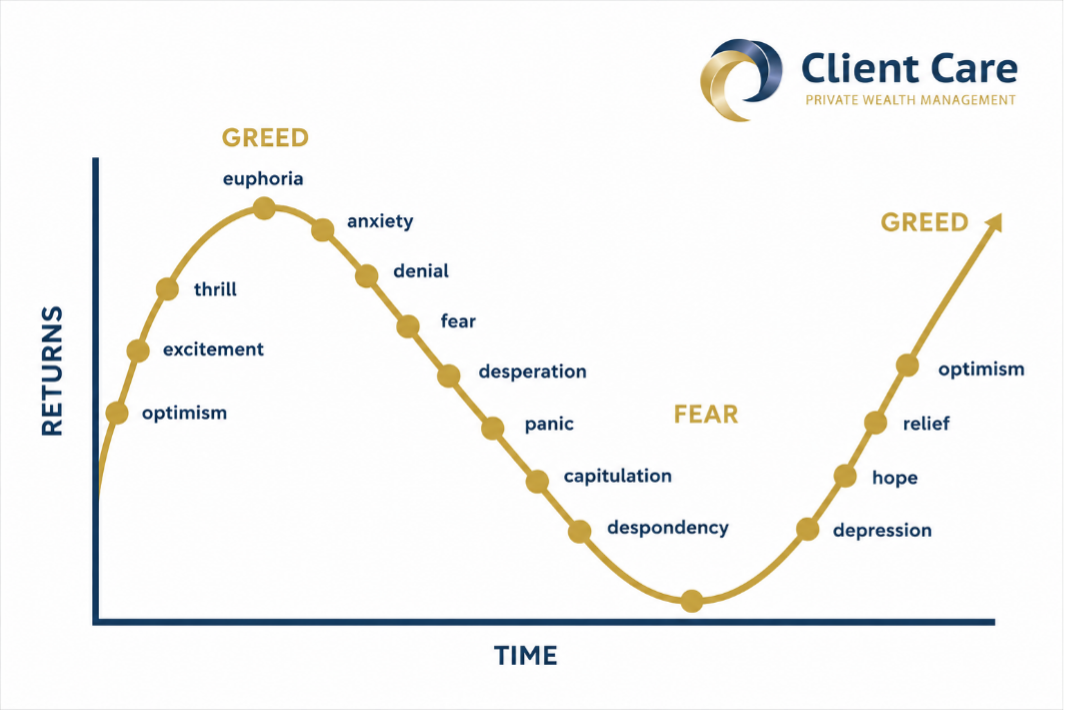
Here are a few lessons from this story.
Leverage cuts both ways, always. Borrowed money makes good years spectacular and bad years brutal, and it has an unpleasant habit of forcing you to sell at precisely the moment you can least afford to, so be very careful betting with money you don’t actually have.
Conviction is not the same as safety, and running with the herd can be dangerous. A portfolio built entirely around one big idea can work beautifully right up until it doesn’t. Diversification has never been about excitement. It’s about still being at the table when the next hand is dealt.
Being right isn’t the same as staying invested. Aschenbrenner may yet be proven correct about AI infrastructure over the long run. It won’t matter one bit to the investors who were forced out in July, at the worst possible price, not because the idea was wrong but because the structure around it was too fragile to survive a bad week.
Aschenbrenner stayed invested, so his personal returns are still massive. These underlying truths apply just as much to a modest retirement portfolio in St Francis Bay as it does to a $45 billion hedge fund in New York.
The goal should never be to catch the best-performing fund in the room. It should be comfortably, steadily invested twenty years from now while living your best life!
—
Dirk Groeneveld, Certified Financial Planner
t. 083 261 9287
Recent Columns
An Investment Portfolio Without a Plan is Meaningless
Five Dangers Of DIY Financial Planning
Finding The Delicate Balance In Giving
—

Disclaimer:
This article is for information purposes only and does not constitute financial advice in any way or form. It is important to consult a financial planner to receive financial advice before acting on any information contained herein. Client Care and PWM and its directors, officers, and employees shall not be responsible and disclaim all liability for any loss, damage (whether direct, indirect, special or consequential) and/or expense of any nature whatsoever, which may be suffered as a result of, or which may be attributable, directly or indirectly, to the use of, or reliance upon any information contained in this article.




Recent Comments