

There’s a quiet but dangerous belief that creeps in once we retire: “This is it. The die is cast.”
We assume that whatever we have is what we have, and that our lifestyle is now largely fixed. But in reality, that couldn’t be further from the truth. Every financial plan whether simple or complex rests on four key numbers. And the important thing to understand is this: each of these numbers can be adjusted. They are not fixed. They are levers. Get them right, and you can completely change the trajectory of your retirement.


The first number is your available assets. This is the pool of money you’ve built up, your retirement funds, unit trusts, share portfolios. It’s what generates your income and funds the big-ticket items: holidays, cars, helping family. This number sets the foundation, but on its own, it tells us very little about how you can actually live.
The second number is your lifestyle cost. What does it cost you to live your life monthly and annually? This includes everything from groceries and medical aid to holidays and hobbies. This number is often underestimated, and importantly, it doesn’t stay constant. Early retirement might be more active and expensive, while later years may look very different. Understanding this number properly is where real clarity begins.
The third number is the return required on your investments. This is where many retirees go wrong. There is a long-standing belief that once you retire, you should become “conservative.” While this feels safe, it can be incredibly risky. A modern retirement can last 25 to 40 years. Without sufficient exposure to growth assets, portfolios may simply not keep up. Ironically, being too conservative is one of the biggest reasons people run out of money.
The fourth and final number is longevity. None of us know how long we’ll live. But we do know this: people are living longer. Living into your 90s or even past 100 is no longer unusual. This creates both a gift and a risk. A longer life means more time for experiences, but it also means more years your money needs to last, often with rising healthcare costs.
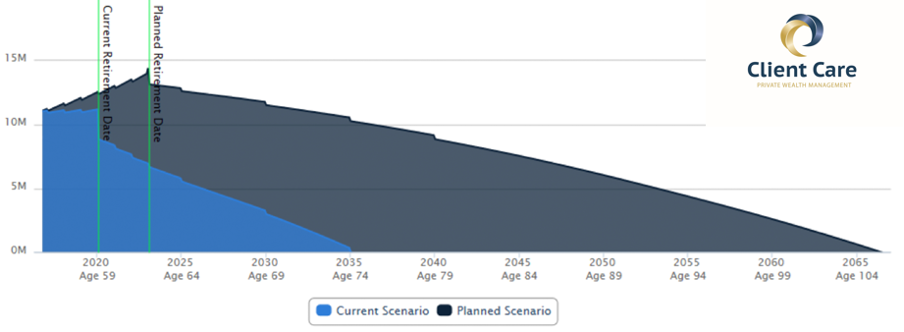
When you bring these four numbers together through proper cashflow planning, something powerful happens you move from guessing to knowing. You stop asking, “Will I be ok?” and start asking, “How well can I live?”
Too many people either spend too freely and risk running out, or live too cautiously and leave behind a life they never fully lived. The truth is, there is often far more flexibility than people realise. Small adjustments to any one of these four levers can create a very different outcome.
If you feel like you’re just accepting the retirement you think you can have, it might be time to take another look.
Pop in for a coffee. Let’s see what’s possible.
Dirk Groeneveld, Certified Financial Planner
t. 083 261 9287
Recent columns:
- Let’s talk about your budget
- Enjoy yourself, it’s later than you think!
- Financial Planning, What It Really Is
- Planning Retirement Properly: Turning Wealth Into a Life Well Lived
—
Disclaimer:
This article is for information purposes only and does not constitute financial advice in any way or form. It is important to consult a financial planner to receive financial advice before acting on any information contained herein. Client Care and PWM and its directors, officers, and employees shall not be responsible and disclaim all liability for any loss, damage (whether direct, indirect, special or consequential) and/or expense of any nature whatsoever, which may be suffered as a result of, or which may be attributable, directly or indirectly, to the use of, or reliance upon any information contained in this article.


Recent Comments