

FOSTER has been busy with a range of activities despite the inclement weather. The reserves are looking stunning after all the rain, although some areas are understandably looking a little overgrown which we will attend to. Alongside our ongoing trail maintenance and alien clearing, we have been putting considerable effort into caring for areas where Bitou has previously been cleared, allowing the natural fynbos to return and flourish.
Supporting the return of fynbos
We started near Hope Crescent in the Irma Booysen Nature Reserve, where we recently erected a sign recognising Rotary for its generous support of our Bitou-clearing projects.
The project then moved to the Lighthouse area in the Seal Point Nature Reserve and, a few months ago, to the Seal Point Reserve adjacent to Queen of the West, where we erected our third sign acknowledging Rotary’s support.
Over the past few weeks, our focus has been on follow-up work – making sure that weeds and Bitou don’t return and that the beautiful natural vegetation that has re-established itself remains protected.
It is particularly encouraging to see not only how quickly the indigenous flora is returning, but also how wildlife is beginning to reappear.
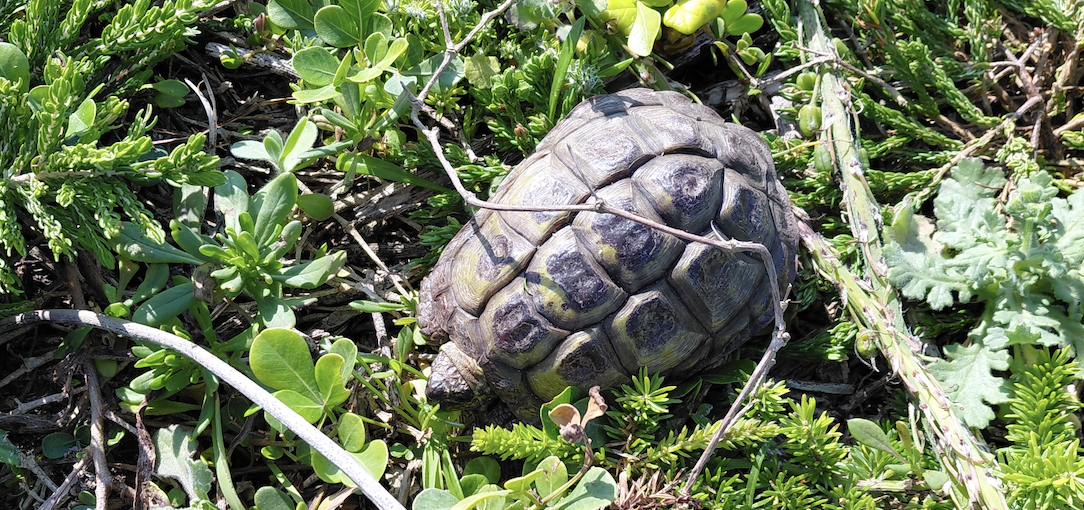
One very special sighting was a parrot-beaked tortoise (Homopus areolatus), also known as the common padloper. Apparently, these tiny tortoises were once quite common in the area, but this is the first one I have seen in years!
A little about the parrot-beaked tortoise
The common padloper is one of the world’s smallest tortoise species and is native to southern South Africa. Adults measure only about 110–130 mm in length and weigh between 140 and 300 grams.
They are named for their strong, sharp and distinctly hooked beaks, which help them feed on tough vegetation and succulents. Their shells are relatively flat, ranging from olive-green to brown, with raised rings around the scutes. Unusually, they have only four toes on both their front and hind feet.
They are found in coastal and lowland fynbos and succulent habitats – making their return to our recovering reserves particularly encouraging.
Thank you, Rotary!
A huge thank you to Rotary for your generous support and ongoing commitment to conservation in our area.
Without the generosity of our donors, members and everyone who supports our fundraising initiatives, we simply would not be able to maintain and protect our reserves as we do.
FOSTER membership costs just R350 per year per family.
Find out more at foster.org.za
Find out more at foster.org.za

Our next FOSTER talk
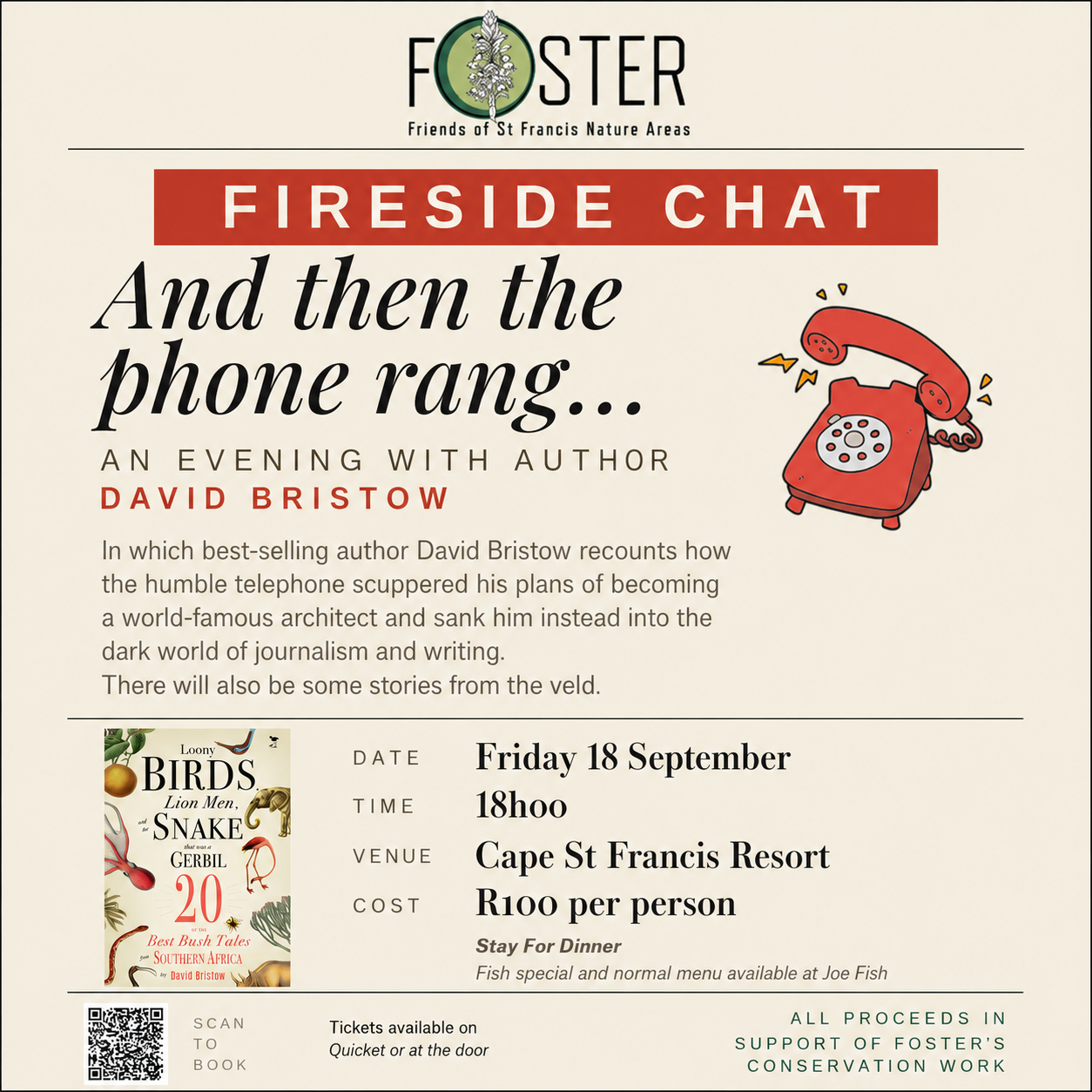
Following the very successful talk by Richard Cowling, held at The Links, we are delighted to announce our next speaker: David Bristow.
David is one of South Africa’s best-known travel and nature writers, journalists and storytellers. He studied Journalism at Rhodes University and later completed a master’s degree in environmental sciences.
He spent 13 years as editor of Getaway magazine and has written and contributed to more than 30 books covering South Africa’s landscapes, wildlife, history, culture and people.
What makes David particularly engaging is the combination of his extensive knowledge, his love of the natural world and his gift for telling a good story. His Stories from the Veld series has brought fascinating people, places and experiences from southern Africa to a wide readership.
Some of David’s books will be on sale at the event, and he will be happy to sign them for you.
Coastal Clean-up – Sunday, 13 September
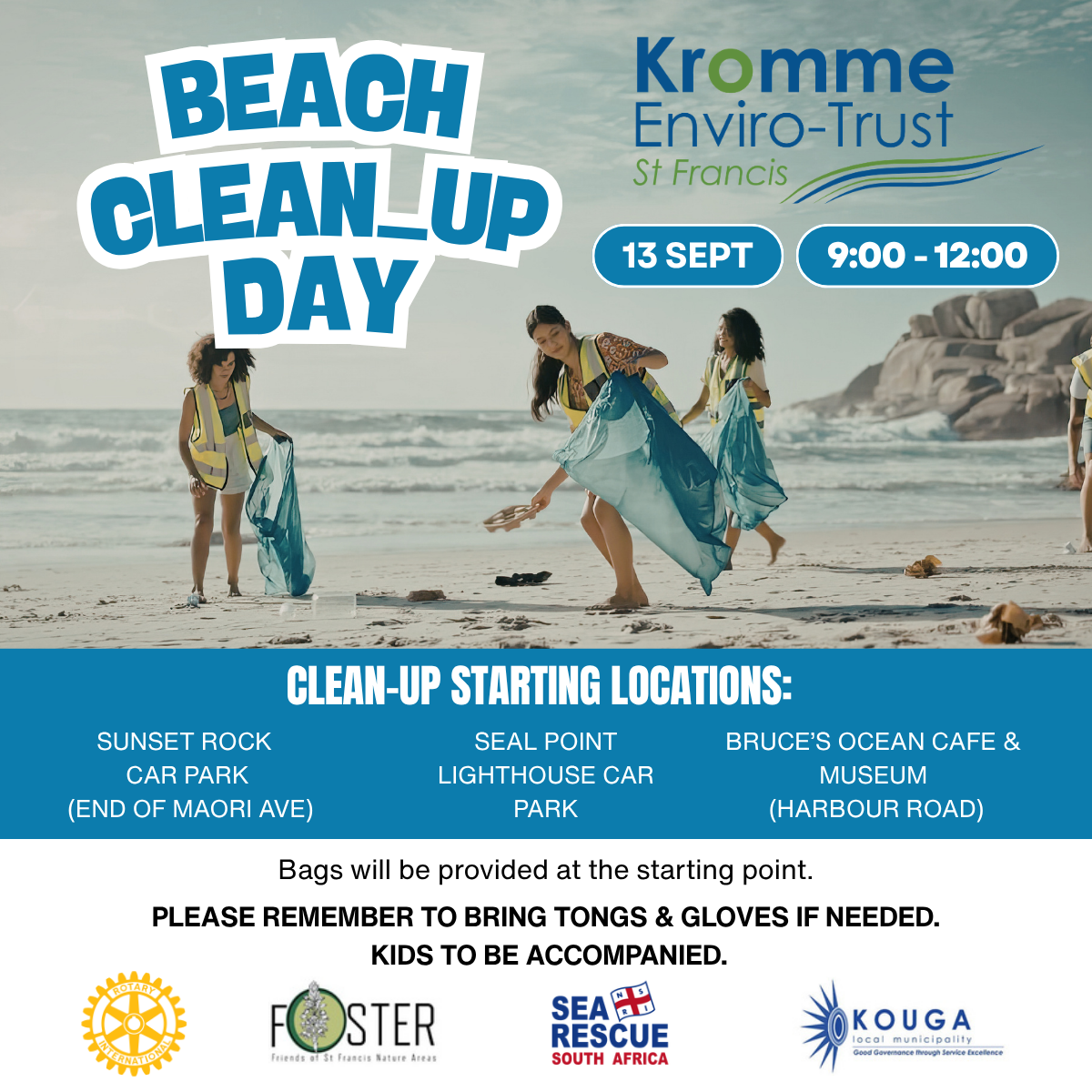
Finally, in conjunction with the Keromme Enviro Trust, our next Coastal Clean-up will take place next Sunday, 13 September.
Meet at one of three locations:
📍 Lighthouse
📍 Sunset Rocks
📍 Bruces
📍 Lighthouse
📍 Sunset Rocks
📍 Bruces
Please give an hour or two of your time to help us maintain our beautiful, pristine coastline.


Recent Comments