
by SFT | Aug 24, 2025 | Financial Planning, St Francis
Living in St Francis Bay, we’re blessed with a lifestyle that many dream of: a morning walk along the canals, a coffee at your favourite spot, and evenings spent with friends who’ve become almost like family. But as we move through retirement—or the years leading up to it—our friendships can take on new dynamics, shaped not only by time but also by money.
It’s something we seldom talk about, yet it quietly influences our social lives.
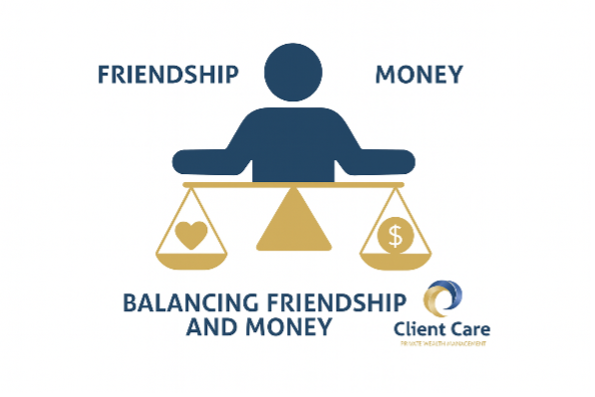
When Means Diverge
Imagine a dinner with old friends. The venue is lovely, the wine excellent. When the bill arrives, it’s split evenly. For some, no problem at all. For others, a little knot of discomfort forms.
Or picture being invited on a group holiday: seaside villas, private tours, fine dining every night. It sounds idyllic, but the price tag gives you pause. Do you stretch your budget and hope for the best, or decline and risk being left out?
These moments are common, especially among friends who’ve known each other for decades. Our financial journeys take different paths, and in retirement those differences often become clearer.

Why Money Matters in Friendships
Money is more than rands and cents—it reflects our priorities, habits, and sometimes our insecurities. While we like to think friendship is above such things, the reality is that differing means can influence who joins in, what activities are chosen, and even how often we gather.
• Inclusion and exclusion: A “casual” evening for one couple may feel extravagant for another.
• Lifestyle differences: Some may favour luxury travel or fine dining, while others prefer simpler pleasures.
• Unspoken tension: Those with less may feel embarrassed; those with more may feel awkward about it.
• Group dynamics: Over time, shared experiences can narrow to what’s “affordable” or “comfortable,” changing the texture of the friendship itself.
Acknowledging this doesn’t mean blaming anyone. It simply helps us navigate with empathy and understanding.
Practical Ways to Keep Friendship First
• Be honest: A gentle, “That’s a bit beyond my budget—how about this instead?” can open the way to more inclusive plans.
• Offer alternatives: Suggest a braai at the beach, a walk along the Wildside, or a simple potluck at home. The joy is in the company, not the cost.
• Respect boundaries: If someone opts out, accept it with grace.
• Keep bills separate: When dining out, pay for what you ordered—it avoids unnecessary pressure.
A Final Thought
At the heart of it, friendship isn’t about consumption but connection. And like the tides in St Francis Bay, relationships shift and change. Some grow closer, others drift a little apart. That’s natural. What matters is the intention: to cherish the bonds that still bring joy, while allowing space for change without regret.
Dirk Groeneveld, Certified Financial Planner
t. 083 261 9287
e. dirk@clientcare.co.za
—
Previous Columns:
Read more on Salute Your Own Self at Client Care

by SFT | Aug 17, 2025 | Financial Planning, St Francis
Estate planning is rarely at the top of our to-do list, yet it is one of the most practical acts of care we can give our families. A well-structured plan can make the difference between a smooth transition and a costly, emotionally draining process at a time already filled with uncertainty. One element often overlooked – and misunderstood – is the Guardian’s Fund.

What happens when a minor inherits?
When someone passes away without a valid Will, they die “intestate.” If a minor child inherits in this way, or even through a valid Will that does not set up a trust, the executor is obliged to transfer those assets into the Guardian’s Fund. This state-run fund, administered by the Master of the High Court, is meant to safeguard the interests of minors and others unable to manage their own affairs.
On paper it sounds reasonable. The money is invested by the Public Investment Corporation and earns interest set by the Minister of Finance. There are no admin fees. But the practical reality is less appealing: access is slow, bureaucratic, and requires guardians to justify every withdrawal with piles of paperwork, whether for school fees, medical bills, or daily living costs. Added to that, the investment strategy is one-size-fits-all and has even been exposed to cybersecurity risks.
Why not look for a better way?
For parents of minor children, the key is to avoid the Guardian’s Fund altogether. That means having a valid Will and, critically, setting up a testamentary trust within it. This type of trust only comes into effect upon your death and holds assets for your children until they reach an age you choose – often older than 18, when they are more capable of managing money.

You appoint trustees to manage these funds. Sometimes a guardian can also serve as trustee, but it is often wise to separate the roles: the guardian focusing on the child’s wellbeing and daily needs, while the trustee ensures the money is managed prudently for the long term.
Choosing the right guardian
Selecting a guardian is deeply personal. Ask yourself: Does my child already have a strong bond with this person? Will their schooling and friendships be disrupted? Do they share my values and have the emotional and financial stability to shoulder the responsibility? And importantly – are they willing to take it on?
Final thought
Estate planning is not just about money. It’s about care, continuity, and peace of mind. Review your Will and guardian choices regularly. Circumstances and relationships shift, and your plan should shift with them – always with your child’s best interests at heart.
Dirk Groeneveld, Certified Financial Planner
t. 083 261 9287
e. dirk@clientcare.co.za
—
Previous Columns:
Read more on Salute Your Own Self at Client Care

by SFT | Aug 12, 2025 | Financial Planning, St Francis
Bringing up children in today’s world is no small task. Even for relatively wealthy families, the challenges are significant. The financial responsibility alone is staggering — the cost of good schooling and tertiary education increases year after year, often outpacing inflation. Beyond tuition fees, there are accommodation costs, travel expenses, and countless other extras that quietly pile up.

Yet the financial strain doesn’t end with graduation. Once our children have a qualification in hand, they face the daunting task of not only finding a job, but securing one that offers them a lifestyle even remotely similar to what they enjoyed at home. In expensive cities like Cape Town or London, rent alone can swallow a large portion of a young adult’s income, making independence a financial high-wire act.
As parents, it is instinctive to want to step in. We hate seeing our kids struggle. We want to protect them from the bruises of life, to smooth the ride wherever possible. After all, we have the means, so why not use them? But herein lies the uncomfortable question: is this always the right thing to do?
Perhaps not.
Life’s obstacles, though painful in the moment, are often the very experiences that forge resilience, creativity, and wisdom. Most adults can look back on some difficult period in their lives — a tough job, a lean month, a personal setback — and see how it shaped them. The hardship forced them to think differently, to stretch themselves, to grow. Without it, they might never have developed certain problem-solving skills or the inner confidence to face the next challenge.

By removing too many obstacles for our children, we risk robbing them of this “privilege” of bad experiences. We might inadvertently send the message that discomfort is to be avoided at all costs, rather than endured and learned from. In doing so, we prepare them for a world that doesn’t exist — one where someone is always ready to step in with a solution.
The challenge for modern parents is finding the balance. Supporting our children to reach their potential doesn’t mean clearing every hurdle for them. It means knowing when to help and when to let them wrestle with the problem themselves. Yes, it’s hard to watch them stumble. But sometimes the best gift we can give them is the opportunity to pick themselves up.
Degrees can open doors, but life lessons are what teach us how to walk through them with courage and purpose. Being a good parent sometimes means letting your kids struggle a little. It’s not easy — but it is essential.

by SFT | Aug 4, 2025 | Financial Planning
Somewhere along the line, “financial planning” got reduced to “picking investments” and “selling pensions.” And because of that, a lot of people still ask:
“Why would I pay an adviser’s fee to recommend a fund when I can buy an index tracker for next to nothing or pick my own funds?”

It’s a fair question—if that’s all you think the job is.
But that’s not financial planning. Not even close.
The Real Work
The real value is in the planning, not the product. It’s in the conversations that shape the direction of your life and help you make decisions with clarity and confidence.
It’s co-creating a lifetime financial plan—one that gives you and your spouse a clear framework for every big decision ahead.
It’s running the what if? scenarios before you commit:
- What if we helped the kids onto the property ladder?
- What if we bought that holiday home?
- What if I retired—or sold the business—next year?

More Than Numbers
It’s getting you financially organised. Do you have a will? Is it current? Have you put Powers of Attorney in place? Are your accounts, policies, and paperwork in order so that anyone can step in if needed?
It’s making you as tax-efficient as possible. Are your assets in the right structures? If you draw income, is it optimised to keep more in your pocket and less in the taxman’s?
It’s being a trusted sounding board. Someone who answers your questions, challenges your thinking when needed, and keeps you accountable so that your money serves your life—not the other way around.
It’s being there for your family if you can’t be. A single, trusted point of contact who can guide them through decisions at a time when clarity and care matter most.

Yes, We Can Pick Funds Too
Selecting an investment fund is the easy part. We can do that. But the deeper work—the work that matters most—is about giving you peace of mind, protecting the people you love, and helping you live the life you want with the resources you have.
That’s what real financial planning is. And once you’ve experienced it, you’ll never confuse it with simply “choosing investments” again.
by SFT | Jul 27, 2025 | Financial Planning
The halfway mark of the year offers a valuable pause—a chance to reflect not just on what markets have done, but what they’re teaching us. And in classic fashion, 2025 has reminded us that while headlines change, human behaviour doesn’t.
A Return to Real-World Volatility
After two years of unusually smooth gains, the first half of this year brought us back to more normal conditions—complete with tension, turbulence, and surprise.
Early optimism was fuelled by falling inflation and improving sentiment. Then came April 2nd, when President Trump’s sweeping tariff announcement rattled global markets. Within days, some indices were down over 20%. Fear spread faster than facts.

Yet by late April, many of those policies were softened. Markets rebounded. As of June, most are back in the green—some even at new highs. The speed of that turnaround was a powerful reminder: markets don’t wait for comfort.
What the Market Reminded Us
- Sentiment moves faster than fundamentals.
Markets are emotional machines. They react to fear long before data confirms it. The tariff panic wasn’t about economic damage—it was about uncertainty. And when the fog cleared, confidence returned.
- Timing the market is a myth that won’t die.
The best days often follow the worst. Investors who sold in April likely missed the sharp recovery in May. Staying invested is still the clearest path to long-term returns.
- Volatility is normal.
It’s not a flaw in the system—it’s the cost of entry. The dips feel uncomfortable, but they are the very reason equity returns outpace cash over time.

Looking Ahead
This last week the JSE hit a new all-time high, breaking through the 100,000 mark. The next six months will bring more news, more noise, more temptation to react. But your advantage is not in predicting. It’s in persisting. Through patience, resilience, and focus on your plan—not the panic.
This year has already tested that discipline. And it’s shown—once again—that those who stay the course tend to finish ahead.

by SFT | Jul 20, 2025 | Financial Planning
Retirement planning is essential. There’s just no getting around it—knowing you’ve got the financial resources to live comfortably for the rest of your life gives you peace of mind that’s hard to put a price on. If you’re not planning for that, you may be setting yourself up for some serious stress down the line.
But here’s the twist: while having a solid retirement plan is important, sticking to it too rigidly can lead to a retirement that’s… well, boring. Predictable. Lifeless, even.

Think about this: many of us will live 30, maybe even 40 years in retirement. That’s not a short chapter—it’s a whole new book. Now rewind your life 30 years. Or even just 20. Where were you? What were your hobbies? Who was important to you? What kept you up at night? Chances are, your life back then looked nothing like it does today.
So, if your life has already changed that much, why assume your retirement will stay static?
This is where things get exciting. When you realise that the next few decades don’t have to follow a fixed script, you unlock the freedom to start designing a life that evolves with you. Your retirement can be just as dynamic, surprising, and fulfilling as any other part of your journey—if you give yourself permission to rewrite the plan.

Of course, have the structure. Know your numbers. Understand what you need to be financially independent. But don’t be afraid to tear up the blueprint and create something new when inspiration strikes.
This stage of life is a gift. So, let’s not go on autopilot. Don’t just wake up every day and “do retirement.” Instead, grab a blank sheet of paper. Dream a little. Be bold. What would it look like if this next chapter was the most exciting one yet?
Retire with a plan—but don’t be afraid to reinvent it. Again, and again. That’s how we turn retirement from a finish line into a fresh start.




Recent Comments