Kouga Local Municipality Condemns Vandalism of Electricity Infrastructure

Kouga Local Municipality Condemns Vandalism of Electricity Infrastructure

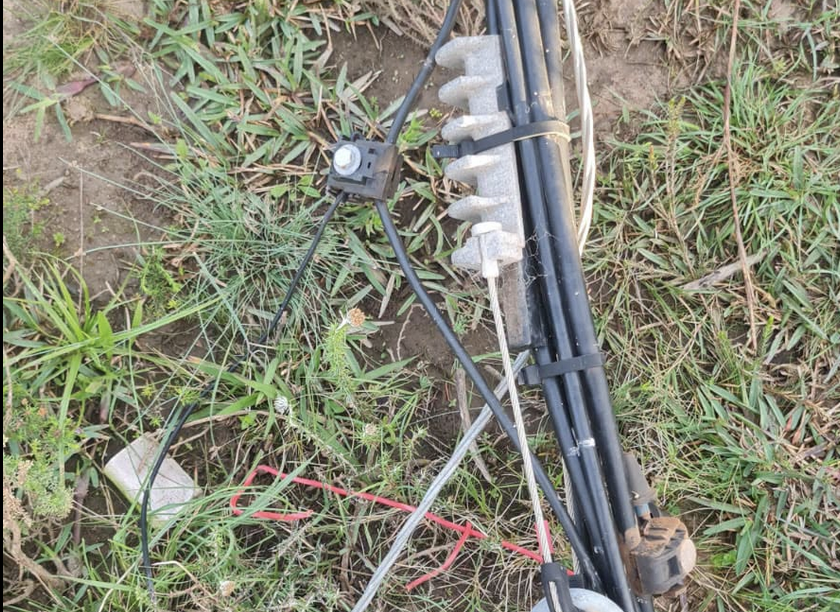
Kouga Local Municipality strongly condemns the vandalism of critical electricity infrastructure following an incident in Mooiuitsig, Ward 4, where an electricity pole was deliberately sawn off during the early hours of this morning.

This reckless act not only causes costly damage to municipal infrastructure but also places the safety of residents at risk and disrupts essential services to the community. Every act of vandalism results in valuable resources for service delivery being negatively impacted.
The municipality appeals to all residents to take ownership of public infrastructure and to work together to protect community assets. Municipal infrastructure belongs to all of us, and safeguarding it is a shared responsibility.
Residents are urged to remain vigilant and to report any suspicious activity involving municipal property to the relevant authorities.
The municipality is working closely with the South African Police Service to investigate the incident. Those responsible will be identified and prosecuted to the fullest extent of the law.
Anyone with information regarding this incident is encouraged to contact the South African Police Service or the Kouga Local Municipality Call Centre on 042 200 2200 or WhatsApp on 081 760 9183.
Kouga Municipality remains committed to maintaining and protecting essential infrastructure for the benefit of all residents.
A day in the life of Kouga’s firefighters

A day in the life of Kouga’s firefighters

Every day, senior firefighter Sibongile Tshali and firefighter Jermaine Groep answer the call to protect the people of Kouga. Whether battling devastating fires, responding to road accidents and rescue operations, or educating communities about fire safety, their work demands courage, resilience, and steadfast commitment. Faced with dangerous conditions, staff shortages, and unpredictable emergencies, they continue to serve with determination and compassion, proving that firefighting is more than a job – it is a calling.

____________________


KOUGA – Whether battling raging wildfires, responding to devastating floods, rescuing trapped residents, or educating communities about fire safety, senior firefighter Sibongile Tshali and firefighter Jermaine Groep stand ready to protect lives and property at a moment’s notice.

For them the profession is far more than a job – it is a calling rooted in passion, sacrifice, and an unwavering commitment to serving the people of Kouga. Their stories offer a glimpse into the challenges, rewards, and extraordinary resilience required to wear the uniform of a firefighter.

For Tshali, becoming a firefighter was a lifelong dream. He first joined Kouga Fire and Rescue Services as a retainer firefighter in 2005 before returning to Loerie to work as a truck driver to help support his parents.

“I always dreamed of being a firefighter,” he recalled. “After a few years I returned to the fire service. I earned only R1 100 a month, but the salary did not matter because this was my calling.”

His perseverance paid off in 2015 when he secured a permanent appointment and was later promoted to Senior Firefighter.

“I am blessed to serve in this position and am currently the only Black Senior Firefighter in Kouga,” he said proudly.

For Groep, the desire to serve others was sparked by an unforgettable childhood experience.

“When I was about 12 years old, we visited my uncle in Cape Town and a house in his street caught fire. Watching the firefighters inspired me to make a difference in people’s lives.”

His career began in Kariega before he joined Kouga Fire and Rescue Services, where no two days are ever the same.

Each shift begins with a handover from the previous crew, followed by planning sessions and intensive training exercises.

“We sharpen our skills because we never know what awaits us during a shift,” Groep explained. “We also conduct community awareness campaigns at schools and in neighbourhoods, teaching residents about fire prevention and how to contact us quickly during emergencies.”

Before responding to a single call, firefighters carefully inspect every vehicle and piece of equipment to ensure they are ready for whatever emergency may arise.

While deeply rewarding, the profession comes with significant challenges. Tshali says the layout of many informal settlements often complicate emergency responses.

“Many shacks are built so close together that our vehicles cannot reach them. Some are built beneath power lines or around fire hydrants, creating serious safety risks.”

He is equally concerned about misinformation within communities.

“Some people believe that if they deliberately burn their shacks, they will receive money from SASSA. That is completely false. Many residents also do not know the emergency number for the fire department or that they must give way to emergency vehicles.”

Illegal structures built on dumping sites create further difficulties.

“When fires start there, they can take days to extinguish.”

Despite these obstacles, Groep says the job remains incredibly fulfilling.

“My mother motivates me every day. She was extremely ill during Covid-19 and spent six months in a coma. She still suffers the effects, yet she gets up every day and goes to work.”

Serving the community gives him a profound sense of purpose.

“When I drive in my uniform and children wave or people say positive things, it reminds me why I do this job. I also enjoy working with my colleagues. We communicate well, work as a team, and that motivates me. I come to work smiling and go home smiling.”

Reflecting on the devastating fires that swept through Kouga in January 2026, Tshali said the experience tested every firefighter’s resolve.

“It wasn’t easy, but when you see people who stand to lose everything, you keep pushing forward. There are moments when your body wants to give up, but seeing your teammates continue gives you strength.”

The gratitude shown by the community made every sacrifice worthwhile.

“After seven or eight days of fighting fires, seeing messages of thanks and hearing people pray for us by name was incredibly emotional.”

Yet the work never stops.

“After the fires came the floods. There is always another emergency waiting – a snake removal, a trapped resident, a vehicle accident. We are still recovering from one traumatic incident when we are called to another.”

Both firefighters have an important message for the people of Kouga.

“We are here to help,” said Groep. “During our awareness campaigns we teach residents how to contact us directly. Sometimes people say we arrived late, but they first called SAPS, who then had to contact us. Calling the fire department directly saves valuable time.”

Tshali urged residents to help protect emergency personnel and critical infrastructure.

“When we respond to incidents in the early hours of the morning, please support us and do not steal our equipment. Fire hydrants must also remain accessible. In some areas, structures have been built around them, preventing us from accessing water during emergencies. Communities should educate themselves about safe building practices because fire hydrants are essential for saving lives and property.”

The Kouga Fire Department can be reached by dialing 112 (cell phone) or 042 291 0250 in an emergency.

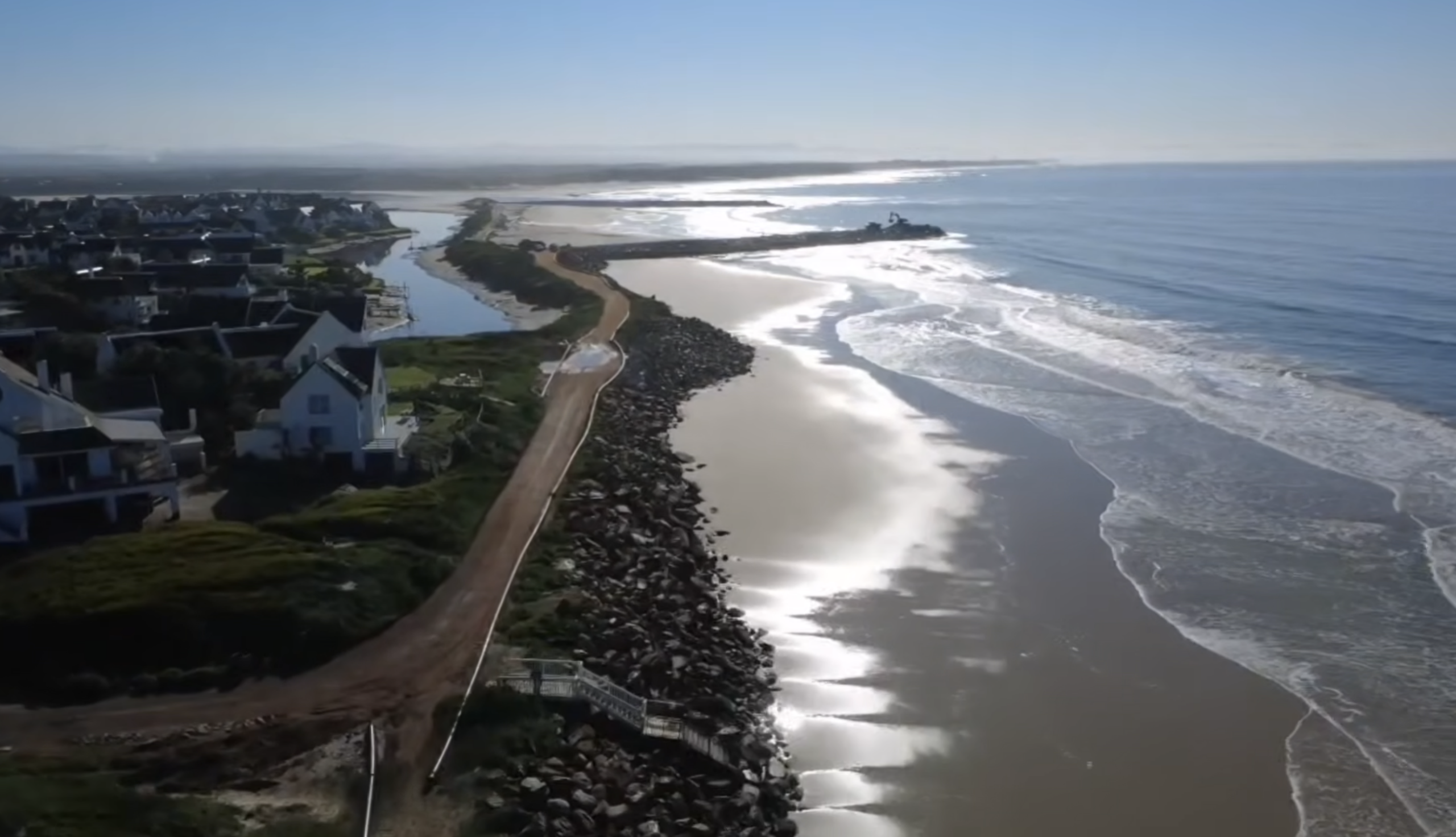
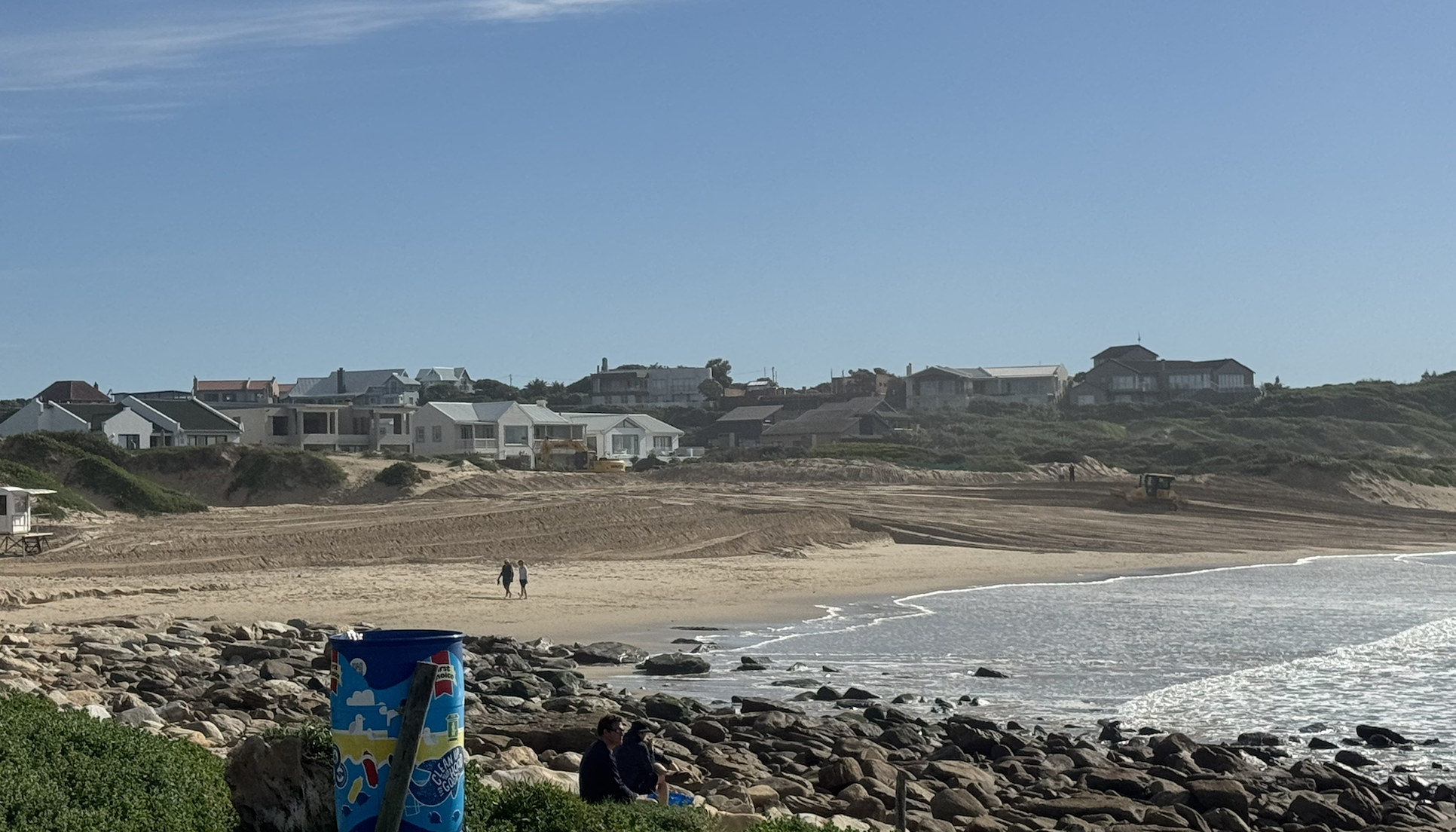
Dune Part 2: Video – Cape St Francis Sand Wars and The Groyne Damage: The Good and The Bad!

Dune Part 2: Video – Cape St Francis Sand Wars and The Groyne Damage: The Good and The Bad!

Dune Part 2: Video – Cape St Francis Sand Wars & The Groyne Damage: The Good & The Bad! by Trevor Hansen from his Next Offshore Adventure YouTube channel.


Reading: Visiting Victoria Bay and other Weird Nooks and Crannies Of The Garden Route During The Rip Curl Vic Bay Surf Pro

Some more – Kromme River Mouth Conditions Affect Canal Water Levels

Read more: The Milky Way Near Hankey – Photo Of The Day By Clive Wright Photography

Read more: Major Rescue Operation Ends With Missing Surfer Found Safe

and one more: How To Escape A St Francis Winter Without Crossing Half The Planet


Dune Part 1: Statement from Cape St Francis Civics and FOSTER regarding CSF Beach

The Cape St Francis Civics Association and FOSTER support the proper implementation of the approved Coastal Management Plan and Environmental Authorisation.

Both organisations remain committed to the objectives contained within these approved processes and continue to support responsible environmental management in accordance with the relevant authorisations and legal requirements.

However, both organisations are disappointed that, despite assurances received, they were misled and not kept properly informed of activities undertaken. As a result, concerns were raised regarding the manner in which certain actions were carried out and communicated to affected stakeholders.

Certain compliance processes and investigations are now underway, and all activities have been halted pending the outcome thereof. This pause will allow the relevant authorities and parties involved to assess the situation fully and determine the appropriate way forward.

Both organisations await that outcome and remain supportive of a lawful, responsible and cooperative process among all stakeholders, including residents, homeowners, Kouga Municipality and DEDEAT, to achieve the objectives of the Environmental Authorisation.

In the meantime, the Cape St Francis Civics Association and FOSTER encourage constructive engagement and transparent communication among all parties as the process unfolds.


Some more – Kromme River Mouth Conditions Affect Canal Water Levels

Read more: The Milky Way Near Hankey – Photo Of The Day By Clive Wright Photography

Read more: Major Rescue Operation Ends With Missing Surfer Found Safe

and one more: How To Escape A St Francis Winter Without Crossing Half The Planet

Visiting Victoria Bay and other Weird Nooks and Crannies Of The Garden Route During The Rip Curl Vic Bay Surf Pro


Thoughts From the Nuclear Fringe – Thyspunt Alliance

Thoughts From the Nuclear Fringe – Thyspunt Alliance

In 1963, filmmaker Bruce Brown captured what many still regard as the perfect wave at St Francis Bay. The endless pointbreak featured in The Endless Summer became one of surfing’s most iconic images and helped place this small corner of the Eastern Cape on the global map.

Sixty years later, much of that beach has disappeared.

Nobody set out to destroy it. There was no single decision, no grand plan and no obvious villain. Instead, a series of decisions accumulated over decades. Each one may have appeared reasonable at the time. Yet taken together, they altered a coastal system that few people fully understood. The result is a shoreline that now requires a coastal protection project costing more than R170 million in an attempt to recover at least part of what has been lost.

The St Francis coastline has become a reminder that environmental change often happens slowly, almost imperceptibly, until the consequences become impossible to ignore.

Just fifteen kilometres to the west, however, another stretch of coastline tells a very different story.

The Thyspunt coastline looks remarkably similar to the way it did in 1963. The dunes remain largely intact. The landscape is still wild and undeveloped. The beaches, wetlands and coastal vegetation continue to function much as they always have.

Ironically, this was not the result of a visionary conservation programme. Instead, the area benefited from decades of restricted access linked to apartheid-era nuclear planning. Land that might otherwise have been developed was effectively locked away, and in doing so, something rare and increasingly valuable was preserved.

Today, Thyspunt finds itself at the centre of another major decision about the future.

Nicholas Heinamann of Deep South Futures has written one of the clearest and most thoughtful examinations of the Thyspunt proposal and the choices that now face the region. His article explores the heritage value of the area, the economic arguments, the planning processes and some of the lessons that can be drawn from other large-scale developments.

Most importantly, it addresses a question that has received surprisingly little attention throughout the debate: what could this landscape become if the decision ultimately goes the other way?

It is a question about opportunity as much as development, and about whether there are alternatives that have not yet been properly explored.

It is a long read. It is a considered read. And for anyone interested in the future of the Eastern Cape coastline, it is well worth the time.

Thoughts From the Nuclear Fringe – St Francis Bay lost its beach. Thyspunt could lose everything

Pothole Update – From Barry Buchman

Our contractor has made excellent progress over the past few days, and the entire section of road from the top of the dip through to the school turnoff has now been repaired. This stretch is once again safe, smooth and fully drivable, representing a significant improvement for residents and visitors who use the route daily.

Work will continue tomorrow on the next phase of the project, with repairs commencing on the section heading towards the traffic circle and continuing beyond it all the way to Build It. Provided weather conditions remain favourable, this work is expected to take approximately three days to complete.

At present, however, the forecast indicates rain on Thursday. Should that materialise, repair work may need to be suspended for several days until conditions are suitable for road repairs to continue.

Once the section between the dip and Cape St Francis has been completed, we will assess the remaining budget to determine whether sufficient funds are available to undertake repairs to the dip itself and parts of the road between the dip and Humansdorp. Unfortunately, the final section alongside the dairy farm has deteriorated to such an extent that any repairs can only be regarded as temporary. The road surface continues to break down under the constant pressure of heavy traffic, particularly the large number of trucks using the R330 on a daily basis.

One final point worth mentioning is that motorists do not need to steer around the newly repaired potholes. In fact, it is beneficial for vehicles to drive over these repaired sections, as the traffic assists with compaction and helps the repairs settle properly.

Thank you to everyone for your patience while this important work continues.

Some more – Kromme River Mouth Conditions Affect Canal Water Levels

Read more: The Milky Way Near Hankey – Photo Of The Day By Clive Wright Photography

Read more: Major Rescue Operation Ends With Missing Surfer Found Safe

and one more: How To Escape A St Francis Winter Without Crossing Half The Planet

Sardine Run Arrives On The KZN Coast

The KwaZulu-Natal sardine run officially got underway this year when the first sardines were netted at Port Edward on 13 June.

Although the arrival is slightly later than in 2025, when the first shoals were netted at the end of May, mid-June is traditionally when sardines make their first appearance along the KZN coastline. As many locals will appreciate, the timing coincided almost perfectly with the annual Comrades Marathon weekend.

Early Success Along The South Coast

Following the initial small net of sardines at Port Edward on 13 June, netters enjoyed further success along the Lower South Coast. Sardines were landed at several locations, including Southbroom, Ramsgate and Umzumbe.

These early catches generated considerable excitement among coastal communities, anglers, divers and ocean enthusiasts. Every winter, many eagerly await the arrival of one of the world’s most spectacular marine migrations.

Sea Temperatures Influence The Run

Sea temperature plays a critical role in determining the movement and distribution of sardines along the coast.

On 13 June, sea surface temperatures at Port Edward were a favourable 19.5°C. These conditions created a suitable environment for sardines to move northward.

However, conditions changed rapidly over the following days. By 16 June, water temperatures on the Upper South Coast had risen to approximately 23.5°C. At the same time, warm water continued to persist around the Durban region.

Sardines generally favour cooler water temperatures. Therefore, the intrusion of warmer water onto the KZN coast can slow or temporarily halt their northward progression.

Encouraging Signs Remain

Since 18 June, sardine activity has become noticeably quieter, most likely because of these warmer conditions. While this may appear concerning, it is not unusual and does not necessarily indicate the end of the run.

In fact, several encouraging signs suggest the season may still have plenty to offer.

Large concentrations of baitfish remain present along the South Coast, including substantial mixed shoals of red-eyes, mackerel and sardines. Perhaps most promising are recent reports of large shoals of sardines along the Wild Coast.

These observations suggest that significant numbers of fish remain to the south of KwaZulu-Natal and could still move north if environmental conditions become favourable.

Waiting For The Next Cold-Water Pulse

Current expectations are that if cooler water once again pushes onto the KZN coast, sardines are likely to reappear in greater numbers.

As always, the sardine run is heavily influenced by changing oceanographic conditions. Consequently, the coming weeks will determine just how far the migration progresses this year.

For now, all eyes remain on the ocean as we wait to see what the next cold-water pulse will bring.

Article written by ORI Senior Scientist, Dr Ryan Daly – SAAMBR

Verified by MonsterInsights